It was 110 degrees in San Bernardino on Saturday, September 4, 1982. The second day of the US Festival had drawn the largest crowd of the weekend — peak attendance around two hundred thousand, baking in the dust at Glen Helen Regional Park, an hour east of Los Angeles. Beer was a dollar fifty. Cheeseburgers two seventy-five.
The festival was Steve Wozniak’s idea. Apple’s co-founder, thirty-two years old, recently recovered from a plane crash that had pulled him out of the company, on hiatus and looking for the next thing. He named the operation UNUSON — Unite Us In Song. He’d put $12.5 million of personal money into building an open-air venue, a state-of-the-art stage, and a lineup designed to collapse the gap between rock and roll and the technology revolution he’d helped seed five years earlier. According to interviews from the time, Steve Jobs thought the whole exercise was a waste.
Saturday’s bill ran longer as the day went on. Joe Sharino, Wozniak’s wedding singer, opened. Then Dave Edmunds, Eddie Money, and Santana. Then The Cars, in the middle slot. Followed by The Kinks, Pat Benatar, and finally Tom Petty and the Heartbreakers, who closed the day.
The middle slot is where most of the cultural pressure of that lineup actually lived. Behind The Cars in the running order were established institutions — The Kinks were going on twenty years as a band, Petty was crossing over from rock radio into something bigger, Benatar had just won her second consecutive Best Female Rock Vocal Grammy. In front of The Cars were musicians playing good records that nobody would call era-defining. Santana was playing variations on the Latin-rock fusion he’d brought to Woodstock thirteen years earlier. Eddie Money was Eddie Money.
The Cars, on that Saturday at the US Festival, were the moment in the lineup where you could see the decade pivoting under your feet.
A year later, in the same slot on Memorial Day weekend 1983, the band that played would be U2 — followed that day by The Pretenders, Joe Walsh, Stevie Nicks, and David Bowie closing. New Wave Day the day before would have INXS in the second-from-bottom slot, with Wall of Voodoo following them, then A Flock of Seagulls, English Beat, Stray Cats, Men at Work, Oingo Boingo, the Clash. The era’s ranking was in constant flux because the era itself was. New artists were arriving every week, genre boundaries were dissolving in real time, and the cultural authority required to stand in the middle of any of those bills was something each band had to claim show by show.
The Cars claimed it on September 4, 1982. They did it with a band that fit nowhere — too pop for the avant-garde scene, too weird for stadium rock, too rock for synthpop, too synth for power-pop. Two lead vocalists who didn’t sound alike. A keyboardist running a rack of analog synthesizers that sometimes got mistaken for guitar solos. They were a genre of one.
Five lots in this auction are the working evidence of how that band operated.
Wozniak’s Stage
Steve Wozniak wasn’t trying to put on just a music festival. He was trying to engineer a cultural reset.
His company, UNUSON — Unite Us In Song — was named to mark what he believed the eighties could be: a deliberate move past the “Me Decade” of the seventies, the self-absorbed pursuit of individual identity, into something he was calling the US Decade. Community. Cooperation. Technology in service of connection rather than isolation. The festival was designed to embody that pitch.
So the lineup at Glen Helen Regional Park wasn’t a standalone rock event. It was a music-and-technology fair. Wozniak built tech exhibits into the festival grounds — five air-conditioned tents demonstrating early Atari home computers and video games, working displays of nascent personal computing, memorabilia from The Empire Strikes Back (which had come out two years earlier). A Sensadome offered a 360-degree multimedia light show. Herbie Hancock led a discussion about the Apple II / Alpha Syntauri music system. Robert Moog — the inventor of the Moog synthesizer and effectively the godfather of every analog synth running on the main stage that weekend, including the ones in Hawkes’s rig — was personally on the grounds demonstrating his instruments to attendees. An enormous hot-air balloon emblazoned with the Apple logo floated above the staging area. Members of the original Macintosh team attended the weekend; Steve Jobs did not. There were also active plans for a satellite “Space Bridge” link to the Soviet Union — cross-cultural goodwill at the height of the Cold War — though that particular ambition didn’t materialize at the 1982 event.
Wozniak’s framing was earnest. The kind of earnest that comes from a thirty-two-year-old computer engineer who’d just survived a plane crash and was personally putting up $12.5 million to demonstrate his beliefs. According to that same Rolling Stone backstage report, when journalists tried to explain his “Us Decade” concept to performers — “all of us working together in the eighties” — Ric Ocasek smiled, replied “That sounds nice,” and visibly did not buy it.
That was the moment. June 1982: Blade Runner in theaters, painting a 2019 Los Angeles ruined by corporations and acid rain. May 1980: The Empire Strikes Back had introduced the eighties to the idea that the rebellion loses, the hero gets his hand cut off (I cried!), and the rogue gets frozen in carbonite. Both pop-cultural touchstones painting bleak visions of where the future was actually heading. Wozniak was trying to engineer a different future on the same stage Ocasek’s band would walk onto an hour later. He had a rock and roll lineup designed to bring people together — selling optimism into a decade that didn’t particularly want it.
It’s striking now, forty-three years on, that we have more powerful technology in our pockets than Wozniak had to build the festival — and a culture more self-absorbed than the seventies ever was. The “Me Decade” turned out to be a warm-up. The “Us Decade” didn’t happen the way Wozniak imagined. His $12.5 million bought a few days of attempted reset before the actual eighties — corporate, MTV-saturated, designer-everything — settled in for the rest of the decade.
The festival lost an estimated $12 million.
The Performance
Ric Ocasek didn’t want to play.
The Cars had been off the road since March 1982, when their Shake It Up tour wrapped. They wouldn’t tour again until 1984. Six months out from a stage, with no tour built around the appearance, asked to deliver in front of two hundred thousand people in 110-degree heat — Ocasek said no the first time the offer came across his desk.
In Rolling Stone’s October 14, 1982 backstage report “It’s Only Rock & Roll,” Ocasek explained that he’d initially declined: “The first time they pushed me to do this, I said no.” He’d been talked into it. The Cars hadn’t played live in six months, he conceded. “This show could be anything.”
The thing that talked him into it was the money. The festival was paying headliner-level fees down through the lineup — Fleetwood Mac was reportedly paid $500,000, Pat Benatar and Tom Petty around $250,000 each. Wozniak’s pockets were deep, and he was paying to assemble a bill that wouldn’t have happened any other way.
The Cars went on in mid-afternoon and played fifteen songs. They opened with “Good Times Roll.” They closed with “You’re All I’ve Got Tonight.” In between: “Bye Bye Love,” “Touch and Go,” “Misfit Kid,” “Cruiser,” “Since You’re Gone,” “Candy-O,” “Moving in Stereo,” “Night Spots,” “Let’s Go,” “My Best Friend’s Girl,” “Dangerous Type,” “Just What I Needed,” “Shake It Up.” The band’s working catalog as it stood in September 1982 — material from the first album, Candy-O, and Shake It Up, pulled into a single afternoon set.
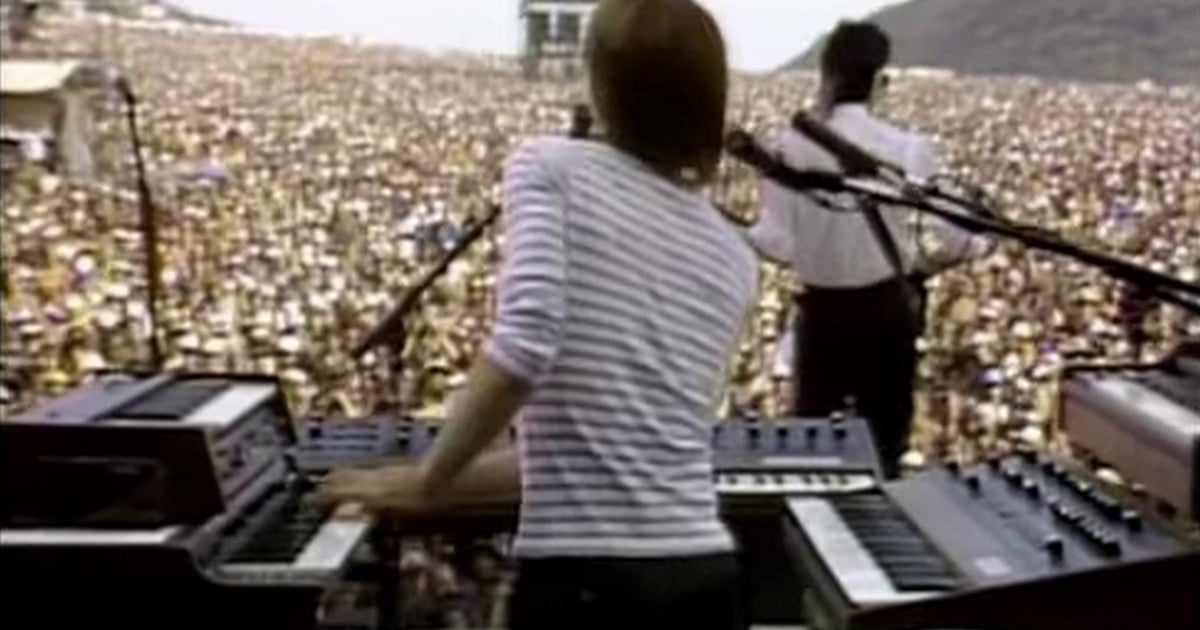
What audiences had already begun noticing in the years before this — and what audiences at the US Festival noticed that afternoon — was that the band was unusually still on stage. They didn’t move much. Ocasek and Orr were a study in contrast. Ocasek stood mostly motionless, in dark sunglasses, in black — the cerebral angular frontman, slightly awkward in a way he’d articulate two years later as a deliberate stance. Orr was the cool one. He held the bass and held the audience’s attention without working for it. Blade Runner had been in theaters since June, and some in the crowd that afternoon would have been forgiven for thinking Rutger Hauer had walked over from the set. Hawkes ran the synth rig with the focused stillness of someone reading a manual — multiple keyboards stacked in front of him, layered to recreate the records’ density live. Pro-shot festival footage shows him from behind, the desert crowd stretching out past his keyboards toward the San Bernardino mountains, a relatively tiny figure raised up above the largest live audience the band had ever played.
The reputation that had attached to them by 1982 was that they were album-accurate live — what was sometimes called mechanical precision and sometimes called disconnection. What it actually was, was confidence.
The set wasn’t the band’s most legendary. It didn’t need to be. They walked out, played what they came to play, walked off — and didn’t play live again for nearly two years.
The Band Right Before MTV Made Them “MTV” Famous
MTV had been on the air just over a year by the time the Cars walked onto Wozniak’s stage. The channel had launched August 1, 1981 with the now-iconic “Video Killed the Radio Star” and a starting reach of about two million households. By September 1982, the I Want My MTV campaign was in full force — Mick Jagger, Pat Benatar, and others on camera urging viewers to call their cable providers and demand the channel. MTV’s footprint had roughly tripled in a year. By the end of 1982 it would be in over nine million households. The cultural takeover was happening in real time.
The Cars were already part of it. From MTV’s first day on the air, the band’s debut-album videos — “Just What I Needed,” “My Best Friend’s Girl,” “Let’s Go,” “Touch and Go,” “Double Life” — were in regular rotation. By 1982, the Shake It Up era was dominating: the “Shake It Up” video (directed by Paul Justman) was an MTV staple, and “Since You’re Gone” followed it. The Cars looked good on MTV — sleek, synth-driven, visually stylized in a way the format was specifically built to amplify. The records had hooks. The videos had concept. They fit.
The audience at Glen Helen that afternoon was the demographic this was all aimed at. Suburban. MTV-aware. Tech-curious. Post-punk but still mainstream — too young to have been Woodstock kids, too plugged-in to be on the fringes. The kind of audience Wozniak imagined inheriting his “Us Decade” and that the cable industry had already identified as its core 12-to-34 viewership. The Cars were aimed at exactly that demographic and that audience knew it.
But here’s the irony of the cultural lens that would soon develop. The Cars as a band of human beings were almost anti-MTV. Reserved. Awkward in interviews. Emotionally opaque. Not naturally flashy. Ocasek especially projected a kind of detached anti-rock-star demeanor that became hugely influential a decade later on alternative rock and indie musicians — the Kurt Cobain and Stephen Malkmus and the whole nineties slacker-frontman lineage owes Ric Ocasek a structural debt. But in 1982, that aloofness was at odds with the medium that was about to make the band ubiquitous.
What happened in the future, the band couldn’t have predicted from Wozniak’s stage. Heartbeat City would come out in March 1984. The “You Might Think” video would win the first MTV Video Music Award for Video of the Year that September — beating Michael Jackson’s “Thriller” in a result that’s still argued about. The Cars would become one of the definitive MTV bands of the eighties, their late-career identity recast around music video and rotation.
At the US Festival, that was still ahead. You were watching a band right before they accidentally became one of the faces of an era. They were already MTV-aware enough that the Shake It Up video had set the visual template. But the cultural transformation that would turn the Cars into MTV-band-of-record hadn’t fully landed yet.
What the festival footage actually shows is a band that fits the desert visual environment in a way that turned out to be predictive. Harsh California sunlight. Dust haze hanging over the crowd. Chrome on the synth rigs, sunglasses on the frontmen. Geometric staging. Detached new-wave fashion. Looking at the pro-shot frames from September 4, 1982 now, the footage almost reads like an early MTV sci-fi broadcast — like material a music-video director two years later could have built a Cars promo from without changing a thing. It’s the visual vocabulary game designers and filmmakers would later mine for nostalgia: peak-1982 future, the synth-rock aesthetic that Grand Theft Auto: Vice City would canonize twenty years later as the defining look of the era.
The Cars walked off Wozniak’s stage and into that look. They didn’t have to do anything different to become MTV’s band. The band already was that band.
The Architecture of a Genre of One
The Cars formed in Boston in 1976. Five musicians, all with prior bands behind them. Ric Ocasek and Ben Orr had moved together through Cleveland, Detroit, and New York before settling in Boston, surfacing through a series of folk and pop projects (Milkwood, Richard and the Rabbits, Cap’n Swing) before assembling the lineup that worked. David Robinson came from The Modern Lovers. Elliot Easton was a Long Island guitarist who’d been playing since age six. Greg Hawkes had played with Martin Mull’s Fabulous Furniture and was a working synthesizer player with a serious modular setup before the Cars even existed.
Two lead vocalists who didn’t sound alike. Ocasek wrote most of the songs and sang lead on the angular rock-leaning ones — “My Best Friend’s Girl,” “Good Times Roll,” “Touch and Go.” Orr sang lead on the smoother, more melodic ones — “Just What I Needed,” “Drive,” “Bye Bye Love.” When the Cars were inducted into the Rock and Roll Hall of Fame in 2018, Ocasek had to sing Orr’s parts on “Just What I Needed” because Orr had been gone since 2000. Ocasek would die the following year.
The two voices weren’t a backup arrangement or a frontman-with-support setup. They were two distinct instruments in the band, deployed song by song based on what served the song. That’s structurally unusual. Most bands lean on one voice and use harmony to fill out the others.
Layered on top of those two voices was the band’s actual sonic vocabulary — the thing that made the Cars the Cars and nobody else. That was Greg Hawkes’s department. Or at least, his most identifiable contribution, since Hawkes also played guitar, marimba, and various percussion across the catalog. But the synthesizer textures were what people heard first and what most arguments about the Cars’ “sound” eventually returned to.
Hawkes was twenty-five years old when the band’s debut album came out in 1978. By the time of J.D. Considine’s January 1982 Musician magazine cover story on the band, Cars fans were routinely confused about what they were hearing. Hawkes told Considine that listeners regularly asked him about the band’s guitar solos — because they thought they were done on synthesizers. Hawkes is a longtime Kraftwerk fan, which makes immediate sense the moment you notice it but doesn’t show up in most discussions of the band. The Cars carried that European-electronic DNA but ran it through American rock songcraft. In a 2022 conversation with critic Jim Sullivan around his seventieth birthday, Hawkes framed where the band sat: “We weren’t as sonically aggressive as the punk records.” The Cars liked hooks. They wrote pop songs. They just dressed those pop songs in unusual sounds.
The Cars had a working philosophy that captured the position. Two years after the US Festival, sitting in their own Boston studio for another Musician magazine cover story, Ocasek told Considine that fitting in was overrated. “I think the best thing you could possibly be is uncool,” he said. “When you get tired of fitting in, then you’ll be what you are.” That was the band’s stance toward their own sound. They weren’t interested in being categorized. They were interested in finding what worked song by song, dressing pop hooks in unusual sounds, and refusing to hold still between records.
Most of those unusual sounds came out of the gear that’s in this auction.
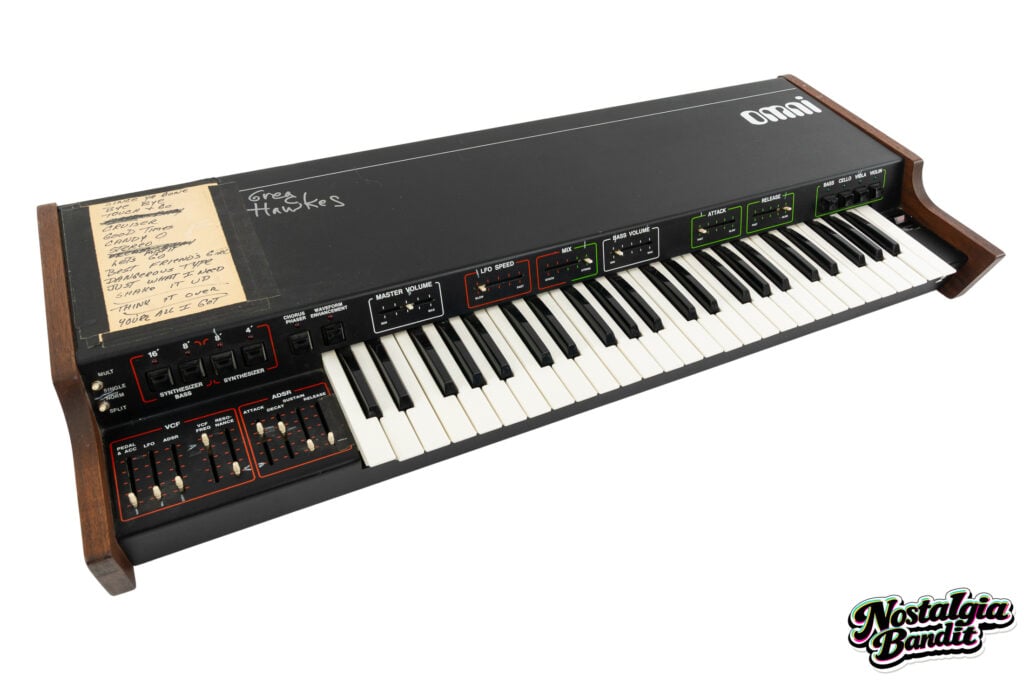
Lot 91 — Greg Hawkes Stage-Played & Studio-Used ARP Omni MK-1 Synthesizer (1978–1982)
This is the synthesizer that was on stage on Saturday, September 4, 1982.
Pro-shot video footage from the US Festival shows Greg Hawkes at a multi-tier keyboard rig, the desert crowd of two hundred thousand stretching out past his keyboards toward the mountains. The ARP Omni Mark 1 is visible in those frames at the bottom of his keyboard stack — the instrument running the string-pad textures underneath the fifteen-song set the band played that afternoon. That specific Omni is in this auction.
Released by ARP Instruments in 1976, the Mark 1 Omni — the version of the instrument in this lot — preceded the more common Omni-2 by about three years. It was designed to do what no rock band had needed before: replace a string section on stage. Bands that wanted lush string textures live before the Omni had to either fly an orchestra in or fake it on a Mellotron. The Omni gave them another option, with paraphonic strings, polyphonic synth voices, and bass — three timbres available simultaneously through one instrument.
Hawkes used this ARP across the band’s 1978–1982 era — from the debut album through Shake It Up, the most commercially explosive five years of the band’s career. The string-pad textures that anchor much of that period — the warmth that lives underneath the more pointed Prophet-5 lead lines — that’s largely the Omni’s work. By the Heartbeat City sessions in 1983–84, Hawkes was moving heavily into the Fairlight CMI and the Roland Jupiter 8. The Omni stayed in the rig for older material but got displaced as the lead synth on new recordings, which makes the 1978–1982 era the period of its most central use — and the period this specific instrument represents.
The instrument arrives carrying its own physical record of the work it did. “Greg Hawkes” is written in marker across the top of the case. Taped beside it is the original setlist from the last time the synth was used on stage — handwritten in marker on yellowed paper, with songs crossed out and replaced where the band adjusted between performances. White grease-pencil marks sit next to every knob and slider on the control panel, where Hawkes had locked in each parameter for live use and never wiped them off. This isn’t a refurbished museum piece. It’s a working stage instrument that’s still set up the way it was the last time it came off.
For a synthesizer collector, the ARP Omni Mark 1 is a deepening rarity in good working condition. For a Cars-specific collector, this is the instrument that built the early band’s most identifiable string textures. For someone collecting at the intersection of pop culture and historic moments — it’s a piece of gear that was on stage at the US Festival, in front of two hundred thousand people, on the day the decade pivoted under their feet.
Click to learn more about Lot 91
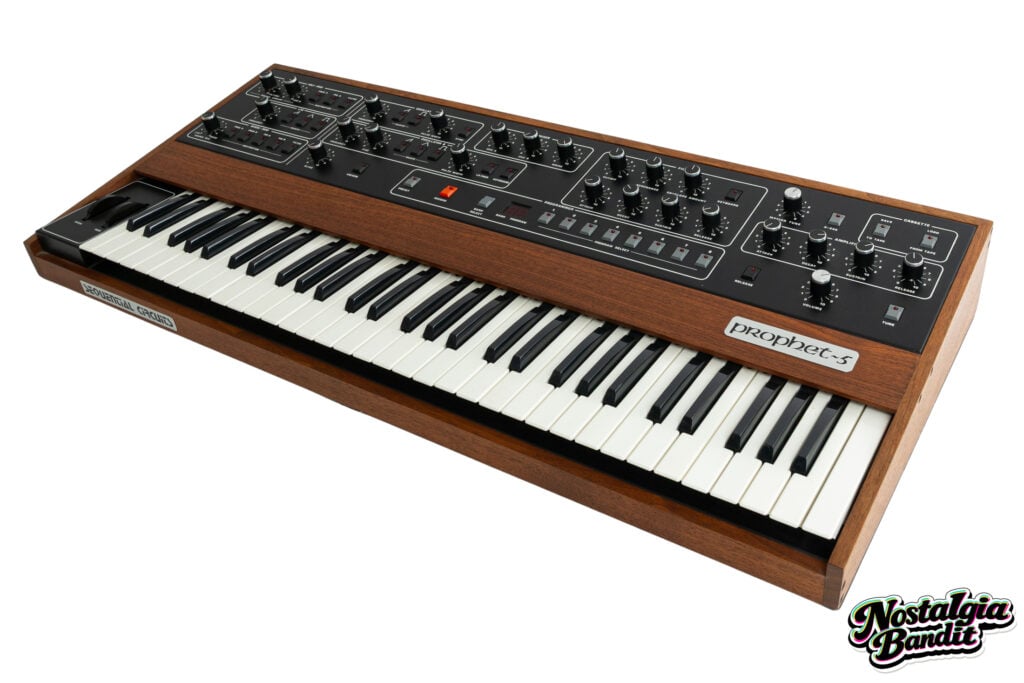
Lot 90 — Greg Hawkes Stage-Played & Studio-Used Sequential Circuits Prophet-5 Synth (1979–1984)
The Sequential Circuits Prophet-5 changed what synthesizers could do. Released in 1978 by Dave Smith — the engineer who would later co-create the MIDI standard with Roland’s Ikutaro Kakehashi, and who continued building synthesizers until his death in 2022 — the Prophet-5 was the first programmable polyphonic synthesizer in commercial production. Five voices of true polyphony, patch memory that could store and recall sounds at the touch of a button, all-analog signal path. For touring keyboardists, it was the instrument that finally meant you didn’t have to rebuild every patch by hand between songs. You could leave the studio sound on the road.
Hawkes used the Prophet-5 from 1979 through 1984 — Candy-O, Panorama, Shake It Up, Heartbeat City. Central to The Cars’ commercial peak. On stage at the US Festival, this was running.
In the January 1982 Musician magazine cover story, Considine asked Hawkes about the synthesizer line that opens “Let’s Go” — the one most fans remembered as a guitar lead before they realized it wasn’t. “It’s a Prophet 5,” Hawkes told him. “The break is actually a Prophet doubled with a real guitar, but that part is just a synthesizer.” The same instrument was running two years later in Battery Studios in London, where the band was tracking Heartbeat City with producer Mutt Lange — best known to that point for AC/DC’s Back in Black. The 1984 Musician gear list for the album credits Hawkes with the Prophet-5 alongside the Fairlight CMI, the Roland Jupiter 8, the Memorymoog, and a Yamaha DX7. By 1984 the Prophet-5 was no longer the newest synth in his rig — but it was the one that had carried the band’s recognizable lead-line vocabulary across five years and four albums.
For a Cars collector, this is arguably the single most important keyboard in the auction. The signature Hawkes synth-leads on the records most listeners still know are largely this instrument’s work.
Click to learn more about Lot 90
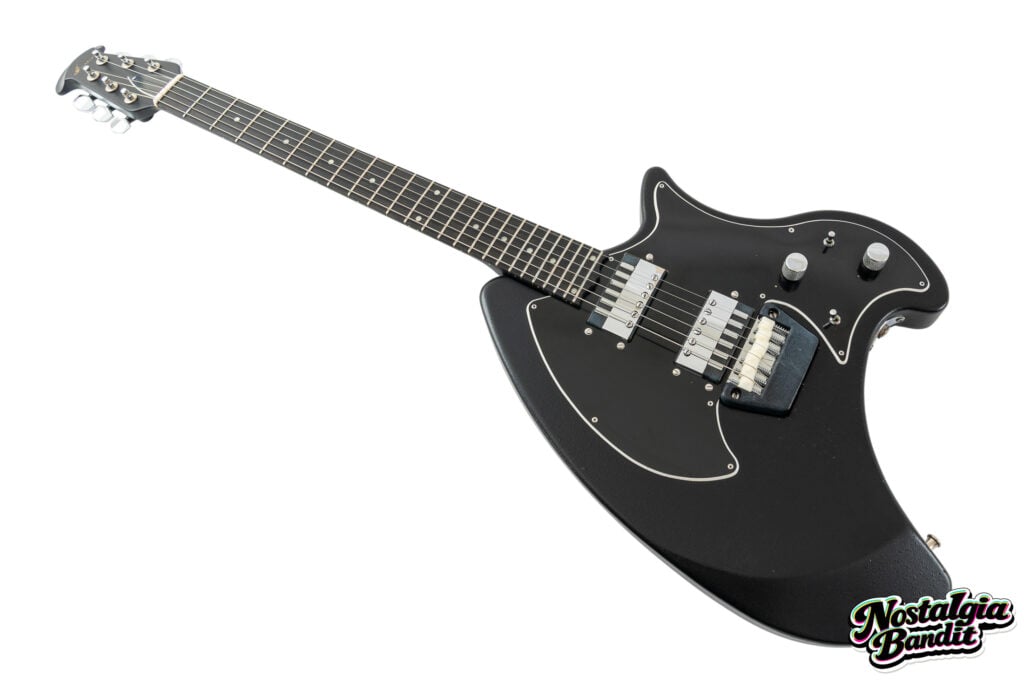
Lot 89 — Greg Hawkes Stage-Played & Studio-Used Ovation Breadwinner Electric Guitar (1976–1988)
The Ovation Breadwinner was a strange instrument from the start. Released by Ovation in 1971, it was the company’s first solid-body electric guitar — and Ovation was best known for round-back acoustics, not electrics. The Breadwinner had an unusual two-cutaway shape that didn’t look like a Strat or a Les Paul or anything in between, and it shipped with active electronics built in, a relatively rare feature for guitars in that era. Ovation marketed it as a working instrument for working musicians — a bread-winner, hence the name. Production ran from 1971 to about 1983.
Greg Hawkes wasn’t only a keyboardist. The 1984 Musician magazine gear list for Heartbeat City credits him with the Fairlight CMI, the Roland Jupiter 8, the Memorymoog, the Prophet-5, the Yamaha DX7 and DX9, the Mini-Korg, and a PPG 3.2 Wave — but he played guitar across the catalog too. The Breadwinner in this auction is one of those instruments.
The lot appears on the back cover of the band’s third studio album, Panorama (1980). The album sleeve — photographed by Paul McAlpine, designed by drummer David Robinson — shows all five Cars in a circular composition viewed from above. Hawkes is the figure in the white shirt and tie, Buddy Holly glasses, almost still inside the chaos of the layout, holding the Ovation Breadwinner. The instrument on that sleeve is the instrument in this auction.
Panorama was the album Considine’s 1984 Musician piece would describe as the band’s most adventurous record — “the one that swung to the left the most,” as Hawkes put it. It was also the album that didn’t quite land commercially relative to the first two Cars records, partly because the textural experimentation had pushed past where casual listeners could follow. (Shake It Up would be the corrective in 1981; Heartbeat City would be the full reset in 1984.) For the working catalog of Hawkes’s gear from that era, the Breadwinner is the rare visible-in-period guitar — a piece of equipment documented in the band’s own album art, held by the player who used it.
Worth flagging: this isn’t the only Breadwinner in the auction. A separate lot features a white Breadwinner used by Siouxsie and the Banshees, with documented use by Robert Smith during his Banshees tenure (1979–1984). Two distinctive bands at the New Wave / post-punk crossover, both reaching for the same unusual American guitar.
Click to learn more about Lot 89
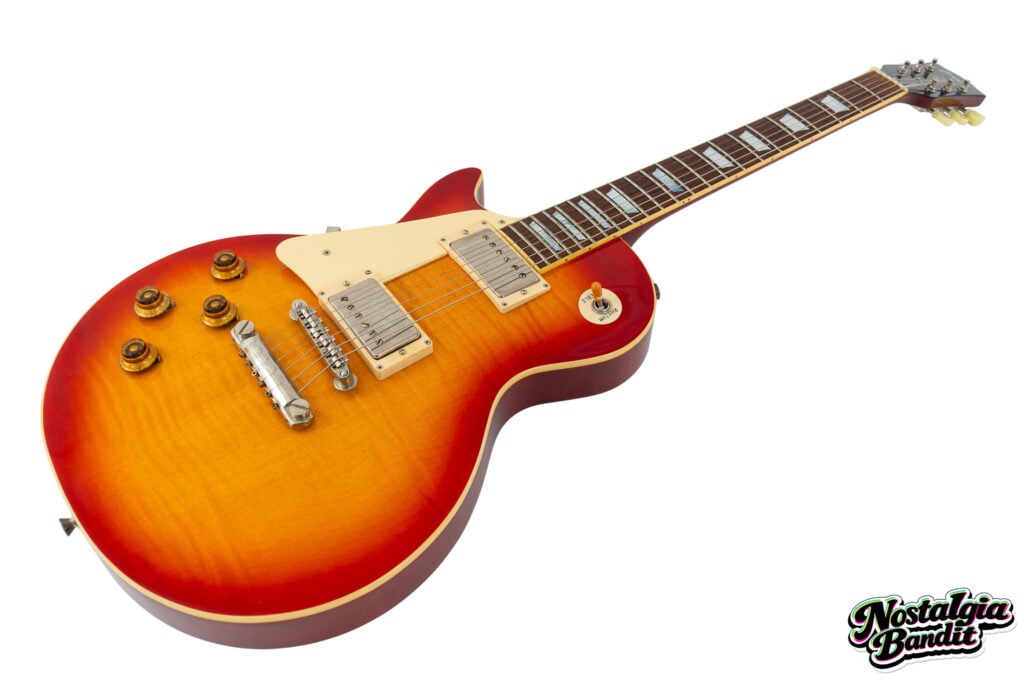
Lot 88 — The Cars | Elliot Easton Stage-Played & Photo-Matched Greco EGF-1000 Super Real Guitar (1980)
The photo-match is to a specific show: Madison Square Garden, New York City, December 4, 1980.
The Cars were two months into the Panorama tour. They were headlining with XTC opening — a bill that captures both bands at very specific moments. Panorama had come out in August. XTC’s Black Sea had come out in September. Two New Wave bands, one American and one British, both making music that pushed at the edges of their respective audiences, on the Madison Square Garden stage together. Tickets ran around eleven dollars.
The photo-match itself is unique. It’s confirmed against a series of period photographs taken at the Garden that night by a photographer — physical color prints from 1980 — which document the specific wood-grain pattern of this guitar’s flame-maple top as it’s held by Easton on stage. The grain is a fingerprint. The instrument photographed at the Garden on December 4, 1980 is the instrument in this auction.
What makes the guitar itself unusual goes beyond its stage history. Easton plays left-handed, and this Greco was custom-built for him by the manufacturer — one of only two left-handed EGF-1000 Super Real guitars ever produced. Greco approached Easton as part of a Japanese-market endorsement deal, built him the guitar to his specifications, and featured him in their period advertising for the Super Real series in Japanese music magazines. The standard right-handed EGF-1000 listed at ¥100,000 in Greco’s domestic catalog. The left-handed version was a custom-build commanding ¥120,000.
The Greco EGF-1000 Super Real was the top-tier Japanese-domestic Les Paul-style guitar from the late 1970s and early 1980s. Greco was a brand owned by Kanda Shokai, built by Fujigen Gakki — the same factory that built guitars for Ibanez, Yamaha, and (later in the 1980s) Fender Japan. The Super Real series was a deliberate effort to build the Japanese market’s answer to the high-end American Les Paul: better wood selection, period-correct hardware, careful attention to neck profile and body weight. They were primarily made for the Japanese domestic market and rarely officially imported to the United States.
In a 2014 letter included with the lot, Easton himself confirmed the chain of custody: “This letter is to certify that the left handed Greco Super Real guitar (one of 2 lefties made) was originally owned by me and sold to David Jaschke.” That’s signed primary-source provenance from the original owner.
For the New Wave / late-’70s collector world, an Elliot Easton stage-played guitar is rare. An Elliot Easton stage-played Japanese-market guitar featured in period Greco advertising is rarer. An Elliot Easton stage-played, custom-built, one-of-only-two-lefties-made Greco — photo-matched to Madison Square Garden, with a letter of provenance signed by Easton himself — is in a different category entirely.
Click to learn more about Lot 88
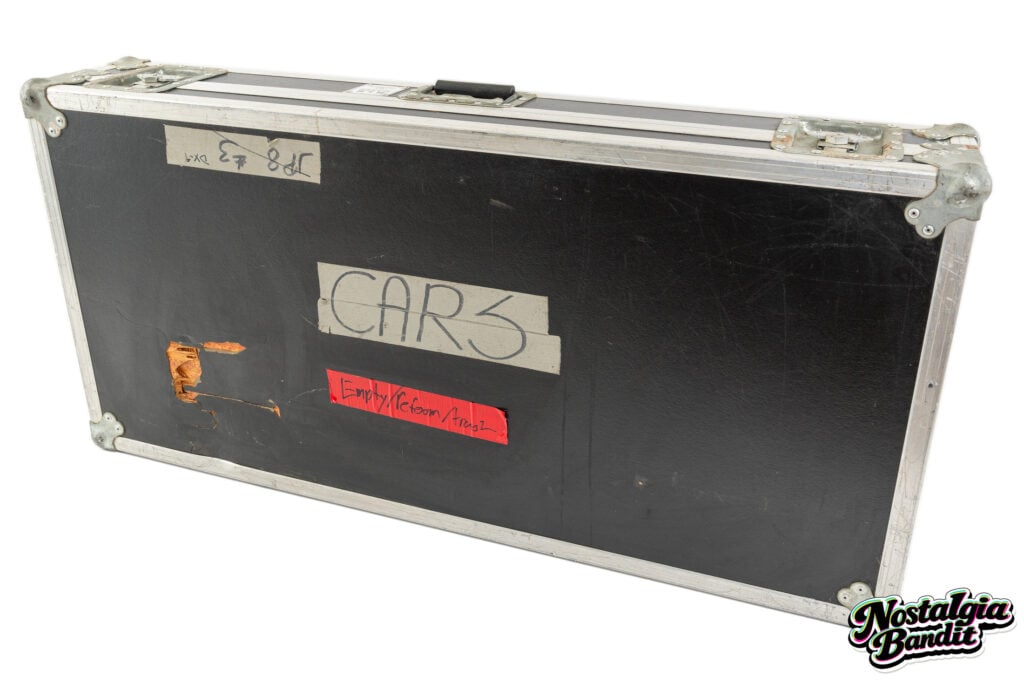
Lot 87 — The Cars | Greg Hawkes Touring Keyboard Road Case, “CARS” Crew-Labeled (1970s–1980s)
Every band has a working catalog of objects that aren’t musical instruments but are still part of the record of how a band actually existed in the world. The keyboard road case in this lot is one of those.
It carried Greg Hawkes’s keyboard during the Cars’ tours from the late 1970s through the early 1980s. The crew labeled the case “CARS” by hand — the kind of marking that wasn’t designed for fans or for cameras, just for the working road crew loading trucks at three in the morning between cities. By the time the case had moved through the band’s touring infrastructure across multiple album cycles — debut, Candy-O, Panorama, Shake It Up — that hand-marked label became something else: a piece of the actual physical record of those tours.
The estimate on this lot ($500–$1,000) puts it as the most accessible Cars-related artifact in this auction. It’s also probably the most personal. A keyboard road case isn’t a recognizable instrument that turns up in promotional photography. It’s the surrounding infrastructure of a working band — the bones underneath the visible body of work. For a fan of the era who wants something tangible from those tours without committing to a five-figure synthesizer, this is the lot.
Click to learn more about Lot 87
September 4, 1982, Forty-Three Years On
The five members of the Cars who walked off Wozniak’s stage on September 4, 1982 had no way of knowing what was coming. Heartbeat City was eighteen months away. “Drive” with Benjamin Orr’s vocal would become the song that scored Live Aid’s famine-relief appeal in 1985. The Rock and Roll Hall of Fame induction wouldn’t happen until 2018. By then Orr had been gone for eighteen years, and Ocasek would be gone within a year of the ceremony.
Greg Hawkes is still here. He turned seventy in 2022 and told Jim Sullivan in conversation that he was, in any practical sense, retired from full-scale touring. He plays the Cars catalog locally now with a Boston band called Eddie Japan. The pressure, as his wife Elaine reportedly put it, is off.
But the gear is still here too. The ARP Omni Mark 1 that ran the string-pad textures underneath “Just What I Needed” on stage at the US Festival. The Sequential Circuits Prophet-5 that played the synth-line in “Let’s Go” that everyone thought was a guitar. The Ovation Breadwinner that’s pictured on the back cover of Panorama. The Greco EGF-1000 that came home with Elliot Easton from somewhere in the late-1970s gear world and that he played at Madison Square Garden on December 4, 1980. The road case the hand-labeled “CARS” while loading trucks before sunrise.
Five objects from a band that fit nowhere by design and built a sound nobody else could replicate. The auction closes June 13. Whoever wins each lot becomes the next chapter in the story of these specific objects — the next caretaker of artifacts that were on stage in front of two hundred thousand people on a day the decade pivoted under their feet.
That’s where it goes from here.
Jason