The Last Frivolous Night
The eighteenth MTV Video Music Awards aired live from the Metropolitan Opera House at Lincoln Center on the evening of Thursday, September 6, 2001. Jamie Foxx hosted his first VMAs that night. The show ran long.
The country had spent the late nineties bracing for Y2K — the predicted global computer collapse, the supplies-in-the-basement panic, the bunker rehearsal that turned out to be nothing. The whole thing had ended in a global shrug, and the room that night reflected that confidence. The disaster that was actually coming had been predicted by no one. It was five days away from this room.
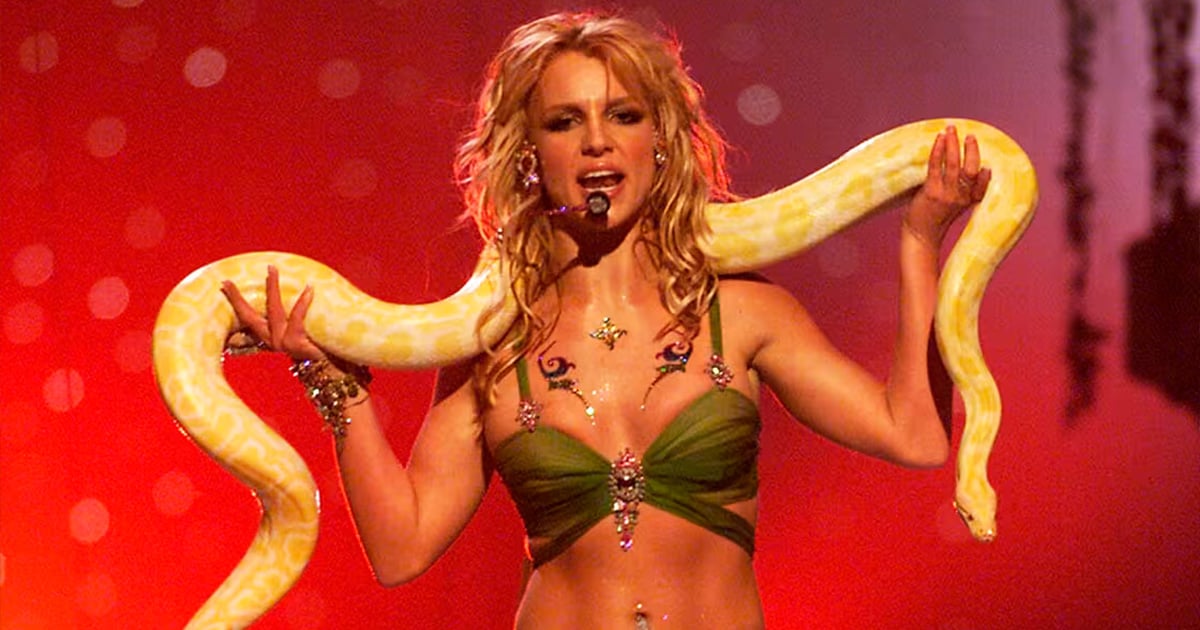
The room was every flavor of pre-9/11 American pop culture inside one hall. Britney Spears performed “I’m a Slave 4 U” with an albino python draped across her shoulders. NSYNC performed “Pop” and Michael Jackson walked on at the end. Fatboy Slim’s “Weapon of Choice,” the Spike Jonze video of Christopher Walken tap-dancing through an empty hotel lobby, took home six awards. Jennifer Lopez arrived with her fiancé Chris Judd. Pamela Anderson arrived with Kid Rock. Macy Gray wore a dress that instructed viewers to buy her new album.
Limp Bizkit won Best Rock Video for “Rollin’.” The video had been filmed the previous year on the roof of the South Tower of the World Trade Center — twenty-two hours of shooting time, on top of one of the two tallest buildings in New York. Four days after the VMAs, on Monday, September 10, 2001, the band received a letter and a fruit basket from the Port Authority of New York and New Jersey thanking them for featuring the towers in the video and congratulating them on the award. Fred Durst had the letter framed. He would later say it arrived on Monday and the attacks happened on Tuesday.
The past was already in the room before the future arrived. Aaliyah had been scheduled to present an award that night. Twelve days before the show, on Saturday, August 25, the twenty-two-year-old singer had been killed when an overloaded Cessna 402 went down on takeoff from Marsh Harbour Airport in the Bahamas, returning her from the filming of a music video. Janet Jackson, Missy Elliott, Timbaland, Ginuwine, and Aaliyah’s brother Rashad came onstage to remember her. A clip of Aaliyah speaking about her life played. The room went quiet, then loud again.
U2 received the Michael Jackson Video Vanguard Award. They brought the surviving Ramones onstage and dedicated the trophy to Joey Ramone, who had died of lymphoma five months earlier. (Joey died April 2001; Dee Dee Ramone would die the following year; Johnny in 2004.) The room applauded that, and the show kept moving.
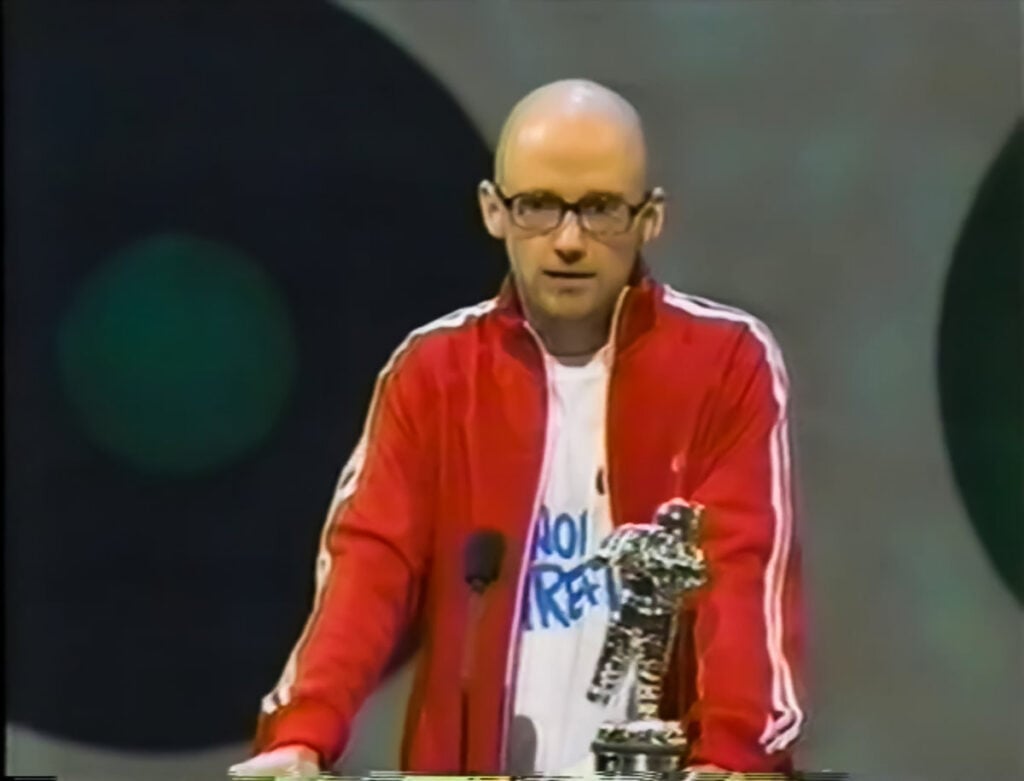
Best Male Video was, on the face of it, the least likely category to register as the night’s pivot. The nominees were Eminem featuring Dido for “Stan,” Lenny Kravitz for “Again,” Nelly for “Ride Wit Me,” Robbie Williams for “Rock DJ,” and Moby featuring Gwen Stefani for “South Side.” “Stan” was, and remains, widely considered one of the most accomplished music videos of its era — a four-minute short film built around a letter from a fan who is about to drive his pregnant girlfriend off a bridge. Moby — bald, vegan, electronic, born Richard Melville Hall, with an ongoing public quarrel with Eminem over Eminem’s lyrics — won.
The “South Side” video, directed by Joseph Kahn, is a parody. Moby in garish fur. Fake gold teeth he visibly resents wearing. A convertible “cruise” filmed inside a studio with women and bottles of champagne and a car that never moves. Bare-room “artistic” shots of Moby and Stefani holding a single potted sunflower. Everything the video lampooned was happening, more or less, somewhere else in the room that night. It won anyway. Gwen Stefani, featured on the track, became the first female artist to win in the Best Male Video category. She would win Best Female Video the same night, featured on Eve’s “Let Me Blow Ya Mind.” Two trophies, both for being someone else’s vocalist.
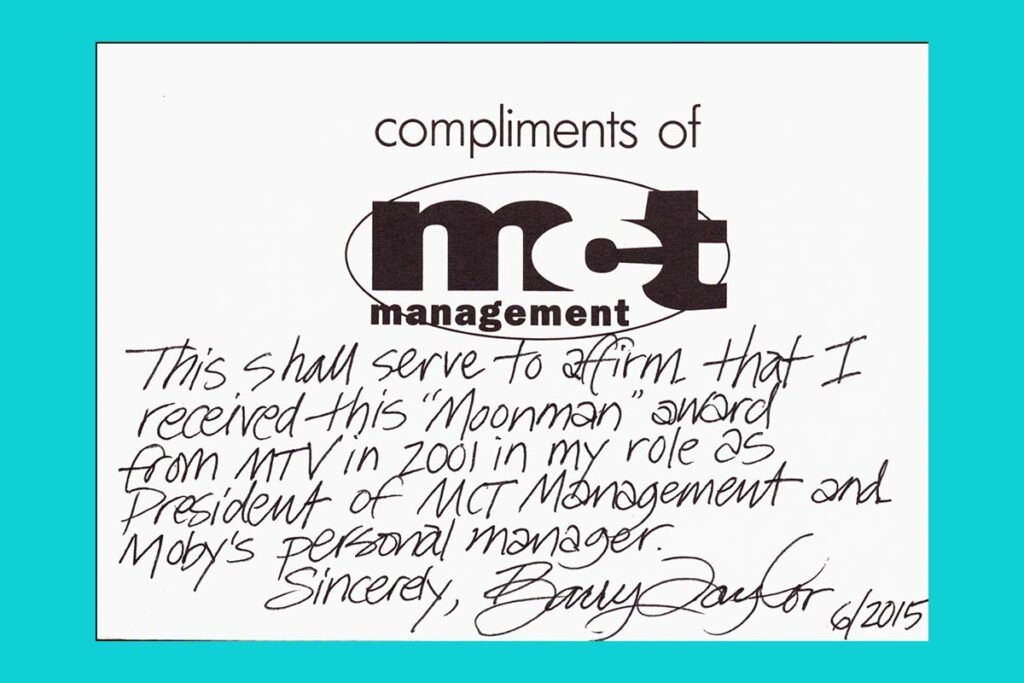
When the Moonman for Best Male Video was handed out, it was routed — per MTV’s standard practice of that era, in which physical trophies went to the management company rather than the artist — to MCT Management. The plaque was engraved to Barry Taylor’s company.
The Birthday
Moby’s thirty-sixth birthday was September 11, 2001.
He had spent the night of September 10 out late celebrating. He lived in a SoHo loft, about a mile north of the World Trade Center. The plan for the morning was to sleep in.
The phone started ringing around 8:30. Then it rang again, and again. He woke up and went to the roof. From there he could see both towers of the World Trade Center on fire. He went back inside and started writing.
What he wrote that morning is preserved by the PBS NewsHour, which republished a fragment in 2011 on the tenth anniversary. The post opens: “i just woke up to the sound of an explosion and people screaming.” Lowercase, unpunctuated at the start, the way he had always written on his journal. He described shaking. He described not knowing what to say. He described the smell of his apartment, which by then smelled like smoke.
He kept writing in the days that followed. The blog he posted to — hosted at moby.com, a personal site he had been running for years — became, per the NewsHour’s later framing, one of the first by a musician at the time. He wrote about the National Guard at the corner. He wrote about the smell of the air. He wrote about the smoldering rubble that remained where the towers had been. Some of what he wrote, the NewsHour later noted, got him into trouble, and some bad press. He kept writing anyway.
The pre-9/11 internet had not yet figured out what a celebrity’s voice was supposed to sound like in a public crisis. There was no playbook. There were no statements written by publicists. There were no measured Notes-app screenshots posted to social platforms that did not yet exist. There was a musician at a desk in a SoHo apartment, writing in lowercase, in real time, about what he was seeing from the roof.
The Moonman from the previous Thursday — the one Joseph Kahn’s parody video had won, the one engraved to MCT Management, the one that beat “Stan” — was, by that morning, less than five days old. It was already a trophy from another era.
Three weeks earlier Moby had founded the Area:One Festival, a traveling summer tour with Outkast, New Order, Nelly Furtado, Incubus, and Paul Oakenfold. He was at the commercial peak of a career that had begun in Connecticut hardcore bands and arrived at Play — the 1999 album that, by licensing every single one of its eighteen tracks for film, television, and advertising, had become one of the defining commercial blueprints of the late-Y2K music industry. The follow-up album, 18, was in production. He had been writing it through 2000 and 2001. On the morning of September 11, he was a thirty-six-year-old man in an apartment that smelled like smoke, writing what he was looking at out the window, on a website that was about to become evidence of what the day had actually felt like to someone who watched it from a roof — and, like the towers themselves, those words are gone now too.
Editor’s note, 2026. Moby’s September 2001 blog posts no longer exist on the live web. The site at moby.com still runs, but its archive reaches back only to around 2005; the Wayback Machine has nothing earlier for the domain either. The phenomenon now has a name: digital decay. A Pew Research Center study published in May 2024 found that 38% of webpages that existed in 2013 had vanished by 2023, and that roughly a quarter of all pages from any point in that decade are now unreachable — deleted, hosted on shuttered platforms, broken by URL changes, moved behind paywalls, or quietly nuked. At the dawn of the World Wide Web, we believed we were building a permanent record. A successor to cave-wall etchings. Something more durable than paper. What we built turned out to be more fragile than any of it. Moby’s real-time account of watching the towers fall from his roof now survives only because a PBS NewsHour journalist, writing on the tenth anniversary in 2011, quoted a fragment of it before the original disappeared.
The album that followed, when it came out in May 2002, would be called 18. Its most-played single, “We Are All Made of Stars,” Moby has said he wrote in direct response to the attacks. The song became one of the first major-label rock-and-electronic hybrids of the post-9/11 era to land in the new tonal register of the moment: mortality-aware, sincere, weary of irony.
But that was later. On the morning of September 11, 2001, before any of the work that would follow, there was only a man on a roof, his phone, his keyboard, and what he could see.

The Vacuum
What happened to American pop culture in the seventy-two hours after September 11 was not, at first, a transformation. It was a vacuum.
Tours canceled across the country. Cover shoots got pushed. The Britney python and the Limp Bizkit-on-the-tower register suddenly had no plausible context for landing — not as entertainment, not as escapism, not as anything. The Best Rock Video winner from the previous Thursday had been filmed on a building that no longer existed.
The album release calendar did not care that the day in question was September 11. Tuesday was Tuesday. Jay-Z’s The Blueprint came out that day and went straight to number one, selling 427,000 copies in its first week — into a market where most Americans were not thinking about new records at all. Bob Dylan’s Love and Theft came out the same day, an album whose lyrics about fire, towers, and high water listeners would spend the following weeks struggling to read past. Nickelback’s Silver Side Up, containing “How You Remind Me,” came out that day. So did Slayer’s God Hates Us All. So did Mariah Carey’s Glitter soundtrack.
The previous Tuesday — September 4 — System of a Down had released Toxicity. The album hit number one on the Billboard 200 chart on the morning of September 11, the same morning that its lead single, “Chop Suey!” — with the line self-righteous suicide — was being pulled from radio rotation across the country. The band would later describe the disorientation of getting one phone call telling them the album had topped the charts and another telling them the song was off the air, both before the second tower had finished falling.
By Thursday, September 13, Clear Channel Communications — the largest owner of radio stations in the country, with over 1,100 stations under its umbrella — circulated an internal memo listing more than 150 songs as “lyrically questionable” to play in the wake of the attacks. It was not, technically, a ban. It was a list of songs that program directors might prefer to skip. John Lennon’s “Imagine.” James Taylor’s “Fire and Rain.” AC/DC’s “Shot Down in Flames.” The Bangles’ “Walk Like an Egyptian.” Peter Gabriel’s “When You’re Falling.” Every Rage Against the Machine song ever recorded — the only entire catalog on the list.
What the memo actually documented was a culture that had, overnight, lost the ability to play itself back at itself without flinching. Lyrics about flying meant something different now. Lyrics about towers meant something different now. Lyrics that had read for years as flippant or ironic or simply rhythmic suddenly read as cruel.
The cultural opening that followed was real, and it was specific. What worked, in the months after, was sincerity. Mortality awareness. A weariness of irony. Anti-corporate identity. The musical vocabulary of the bald-vegan-electronic-Moonman-winning night of September 6 — meta, knowing, parodic, expensive — fell out of step almost overnight.
One illustrative footnote, before we get to the bands already at work. On the morning of September 11, a twenty-four-year-old comic book illustrator named Gerard Way was on a train into Manhattan when he saw the second plane hit the south tower. Within days, he had decided to start a band. The band became My Chemical Romance. The cultural opening was real enough to make new musicians, not just reshape existing ones.
The three records that filled the vacuum were not made in response to the attacks. Two had been written years earlier. One was already in production at a studio on a different continent. But the world they came out into was a world that finally needed exactly what they were.
Coldplay
Two days after the towers fell, Chris Martin walked into Mayfair Studios in London with a song.
He has said many times, in roughly the same words each time, that he wrote it on 9/11 and that the band recorded it on 9/13. The four of them were confused and frightened, like everyone else. What they wanted, in that room on that day, was to hit their instruments as loudly as they could. The song they recorded was “Politik.” It is the song that opens A Rush of Blood to the Head.
The detail worth pausing on is that Coldplay were not in the studio because they were preparing for a new album cycle. They were still on the road for the old one. The Parachutes tour had been running since June 2000 and would not wrap until December 2001 — a hundred and thirty shows in support of the band’s debut. The Rush of Blood sessions began in the middle of the tour, with September 13, 2001 as the first day of tracking. The band came off the road for a few days, walked into Mayfair, recorded the song Martin had written two days earlier, and then went back to playing the old record. The album that followed was made in parallel with the touring life the band was still living, not after it.
A year earlier they had been a different band. Parachutes, released July 2000, was a quiet record — falsetto, acoustic guitar, “Yellow,” tender melancholy. They were a soft-edged British indie band on a successful first album, scheduled to take their time on the follow-up, doing what most bands did between records: writing slowly, settling into the shape of their second act. Rush of Blood, when it arrived August 26, 2002, was none of that. It was heavier. More direct. More anthemic. More confrontational with mortality. “Politik” opens with a hammered piano-and-guitar figure, drums that sound like marching, and a vocal that asks for peace, for time, for someone to give Martin his missing pieces back. “In My Place” follows, then “God Put a Smile Upon Your Face,” then “The Scientist,” then “Clocks.” Coldplay had stopped apologizing. The songs are pounded, not played — the band sounds like it has shown up to fight — and they are built for rooms much larger than the rooms Coldplay had played the year before. By the time the album reached the United States that summer, the band was on its way to becoming what it has been ever since: the largest rock band of its generation.
What they did with the new scale became part of how they got there.
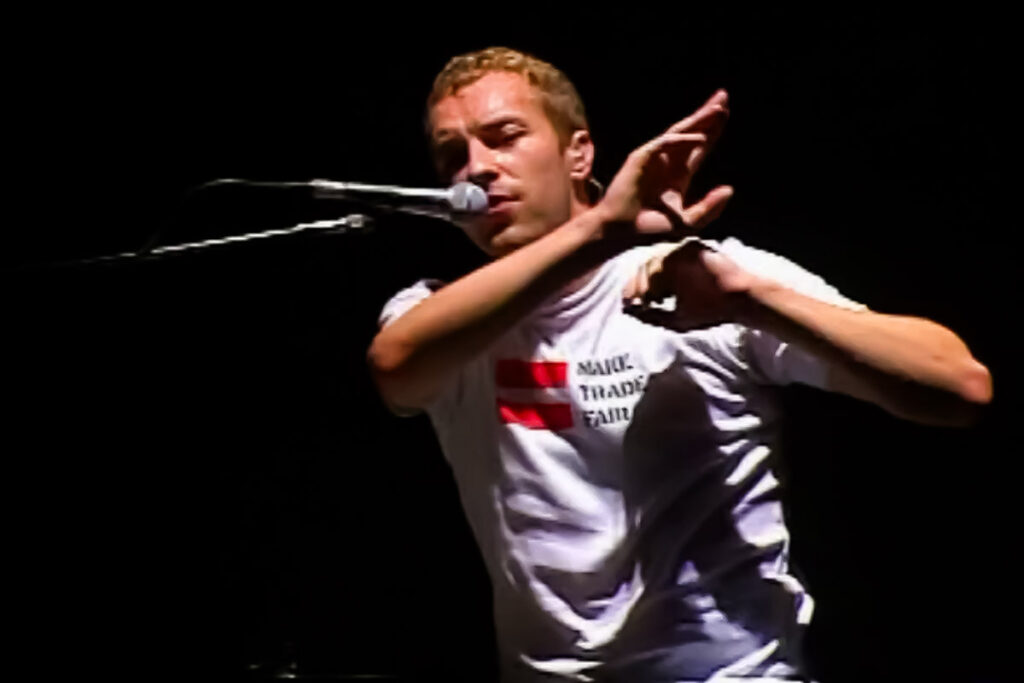
On April 11, 2002, four months before the album’s release, Oxfam launched a multi-year global campaign called Make Trade Fair, calling for changes to international trade rules affecting farmers and producers in developing countries. Martin became one of its most visible advocates. He wore the campaign T-shirt — white, with the red equality sign above the stacked “MAKE TRADE FAIR” wordmark — at shows across the 2002 tour. He wrote MAKE TRADE FAIR.com on the back of his hands before walking onstage, where the URL would be visible in close-up videography of his piano performances. Petition booths went up at venue concourses. Members of the band attended Oxfam events at WTO summits and ministerial meetings. The campaign collected millions of signatures.
In a different cultural moment — say, the moment of September 6, 2001 — soft activism from a rising rock band might have read as gestural. In the cultural moment of 2002, in the months when the country was actively looking for sincerity, mortality awareness, and meaning, it landed.
The visual document of that era is Coldplay Live 2003, the concert film released November 4, 2003 and filmed primarily at the Hordern Pavilion in Sydney during the tour. The film captured Martin at the piano with the Make Trade Fair URL still written on his hands, the band moving through the Rush of Blood tracks at arena scale, the audience absorbing music that had been written in studio sessions that began on September 13, 2001. The DVD was nominated for Best Long Form Music Video at the 47th Annual Grammy Awards in February 2005. It lost to Concert for George, the all-star tribute to George Harrison.
The Make Trade Fair shirt Martin wore on tour was not a single garment. He wore many of them, across the 2002–2004 stretch — they were Oxfam’s, mass-produced for the campaign — but he modified them. The standard shirt was, by his account, restrictive on stage. He cut the necklines down. He cut the sleeves off. He cut the hems short. The shirts came off the rack with a fundraising mission and an equality logo; what they became, in his hands, were working stage garments — band signatures across the front from all four members in black marker, sweat lines, and on the front of one specific shirt, a hand-written inscription in Martin’s own marker: COLDPLAY gig shirt 2004.
That shirt — cut, signed, inscribed by the singer of the band that had, less than three years earlier, walked into a London studio two days after the towers fell — is now passing into its next chapter.
The Flaming Lips
Coldplay wrote their way into the post-9/11 mood. The Flaming Lips had been writing in it for years.
Yoshimi Battles the Pink Robots was released July 16, 2002 — just over ten months after the attacks. By that point, most of the album was already in the can. The songs had been written through 2000 and into 2001. The vocabulary of the record — mortality, fragility, the felt absurdity of being alive at all in a precarious universe — had been the band’s vocabulary for a while.
Wayne Coyne, the band’s frontman, had spent the late nineties watching his father die of cancer. Both of his parents would eventually be lost the same way. Steven Drozd, the band’s drummer and multi-instrumentalist, had spent the early 2000s fighting a long, brutal heroin addiction; he was actively detoxing during the Yoshimi sessions, his struggles bleeding into Coyne’s draft lyrics. The song that would become “Do You Realize??” — the album’s emotional anchor, the song eventually adopted as the official state rock song of Oklahoma — began life as Coyne’s response to a Japanese fan of the band who had traveled across the world to see them perform and then died of a mysterious heart condition.
These were not abstract themes. They were the actual circumstances of the people writing the songs.
The album was already finished when the towers fell. When it landed in the world in July 2002, the country it landed into was a country fluent in the sensibility the Flaming Lips had been building independently for years. Mortality awareness, the weariness of irony, the willingness to ask the simplest question with the straightest possible face — Do you realize that everyone you know someday will die — was what summer-of-2002 radio listeners suddenly wanted to hear. The album spent the next four years building toward its certification as gold in 2006. By then, “Do You Realize??” had embedded itself in the post-attack American imagination as something close to a hymn — played at funerals, at memorial services, on the radio at moments of public mourning, in the closing minutes of TV episodes when a character had died and the screen needed a song to mean something.
The video for “Do You Realize??” was filmed on Fremont Street in downtown Las Vegas on the eighteenth and nineteenth of July 2002.
The director was Mark Pellington. A decade earlier, Pellington had made the video for Pearl Jam’s “Jeremy” — the four-minute MTV short film about a teenager who shoots himself in front of his English class. Pellington had filmed mortality material before. He understood the assignment.
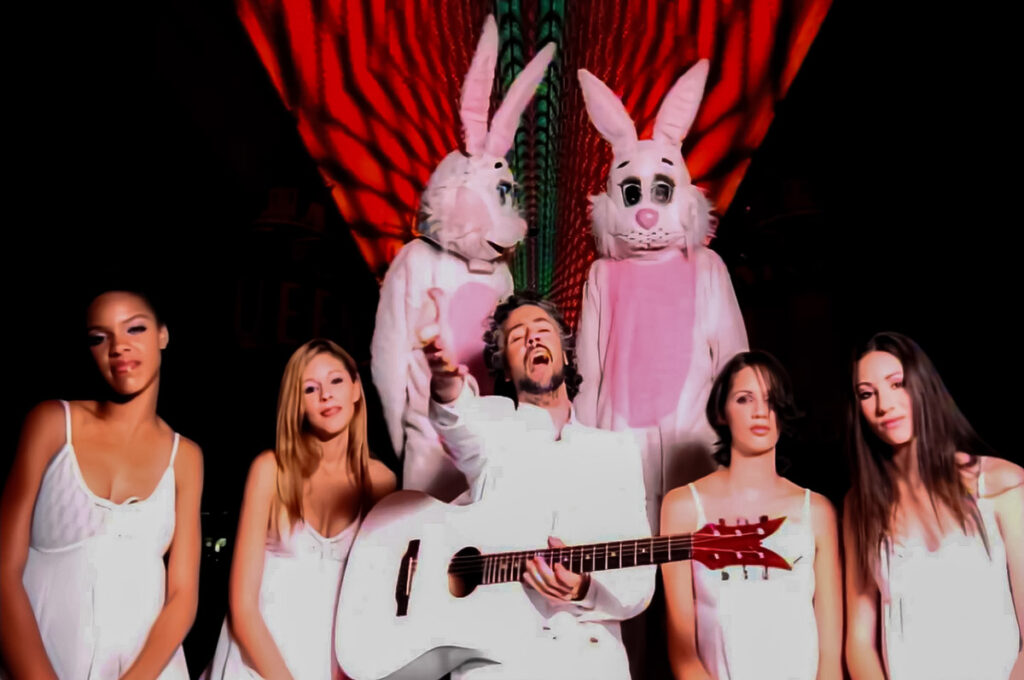
What he made for “Do You Realize??” is, in nearly every visible detail, a piece of the Yoshimi-era universe rendered for its widest audience: Coyne in a white suit with a custom-white acoustic guitar, walking down Fremont Street followed by four models in light dresses; people in pig and bunny and frog costumes drifting through frame; an actual live elephant standing in a casino corridor; long close-ups on women’s faces moving from joy to grief to wonder and back; Coyne being lifted by an unseen force out of a bus stop bench beside a man dressed as a pig, deposited downtown, and then returned to the bench at the end of the song to continue waiting for the bus that never comes.
What makes the video work is the same thing that made “Jeremy” work. Pellington does not flinch. The elephant falls down when Coyne sings of death. The elephant rises again, slowly, when Coyne sings of love. And the dancers — women whose Las Vegas working lives are organized around objectification and lust — are filmed by Pellington with wholly different regard. He holds the camera on their faces past the point where music video convention would cut away. What he gives the viewer, in those held seconds, is their true beauty, which is their humanity. The white costumes and guitar stand in stark contrast to the muted and muddy reds and oranges of the city of synthetic spectacle.
This is what the song has done in the world, and continues to do. The video’s official YouTube page hosts more than ten million views and more than five thousand comments — and the comments continue to accumulate, daily, twenty-four years after the song’s release. They are not the usual comments-section traffic. They are personal. People come to write about parents and partners and children lost to cancer, to suicide, to age. They write about songs played at funerals, at memorial services, on deathbeds. They write about hearing the song on the radio the day after a death and feeling, briefly, accompanied. They write to thank The Flaming Lips, by name, for making the song that helped them grieve. They write to say they want the song played at their own funeral when the time comes. A song that began as Wayne Coyne’s response to one Japanese fan who died has become, by accumulation, a vessel that strangers fill with their losses.
The guitar in Coyne’s hands across the two-day shoot was an Epiphone PR-150 — a standard-finish dreadnought acoustic with a cherry-red wood top. Three days before filming began, on July 15, 2002, the production team customized it for the shoot by applying white adhesive panels over each of the guitar’s surfaces. The seams and overlap lines are visible if you know to look. Where the white material has lifted at the lower strap pin, the original cherry wood is exposed. A wood screw was driven directly into the side of the neck heel during production to accommodate a strap, bypassing a standard strap-button installation. The strap — the original white canvas one Coyne wore in the video — is still attached.
After filming, Coyne handed the guitar to the music video’s executive producer. It stayed in his care for more than two decades. The instrument — the white-skinned, hastily-prepped, screw-modified Epiphone Wayne Coyne played on Fremont Street on the eighteenth and nineteenth of July 2002, the guitar around which Mark Pellington built one of the era’s quiet mortality films — is now passing into its next chapter.
The White Stripes
The third record arrived as a refusal.
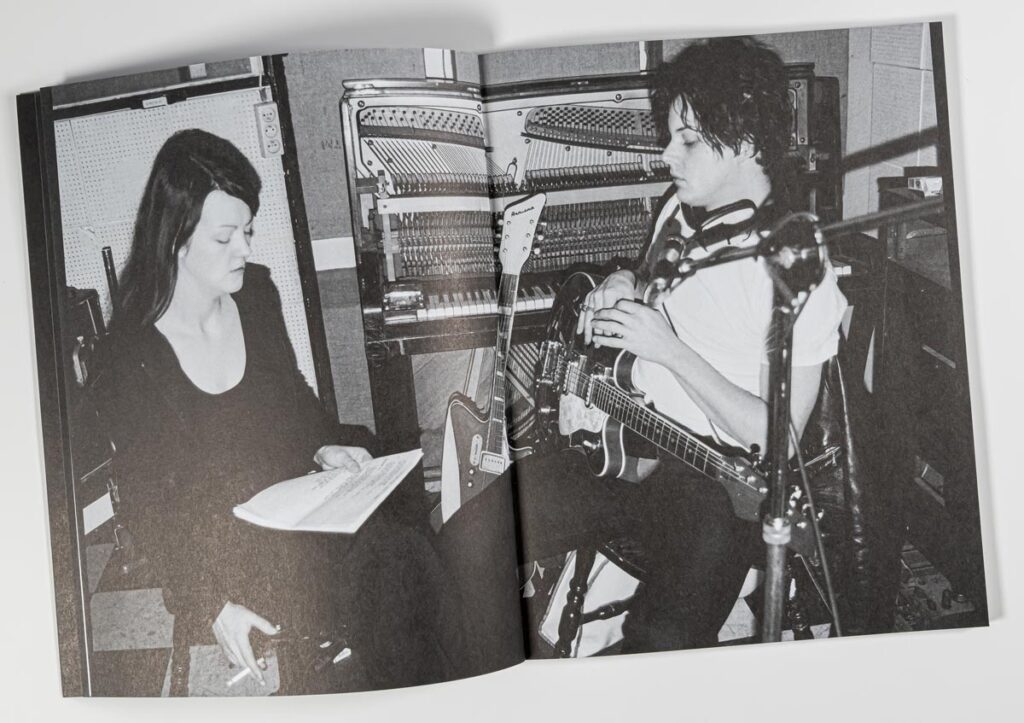
In November 2001, two months after the towers fell, Jack and Meg White flew to East London for the first time to record at Toe Rag Studios. They tracked one song. Then they went home. They came back five months later, in April 2002, for two weeks of sessions that would produce their fourth album, Elephant.
Toe Rag was, then and still is, a studio that refuses the era it operates in. Founded in 1991 by Liam Watson at 166a Glyn Road in Homerton, the facility runs entirely on analog equipment — mostly equipment older than the band recording in it. Studer tape machines. Vintage outboard gear. No Pro Tools. No computers. No digital anything. Watson’s recording philosophy, profiled at the time in Sound on Sound magazine, was a working statement against the way records were being made in 2002. Capturing music meant getting microphones in front of instruments and letting the tape do the rest.
To the question of why a Detroit duo at the commercial peak of their critical reception would fly to East London to record on equipment they could have used in any number of American studios, the answer was philosophical. Jack White had been building his career on a series of refusals. No bass player; the band was guitar, drums, voice. No four-member lineup; everything centered around the number three. No backstage glamour; the red, white, and black uniform on stage every night. No biographical clarity; Jack and Meg were married once, divorced by 2000, and continued to perform as brother and sister. And no digital production. The studio in East London matched the philosophy.
Elephant was released April 1, 2003. The reviews, from publications that had been alert to the band since White Blood Cells two years earlier, used a particular kind of vocabulary to describe it. David Fricke of Rolling Stone called it a work of “pulverizing perfection.” The album hit number six on the U.S. Billboard 200 and number one on the UK Official Albums Chart, was certified 2x-Platinum, won the Grammy for Best Alternative Music Album at the 46th Annual Grammy Awards in February 2004, and received an Album of the Year nomination as well.
The album opens with a riff Jack White had written, on tour in Australia, fifteen months before the Toe Rag sessions began. He had been sound-checking at the Corner Hotel in Melbourne in late January 2002. He played the riff for Meg and for the band’s Third Man Records executive Ben Swank. Swank’s reaction was that the riff was just okay. White set it aside, originally intending to save it for a potential James Bond theme. When the sessions began at Toe Rag, the riff came back out. Watson set up microphones. White ran his vintage Kay hollowbody electric guitar — a thrift-store find, late 1950s, single pickup — through a DigiTech Whammy pedal set to drop the signal an octave. Meg White played a heartbeat kick drum doubled with a floor tom. The song they recorded was called “Seven Nation Army.” It was the album’s opening track and lead single.
What happened next was unintended.
In October 2003, eight months after the single was released, a group of Club Brugge KV supporters from Belgium were in a Milan bar before a Champions League group-stage match at the San Siro against AC Milan. The song was playing in the bar. They started chanting along to the riff — no words, just the seven notes, sung on a single oh. They kept chanting it on the walk to the stadium. They chanted it in the stands. In the thirty-third minute, Peruvian striker Andrés Mendoza scored for Brugge. The match ended one-nil to the underdogs. The Belgian fans took the chant home with them. The club adopted “Seven Nation Army” as their unofficial anthem. In February 2006, when AS Roma visited Brugge for a UEFA Cup match, the Italian supporters heard the chant and took it back to Rome. By June 2006, the Italian national team was using it through their run at the FIFA World Cup. After Italy won the final on July 9, the chant was sung in Rome’s streets late into the night.
More than two decades later, “Seven Nation Army” remains the universal stadium chant. It has been adopted by the NFL, the NBA, college football and basketball, Formula One, the WWE, and football leagues across every continent that has football. Jack White’s response to the song’s afterlife, when asked, has been that he is honored when people chant a melody whose origin they do not know. That, he has said, is what makes a song folk music.
The most anti-corporate, anti-modern, anti-Pro-Tools band of its generation had made — by accident, on a thrift-store guitar through a vintage pedal, in a studio that refused to acknowledge the year it was operating in — the most universally chanted communal anthem of the post-9/11 era.
Watson worked the album, by his own description, with a small number of microphones used and reused across the two weeks of sessions. Four of them were Shure S4SD Unidyne III dynamic microphones — manufactured by Shure Brothers Incorporated in an earlier era, period-correct to the analog mission of the studio. Watson placed them, by his own account in a signed letter written years later, on the top of the snare drum, on two positions in front of Jack White’s guitar amplifiers, and on Jack White’s live vocal and guitar rig. They were central to the album’s sound. They are visible across multiple frames of the photographer David James Swanson’s book Pictures from Elephant, which documents the band’s two weeks at the studio.
The microphones stayed in Watson’s care across the decades that followed, in continuous use on records that came through Toe Rag in the twenty-plus years since Elephant was tracked. One of the four — Watson has documented that he does not know which microphone served which role on the album, only that all four were used across all three positions — is now passing into its next chapter.
Five days in September. One funeral nobody knew they were attending. One eyewitness on his thirty-sixth birthday. Three records made by artists who never planned to write the soundtrack for the cultural pivot they ended up writing.
Twenty-five years on, the day still holds a particular kind of gravity in pop culture. The four artifacts in this auction are documentation of what that day produced — not the news footage, not the photographs that the world has seen ten thousand times, but the working objects from the artists whose music filled the cultural space that opened. A Moonman from the funeral. A shirt from a band that wrote its breakthrough song while the smoke was still rising over lower Manhattan. A guitar from a video that asked, in the city of synthetic spectacle, whether you realize that everyone you know is going to die. A microphone from the album that rejected everything the funeral was attended by — and accidentally made the universal communal anthem of the era.
These are not commemorative items. None of them were made to mark the cultural pivot they now belong to. They were made because four bands had work to do, and the work landed in a country that needed exactly what the work was.
Moby’s real-time account of the morning of September 11, 2001 no longer exists on the live web. The original blog posts are gone. The Wayback Machine never caught them. What remains, of that morning, are a fragment quoted by PBS NewsHour in 2011, a photograph he later posted to Facebook, and the Moonman from the previous Thursday — a piece of physical hardware engraved with a date and a category, which has survived two decades and now comes to the open market.
This is what the artifact-journey frame means in practice. The digital record turned out to be more fragile than anyone thought it would be. The physical objects that came out of the same cultural moment turned out to be more durable. Twenty-five years on, the trophy is still a trophy. The shirt is still a shirt. The guitar still plays. The microphone still picks up a snare drum or guitar amp or vocals.
The auction closes Saturday, June 13, 2026. The full catalog of ninety-six lots — including the four discussed here — is at nostalgiabandit.com.
Every artifact has a history. We are, all of us, only its caretakers for as long as it stays in our care. The history of these four artifacts has been written. The next chapter is yours.
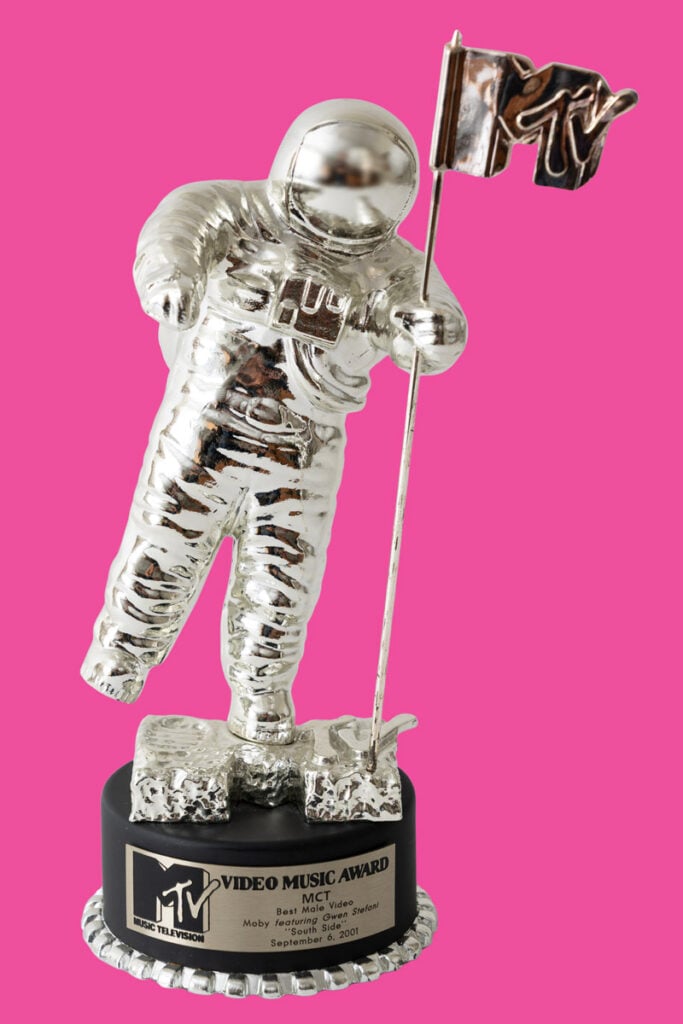
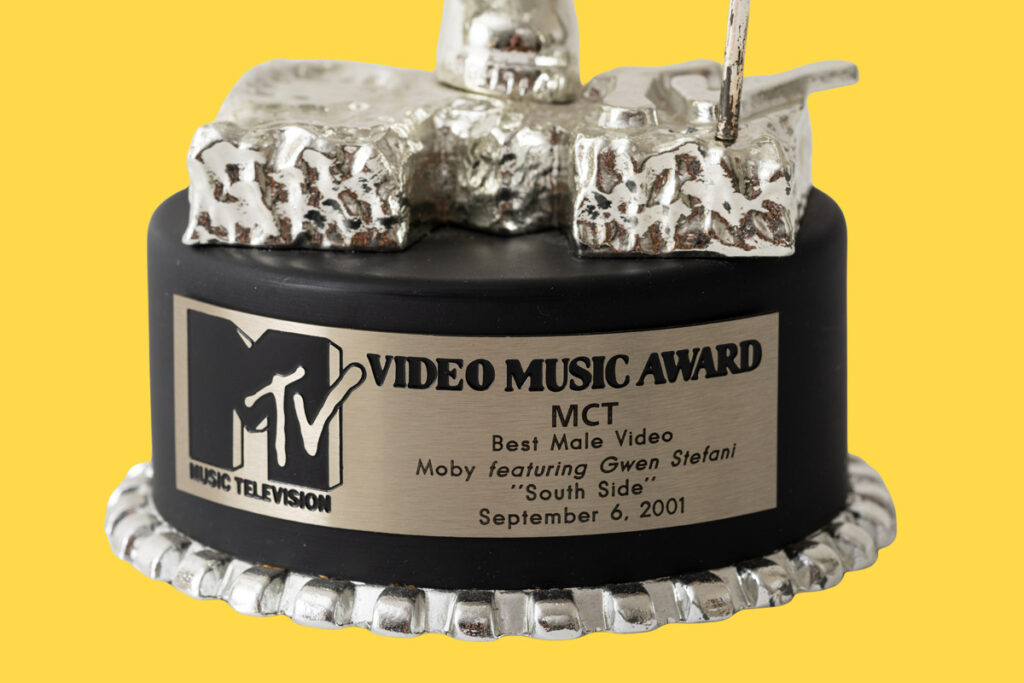
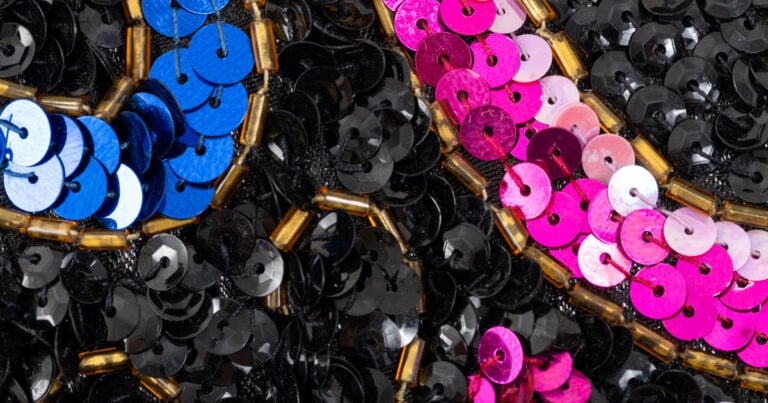
The 2001 MTV Video Music Award for Best Male Video Presented to Moby for “South Side,” September 6, 2001.
“I watch hope come over me.” — Moby, “South Side” (1999)
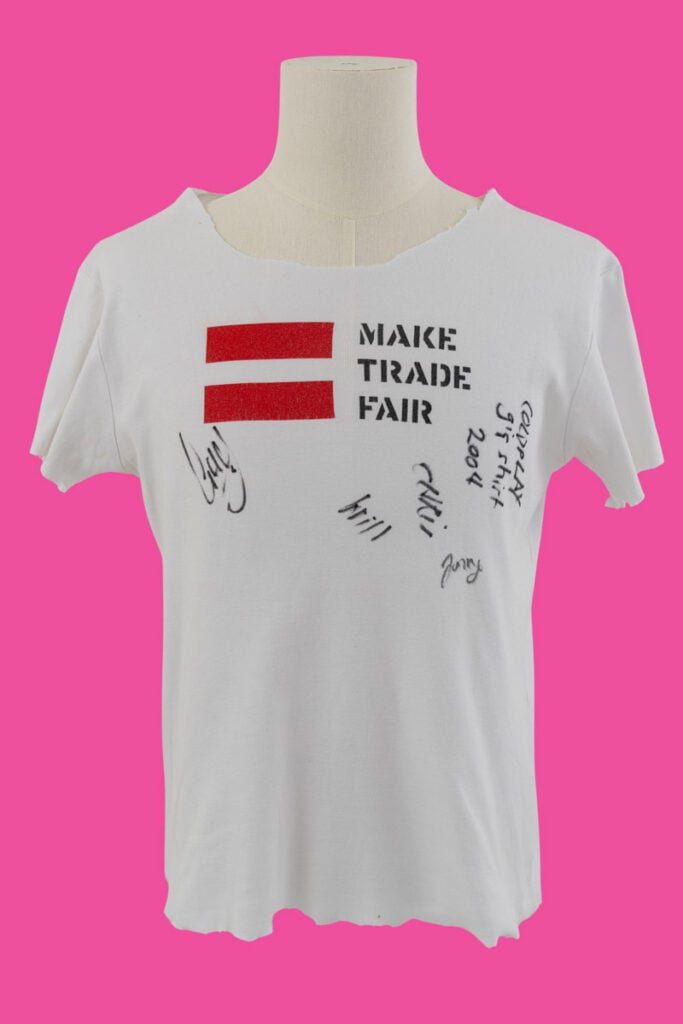
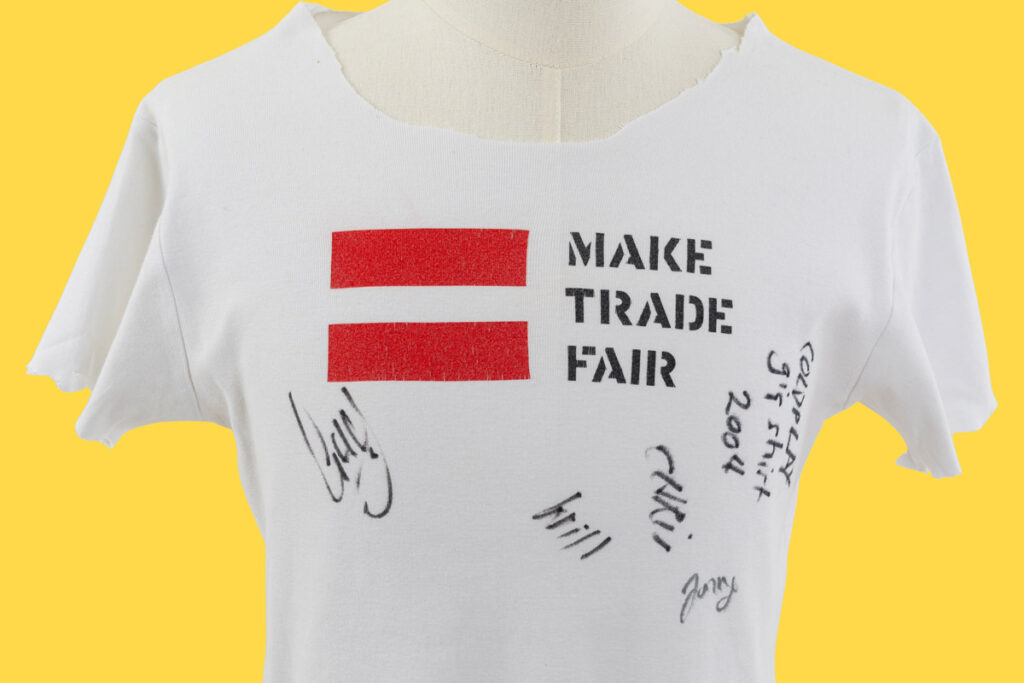
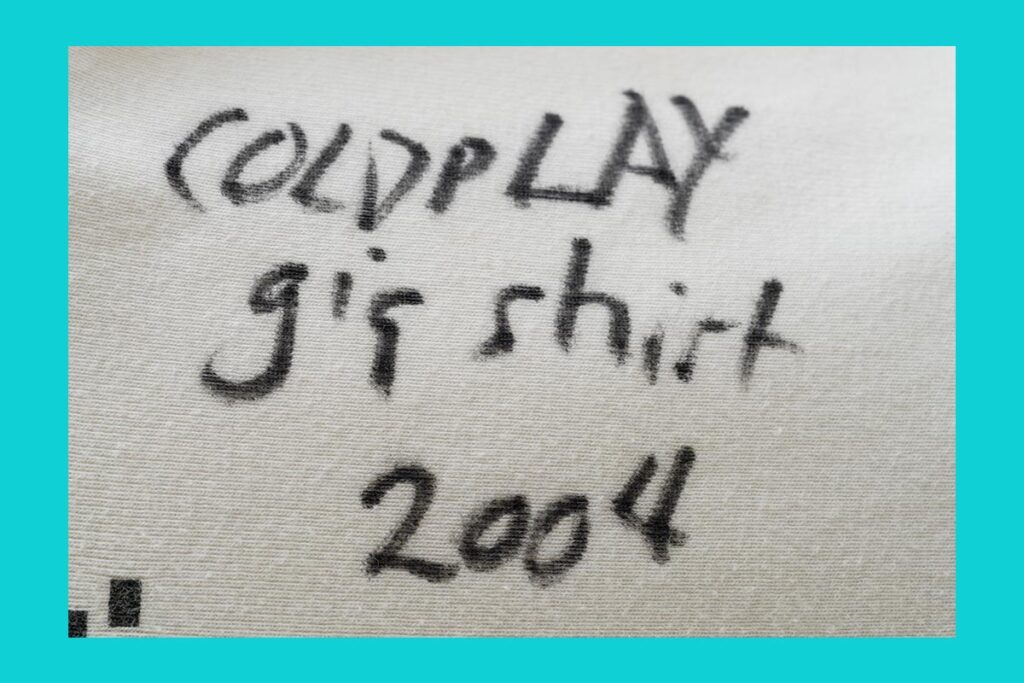
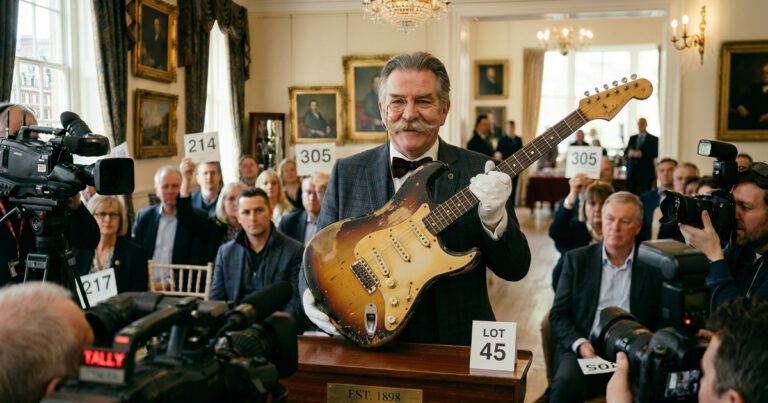
Chris Martin’s Stage-Worn “Make Trade Fair” Shirt Worn by Chris Martin during the 2002–2004 A Rush of Blood to the Head era. Cut and modified for stage use. Signed by all four members of Coldplay. Inscribed by Martin: COLDPLAY gig shirt 2004.
“Give me heart and give me soul.” — Coldplay, “Politik” (2002)
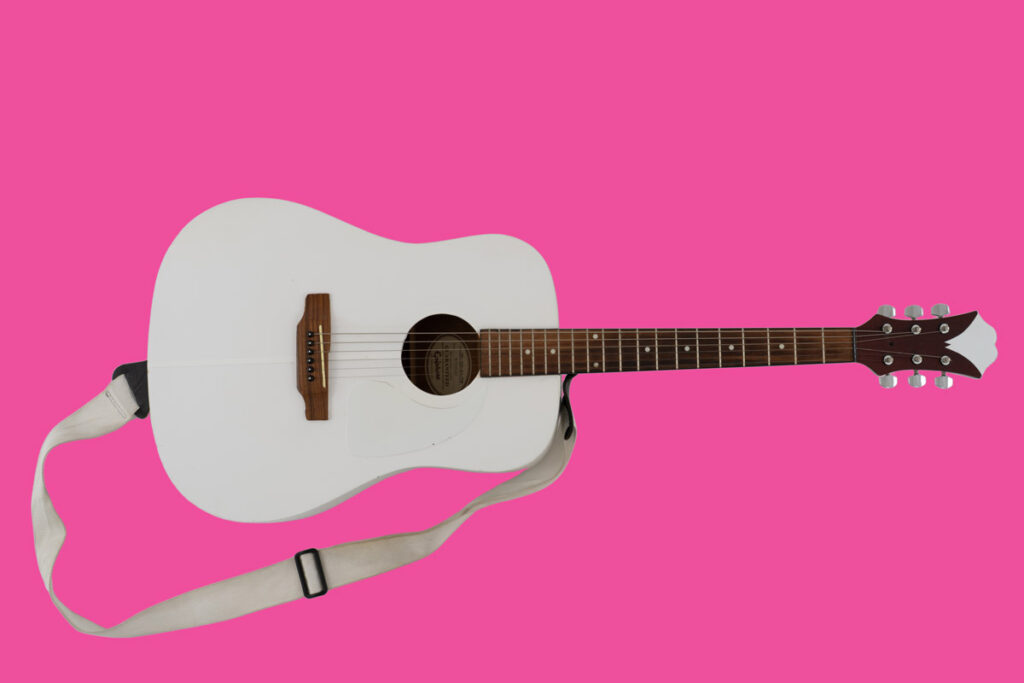
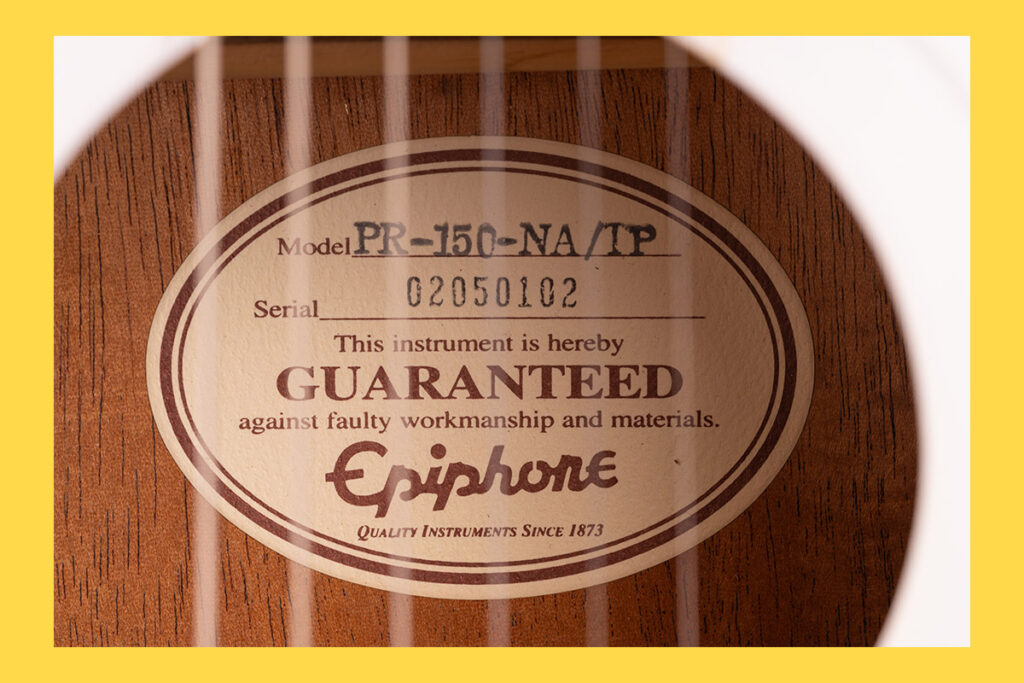
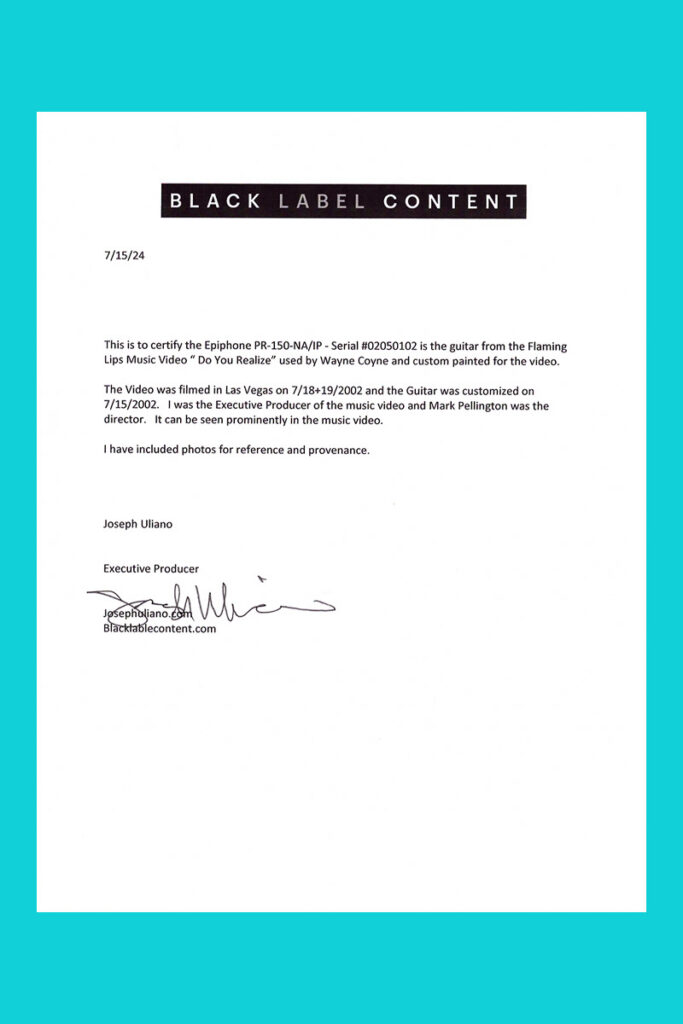
Wayne Coyne’s “Do You Realize??” Music Video Guitar The custom-white Epiphone PR-150 played by Wayne Coyne in Mark Pellington’s music video for “Do You Realize??” Filmed on Fremont Street, Las Vegas, July 18–19, 2002.
“You realize the sun doesn’t go down.” — The Flaming Lips, “Do You Realize??” (2002)
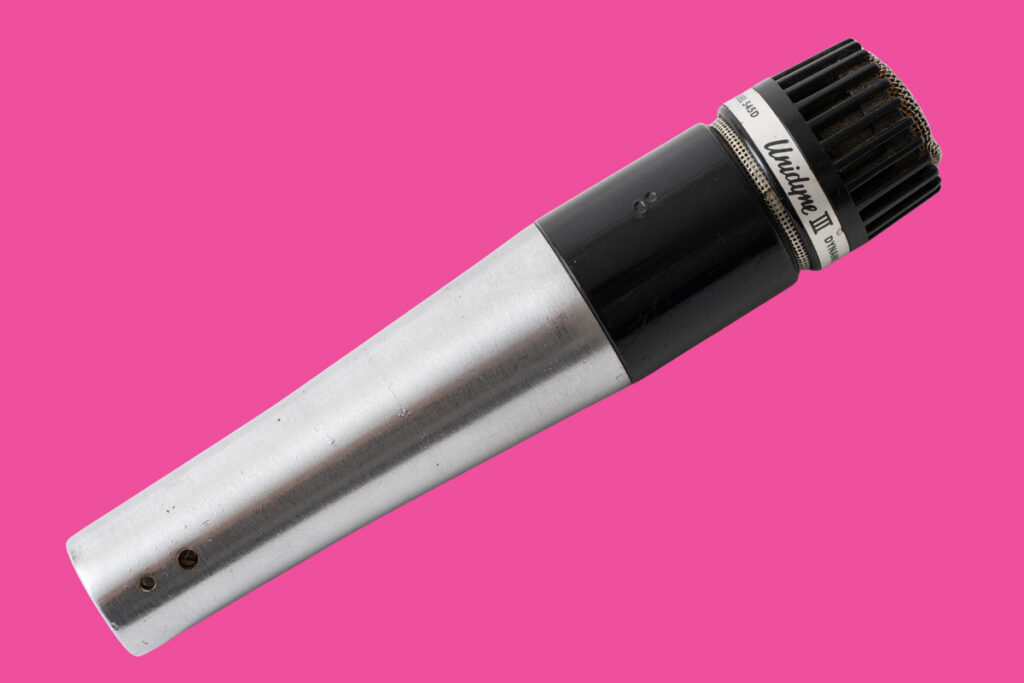
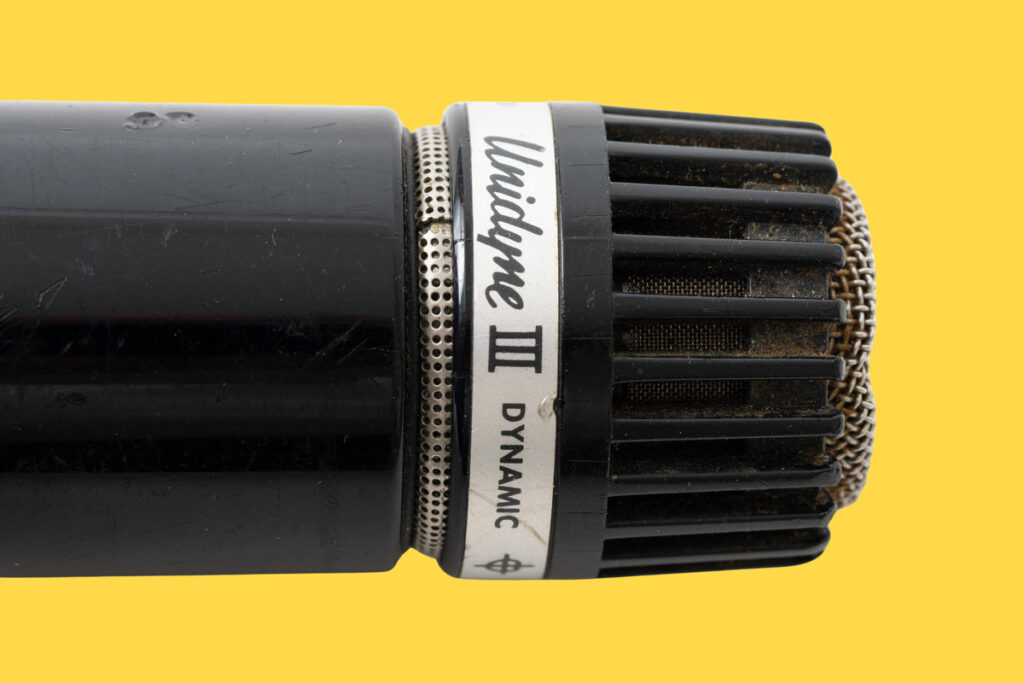
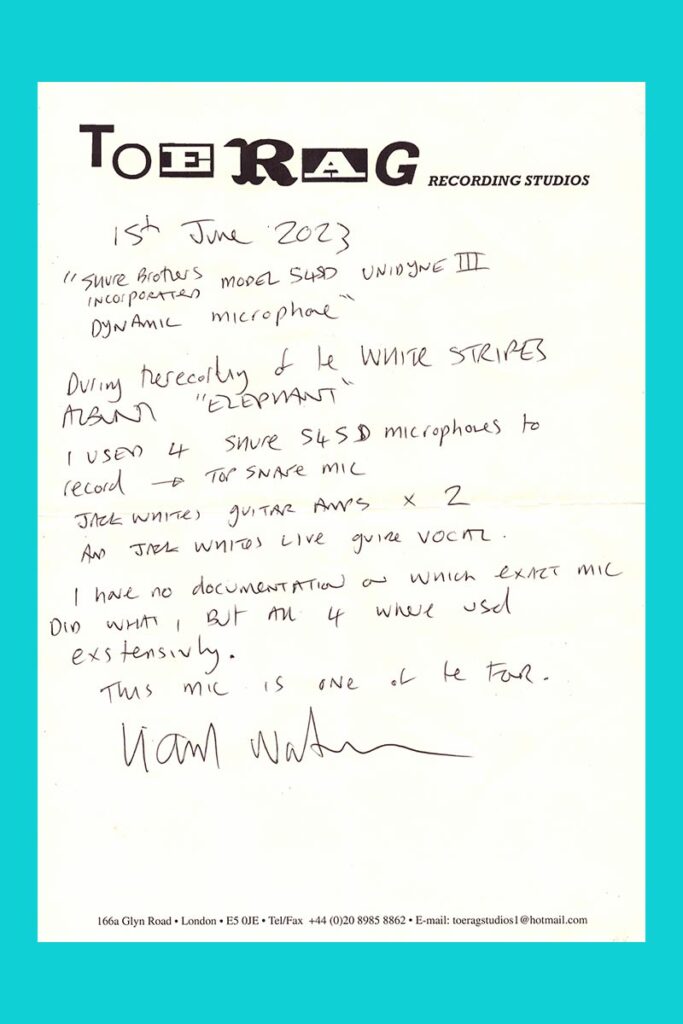
The Toe Rag Studios Shure S4SD Microphone One of four Shure S4SD Unidyne III microphones used by Liam Watson to record The White Stripes’ Elephant at Toe Rag Studios in East London, April 2002.
“Every single one’s got a story to tell.” — The White Stripes, “Seven Nation Army” (2003)
The four objects above are part of the inaugural Nostalgia Bandit auction, closing Saturday, June 13, 2026. There are more like them. Check out the full auction here.