In the autumn of 1976, three teenagers from the southern suburbs of London were spending most of their evenings following the Sex Pistols.
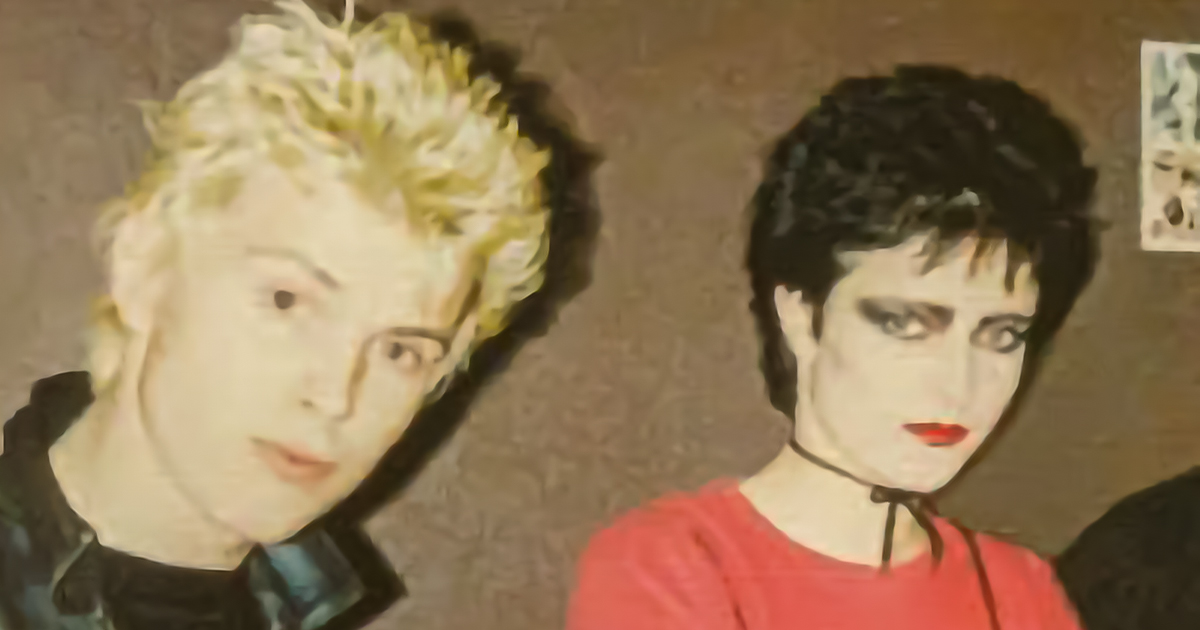
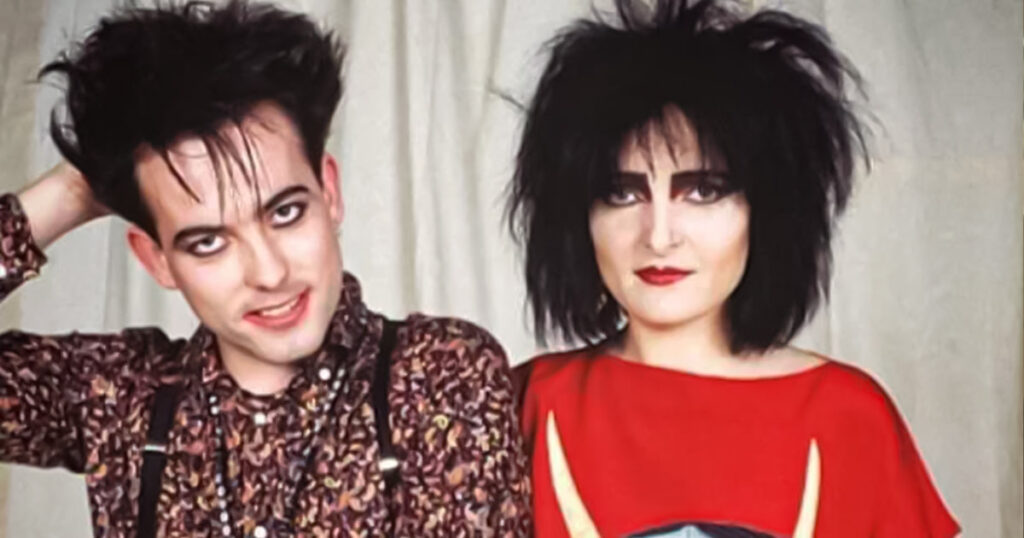
Susan Ballion came in from Chislehurst. Steven Bailey came in from Bromley. William Broad came in from a few stations further along the line. They knew each other from the gigs. Briefly in 1976, two of them were in the same band: Broad was playing guitar in Ballion and Bailey’s first lineup — the band that would, after he left, settle on the name Siouxsie and the Banshees. He moved on to Chelsea on guitar in 1977 and co-founded Generation X with Tony James. All three eventually took stage names: Susan Ballion became Siouxsie Sioux, Steven Bailey became Steve Severin, and William Broad became Billy Idol. The music press, picking up a phrase coined that September by the journalist Caroline Coon, called them the Bromley Contingent. The geography was approximate. The label stuck anyway.
An hour south of London, in Crawley, West Sussex, a seventeen-year-old guitarist named Robert Smith was in a band of school friends that would become The Cure. One of his bandmates was a multi-instrumentalist named Paul Thompson, who would later adopt the stage name Porl.
By 1984, these four were in three bands that did not sound anything alike.
The window of separation — the years in which one shared scene broke into three artists, three sounds, three audiences — is what I keep finding now, looking at the gear that survived from those bands.
Three lots in this auction document the fracture. The first, a guitar, was bought in September 1979, after the Banshees lost half their lineup mid-tour. The second, a keyboard, first appeared in public on the Cure’s stage in January 1984. The third was built by hand in New York in 1983 by Steve Stevens, a guitarist who had never been part of the London scene at all.
Post-punk was the shorthand for what they did. By 1984, the word still applied to all three — and meant three completely different things.
Siouxsie and the Banshees
The Banshees’ second album, Join Hands, was released on Friday, September 7, 1979. The band’s UK tour in support of it had been underway for ten days. The Cure, with their own debut album, Three Imaginary Boys, just four months old, were the opening act on every stop. The Aberdeen Capitol Theatre was an early date.
The morning of release day, the Banshees did an in-store record signing. Something happened during it. Guitarist John McKay and drummer Kenny Morris walked out of the store and never came back. Siouxsie collected the unsigned copies, gave John McKay’s own guitar to a fan in the crowd, and went back to the hotel.
The show that night had been billed and sold out. Severin and Siouxsie went on at the Capitol that evening with the news, cancelled the performance, and offered refunds. Then, with Robert Smith of the Cure standing in on guitar, the two remaining Banshees performed an extended version of “The Lord’s Prayer” — the song the original lineup had played at their first-ever gig at the 100 Club in September 1976, with Sid Vicious on drums.
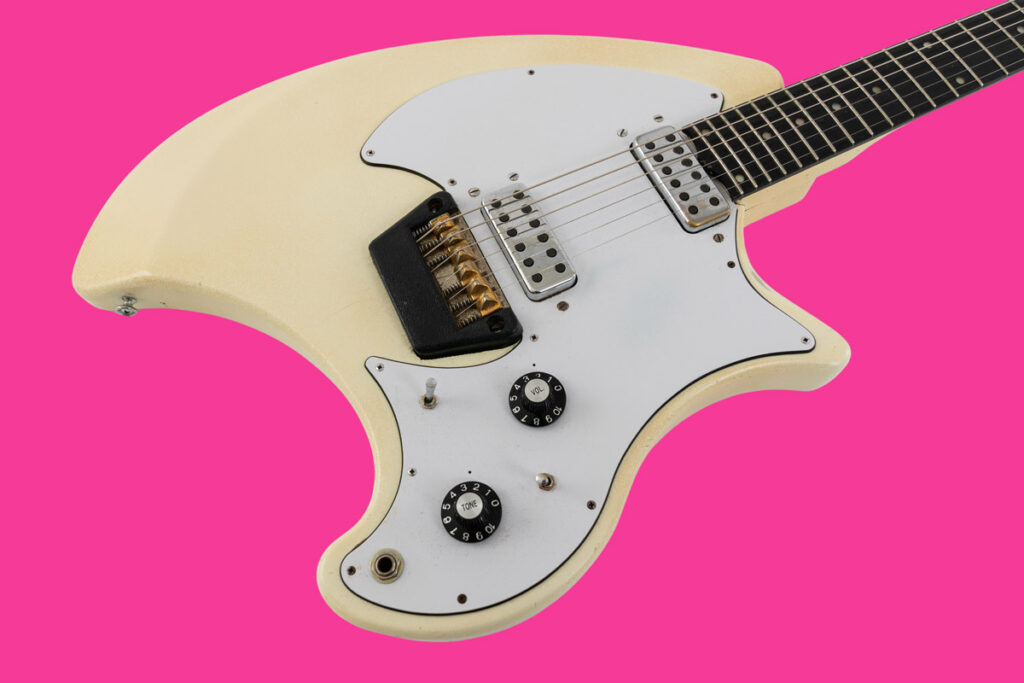
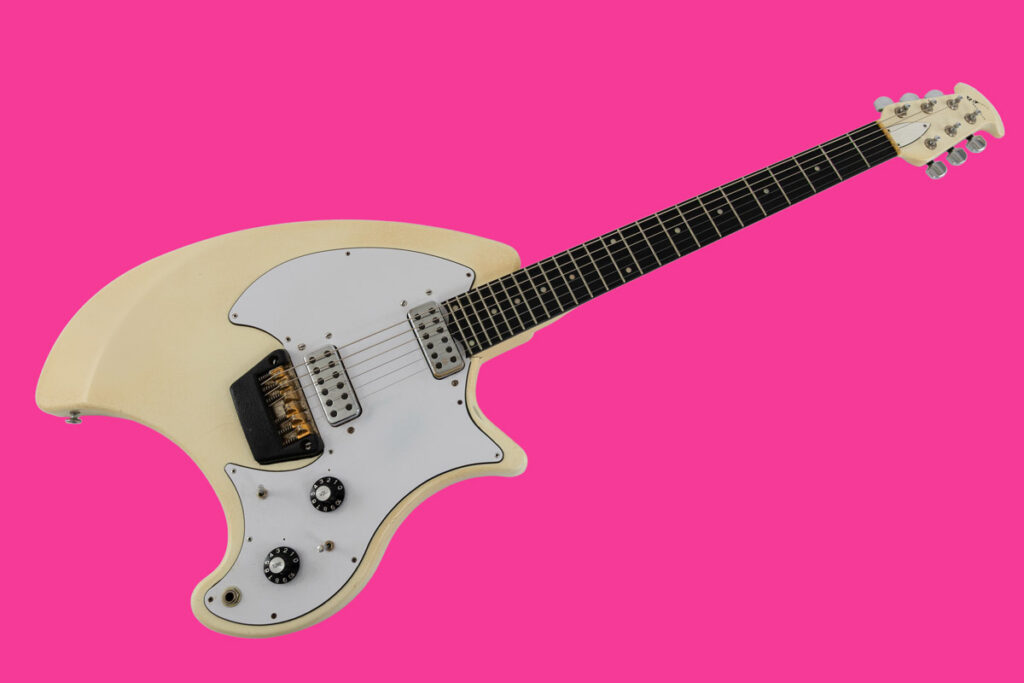
By the next day the band needed an instrument. There would be auditions — first for a touring guitarist to finish the Join Hands run, and after the tour ended for the permanent replacement for McKay. Severin remembered a particular guitar: Colin Newman of Wire had been playing an Ovation Breadwinner — a white solid-body with a textured spackle finish and an asymmetric body shape that looked less like a guitar than like something Wire might have commissioned to be a guitar. “I thought it was the best looking guitar ever,” Severin would later write, in the handwritten letter of authenticity that accompanies they guitar today. The band bought one.
Robert Smith auditioned on it. He had been the band’s stand-in the night before; the white Breadwinner was what he was holding when the band offered him the rest of the Join Hands tour. He liked the guitar enough, after the audition, to ask Severin — as his ‘present’ for guesting on guitar — for a black version of his own. Severin bought him one. The black Breadwinner Smith carried out for the rest of the run became his stage instrument across both his Banshees stints, the 1979 fill-in and the longer 1982–1984 Hyaena-era stretch, and it is the guitar he is seen holding in essentially every Banshees performance and promotional image of his time with the band. His choice of instrument for his entire Banshees tenure traced directly to the white Breadwinner Severin had handed him at the audition.
How the instrument sounded mattered less than what happened to it after. The white Breadwinner became, in Severin’s words, “the band’s guitar“. Severin played it on B-sides. Siouxsie played it on B-sides. By the time John Carruthers had taken the guitar chair in 1984, the white Breadwinner was the instrument he was holding. It is one of three guitars across two decades of Banshees performance that holds visual identity for the band — the other two are Siouxsie’s own Vox Mark VI Teardrop and her Music Man Sabre. The Banshees were known by their singer, their bass player, and their drummer; the guitarists came and went. The white Breadwinner stayed.
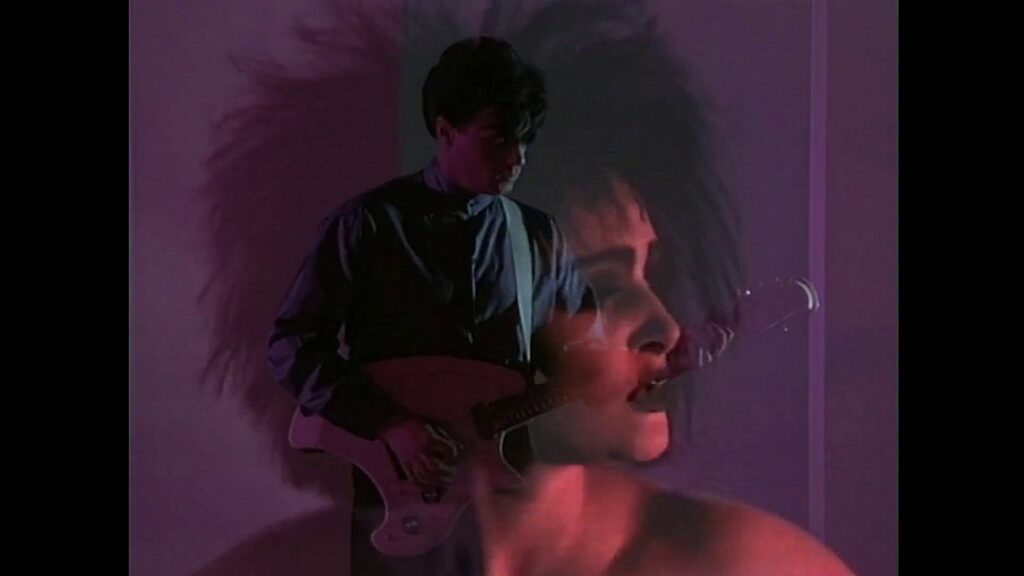
By the mid-eighties it had become a visual instrument as much as a musical one. The April 1986 cover of International Musician & Recording World, headlined “Back In Black” with the Banshees, shows Carruthers holding it next to Siouxsie and Severin. The May 1986 cover story in Guitarist magazine puts it in the studio shots. The official video for “Candyman” — single off Tinderbox, released April 1986 — shows it throughout (superimposed with surreal images of Siouxsie). The Banshees were a visual band. The Breadwinner had become part of how they looked.
The guitar — the one Severin bought because he’d liked how it looked in someone else’s hands, the one Siouxsie and Severin both used in the studio, the one Carruthers carried through the Tinderbox era and into the “Candyman” video, the one that stayed with the band across years of changing guitarists — is now passing into its next chapter.
The Cure
Robert Smith went back to Crawley after the Join Hands tour ended in October 1979 a different musician than he was when he got on it.
He had played a Banshees set every night for six weeks. He had stood a few feet from Siouxsie on stage throughout the tour. He had watched a frontwoman who performed and had an identity and unique aesthetic that Smith — twenty years old, a guitarist by training and by temperament — did not yet know how to do himself. He went home with the realization that the Cure, as he had been running it, was a guitar band with a singer who wrote songs. What he had seen Siouxsie do with a song was inhabit it.
The Cure’s next three records are remembered now as the dark trilogy. Seventeen Seconds arrived in April 1980. Faith in April 1981. Pornography in May 1982. The arc went down. Sonically, the records turned colder, slower, more atmospheric. Visually, Smith began wearing eyeliner and lipstick onstage and combing his hair into the shape it would become permanently associated with. The Pornography tour ended with Smith near a breakdown and Cure bassist Simon Gallup leaving the band. There was a brief, semi-public question of whether the Cure still existed.
It existed because Severin asked Smith to join the Banshees full-time in late 1982. John McGeoch had collapsed on tour and the band needed a guitarist for the Hyaena album cycle. Smith said yes. From the autumn of 1982 through the spring of 1984 he held two band memberships at once — Cure singer-guitarist, Banshees touring and recording guitarist — and the two bands’ creative orbits collapsed into something close to one orbit. In 1983 Smith and Severin recorded together in a side project together called The Glove, releasing Blue Sunshine that September. The album cover was designed by Parched Art, the design partnership of Andy Vella and a Cure school-friend who had left Smith’s band in 1978 to attend art college — Porl Thompson.
Thompson came back to the Cure that same year.
He had been one of the original four at Notre Dame Middle School in 1976, playing guitar alongside Smith in the band that became The Cure. He had left because his playing didn’t fit Smith’s post-punk songwriting. In the five years he had been gone, the Cure had become a band that needed what Thompson had — a multi-instrumentalist with deep technical range who could move across an evening between guitar, keyboards, and other instruments. He has been widely cited since as the most technically proficient musician in the Cure’s history.
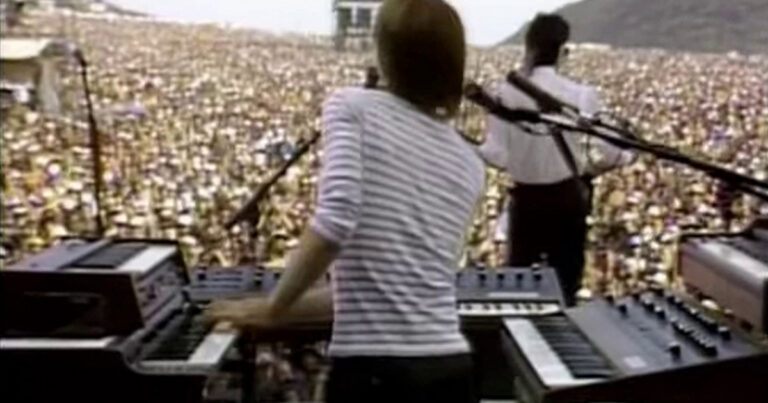
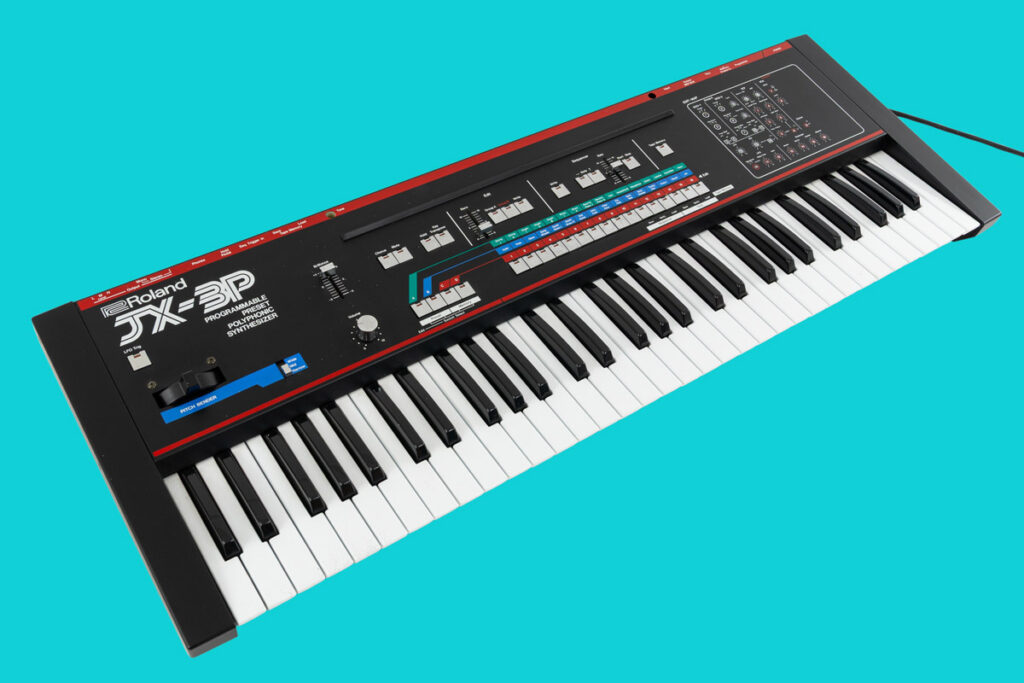
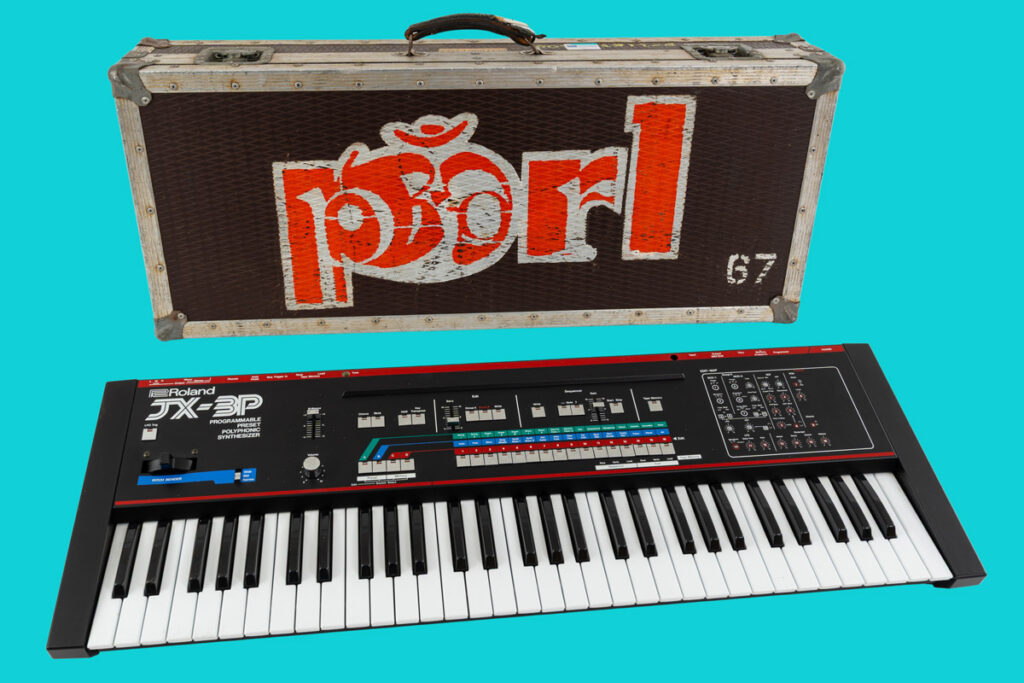
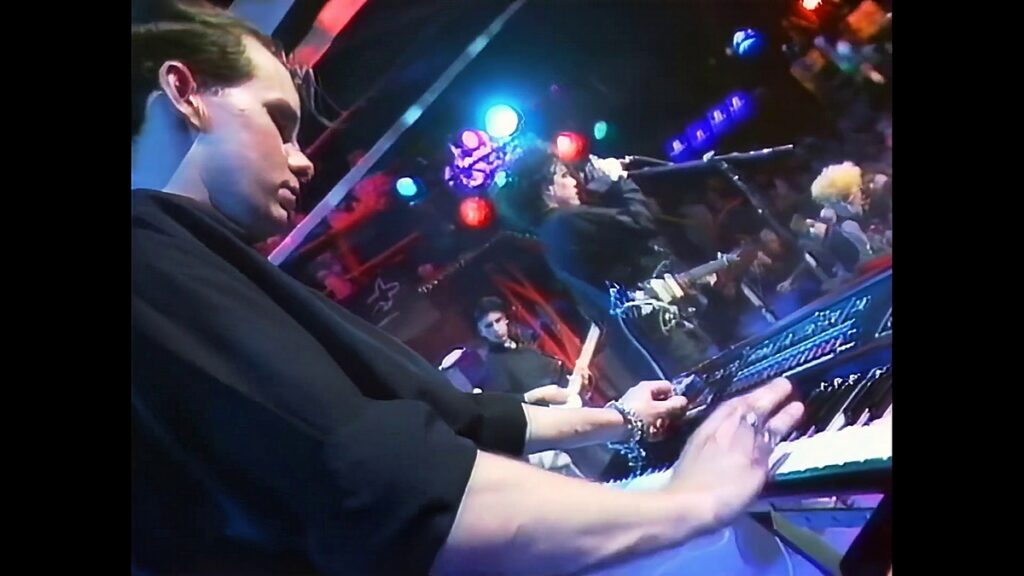
The early-production Roland JX-3P he brought into the band — serial number 360907, manufactured in November 1983 — became the Cure’s primary stage keyboard across their most commercially productive stretch. It appears on the band’s Munich television broadcast of January 30, 1984, behind “Play for Today” and “A Forest.” It appears again on Channel 4’s The Tube with Jools Holland on April 12, 1984, behind songs from the album the band was about to release — The Top. Smith, across the same months, was working both Cure and Banshees records in parallel — The Top and Hyaena — and the Cure spent the Top sessions living in a pub on a diet of mushrooms and overnight drinking, both bands’ work landing on Smith’s shoulders simultaneously. The JX-3P returned to a BBC stage in Glasgow on August 25, 1984, for the BBC’s Rock Around the Clock ’84 broadcast.
By the time it was carried back into the studio in 1985 for The Head on the Door — the album that gave the Cure “In Between Days,” “Close to Me,” and “A Night Like This” and made them, at last, a commercial band on both sides of the Atlantic — Thompson was the Cure’s lead guitarist as well as their keyboardist. He held both roles for the remainder of his Cure tenure, which stretched, across two stints, to roughly fifteen years.
The early-production JX-3P — the keyboard that arrived on the Cure’s stage in January 1984, that documented the band’s pivot out of Pornography and into the commercial reach of Head on the Door, played by their most technically proficient member during the years that made them globally famous — is now passing into its next chapter.
Billy Idol and Steve Stevens
In the late autumn of 1978, the Cure were the support act on a short UK tour for Billy Idol’s band Generation X. The Cure had not yet released a record. Generation X had a debut album out and singles charting. The tour ended for the Cure, abruptly, when their drummer Lol Tolhurst — drunk after a Bristol gig — stumbled into a backstage bathroom and accidentally urinated on Billy Idol, who happened at that moment to be otherwise engaged with a fan in the next stall. The Cure were kicked off the tour the next morning.
Five years later, no two paths from the same 1976 scene had diverged further than theirs.
By 1983 Robert Smith was inside the cluster of bands — Cure, Banshees, the Glove side project — that the last section walked through. Siouxsie was eight years into Banshees, in the middle of recording Hyaena with Smith as her guitarist. Billy Idol had left England. He had moved to New York in 1981, after Generation X dissolved, with a vague plan to make solo records in America. The pivotal thing he did in New York, before he had a record deal or a band, was meet a twenty-two-year-old guitarist from Brooklyn named Steven Bruce Schneider, who had taken the stage name Steve Stevens. Back in London, the band Idol had briefly been in — Siouxsie and the Banshees — seven years earlier, was carrying on with Robert Smith now playing the guitar position Idol had once held himself.
Stevens didn’t fit the post-punk pattern.
He had not been at the 100 Club. He had not been at the Pistols’ Paris gig in September 1976. He had never been a punk. He had grown up on prog and classical and jazz — the wrong inheritance, by London-scene standards, for a guitarist working with someone out of the Bromley Contingent. What he brought to Idol was the thing the London scene had been pointedly rejecting since 1976: technical reach. Asked years later by an interviewer if Stevens was his Keith Richards, Idol agreed without hesitation, then described the partnership as Stevens bringing prog and classical training, Idol bringing punk, and the two together being able to do anything.
What he wanted to do was Rebel Yell.
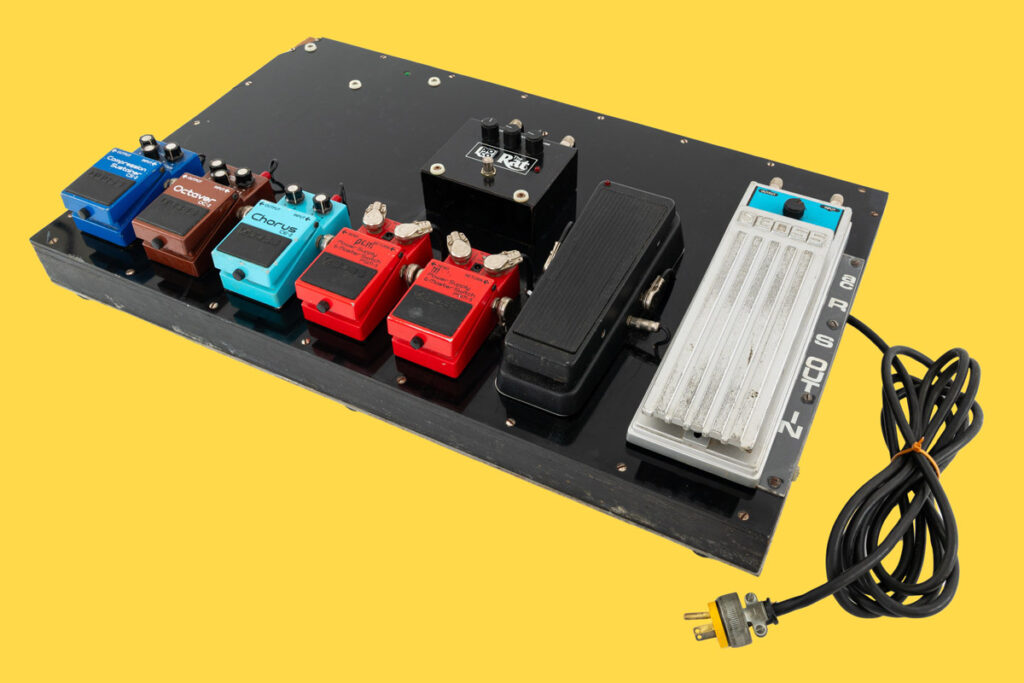
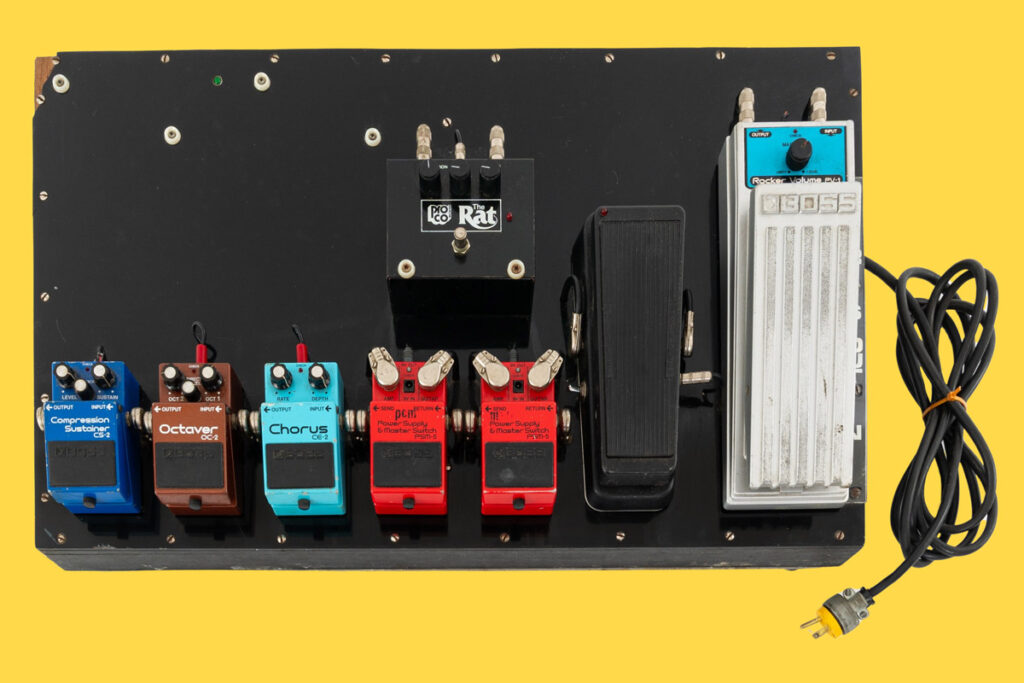
Recorded at Electric Lady Studios in 1983 with producer Keith Forsey, Rebel Yell was released in November of that year, peaked at number six on the Billboard 200, went double Platinum, and became the best-selling record in Idol’s catalog. Almost every sound on it that the listener can hum was either invented or routed through the pedalboard Stevens had built by hand for the sessions and the touring cycle. The Boss OC-2 Octaver — the ‘ray gun’ — delivered the octave-down on the title track’s solo. The Boss CE-2 Chorus and CS-2 Compression Sustainer gave “Eyes Without a Face” and “Flesh for Fantasy” their atmospheric clean tones. The Pro Co Rat handled the bite on the heavier passages. A Dunlop Cry Baby wah, rewired for him personally by Roger Mayer — the electronics engineer best known for his work with Hendrix — sat in the middle of the board. Stevens was twenty-four years old. He had built the rig by hand.
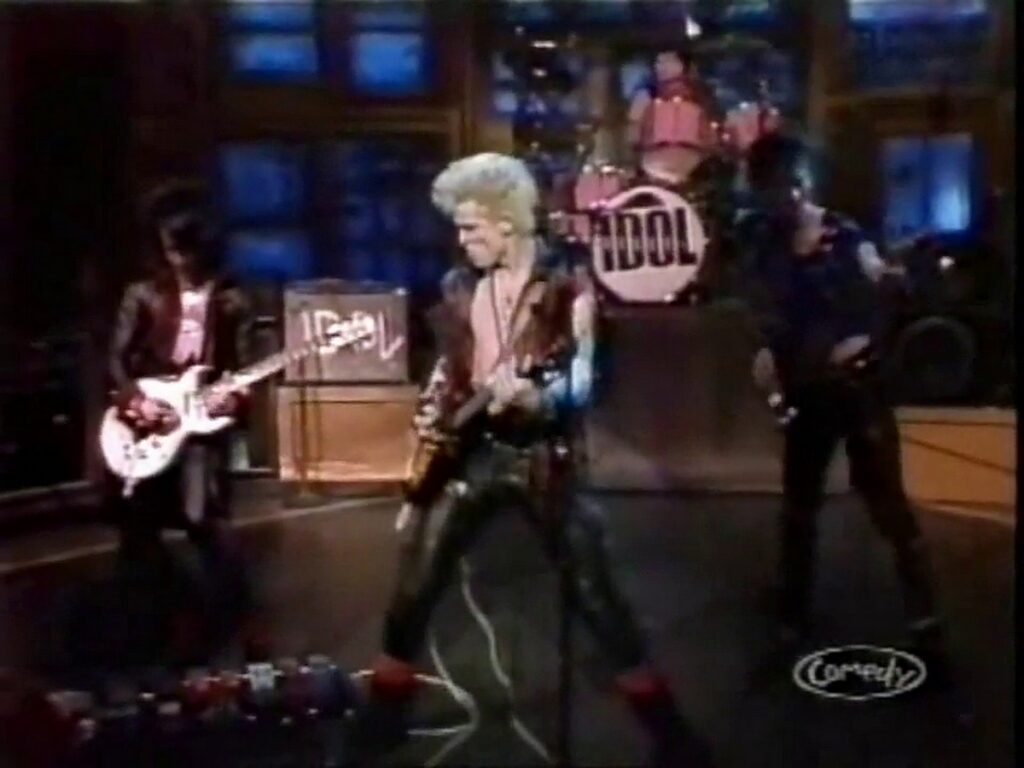
The board was on stage on December 31, 1983, when Billy Idol headlined MTV’s New Year’s Rock N’ Roll Ball — a holiday broadcast aimed at the cable channel’s by-then-massive American audience. It was on stage again on January 28, 1984, when Idol performed on Saturday Night Live — NBC, network, national, a slot the Cure and the Banshees did not have access to and were not in 1984 trying to reach. While Smith was driving between studios in England recording two records for two bands, and Siouxsie was finishing Hyaena, Idol was on American primetime in leather, mugging at the camera between guitar solos, becoming the British punk-era artist most fully claimed by American MTV.
The pedalboard stayed in continuous touring use through 1987. In 2026, Idol and Stevens will be inducted together into the Rock and Roll Hall of Fame.
The hand-built pedalboard that powered Rebel Yell, that anchored the album’s highest-profile American television appearances, that documented the route Idol took out of the London punk scene by way of a guitarist who had never been part of it — is now passing into its next chapter.
By the end of January 1984, each of these three artifacts was in a different room, in a different city.
The white Ovation Breadwinner was somewhere in London with the Banshees, used by then on multiple B-sides. The Roland JX-3P had just been on Munich television behind “Play for Today” and “A Forest.” The hand-built pedalboard had just come off the stage at NBC’s Saturday Night Live. The Banshees were in London. The Cure was an hour south of London. Billy Idol was in New York.
All three artists had been within a few miles of each other in 1976. By the end of January 1984, they were on two continents, working at three different scales of production. The Banshees had built post-punk’s darker, more theatrical version and stayed there across the rest of the decade. The Cure had taken Siouxsie’s lessons, added Porl Thompson, and built a different stage — one that had room for synthesizers and the slow expansion into the band that would become globally famous on the next record. Billy Idol had taken what he had learned in London and walked out of the room entirely, finding in a Brooklyn guitarist the partner who could turn punk attitude into MTV-scale production.
The fracture lasted. Smith and Idol, reportedly, have never reconnected. Idol and Siouxsie did once — in 2023, ahead of her Cruel World Festival appearance. “First time seeing her in 32 years,” Idol noted on Instagram.
The Breadwinner, the JX-3P, and the pedalboard — three objects, each tied to one of those three bands — made or used or filmed in three different places, played by people who had once been close enough to share a stage on a tour bill or fight over a bathroom in Bristol. They survived. The work survived. We have, now, what the work made.
The auction closes Saturday, June 13, 2026, at 10:00 am Pacific / 1:00 pm Eastern.
Every artifact has a history. We are, all of us, only its caretakers for as long as it stays in our care.
—
Lot 96 — Siouxsie and the Banshees
Stage-Played, Studio & Video-Used Ovation Breadwinner Guitar (1979–1986)
A white Ovation Breadwinner electric guitar (serial #E 4228, manufactured circa 1974), purchased by Siouxsie and the Banshees in September 1979 following the abrupt mid-tour departure of guitarist John McKay. Robert Smith of the Cure auditioned on it for the band’s touring-guitarist slot and was inspired enough to ask Severin for a black version of his own — which became Smith’s stage instrument across his entire Banshees touring tenure. Also used by Steven Severin, Siouxsie Sioux, and John Carruthers — including throughout the official “Candyman” music video (1986) and on the covers of International Musician & Recording World (April 1986) and Guitarist magazine (May 1986). Accompanied by a handwritten letter of authenticity from Steven Severin.
Acquired in 1979 to audition a replacement guitarist. Stayed, instead, as the band’s instrument across the rest of the eighties.
[View Lot 96 →]
—
Lot 94 — The Cure
Porl Thompson Stage-Played & Studio-Used Roland JX-3P Synthesizer Keyboard (1983–1987)
A Roland JX-3P programmable polyphonic synthesizer keyboard (serial #360907, manufactured November 1983) from the personal collection of Porl Thompson of the Cure. Documented in television broadcasts including Munich (January 30, 1984), Channel 4’s The Tube with Jools Holland (April 12, 1984), and BBC’s Rock Around the Clock ’84 in Glasgow (August 25, 1984), and used on The Head on the Door album and tour (1985–87). Sold as Lot 27 from The Porl Thompson Collection (Omega Auctions, Stockport, UK, May 19, 2012). Accompanied by a signed letter from Porl Thompson.
The keyboard Porl Thompson brought onto the Cure’s stage five years after he had left the band.
[View Lot 94 →]
—
Lot 83 — Billy Idol and Steve Stevens
Custom-Made Stage-Played & Recording-Used Rebel Yell Pedalboard (1983–87)
A custom pedalboard personally built by Steve Stevens, used to record Billy Idol’s Rebel Yell album (1983) at Electric Lady Studios in New York and throughout the touring activity that followed through 1987. Photo-matched to Billy Idol’s Saturday Night Live appearance of January 28, 1984; screen-matched to the MTV New Year’s Rock N’ Roll Ball performance of December 31, 1983. Documented in Steve Stevens’ public statements, his BOSS Lifetime Achievement Award citation, Guitarist magazine (July 1986), and the International Musician & Recording World (July 1986) feature. Accompanied by a Certificate of Authenticity signed by Steve Stevens.
Hand-built by a Brooklyn guitarist for the album that finished Billy Idol’s departure from London.
[View Lot 83 →]
—
The three objects above are part of the inaugural Nostalgia Bandit auction, closing Saturday, June 13, 2026.
Jason
Nostalgia Bandit