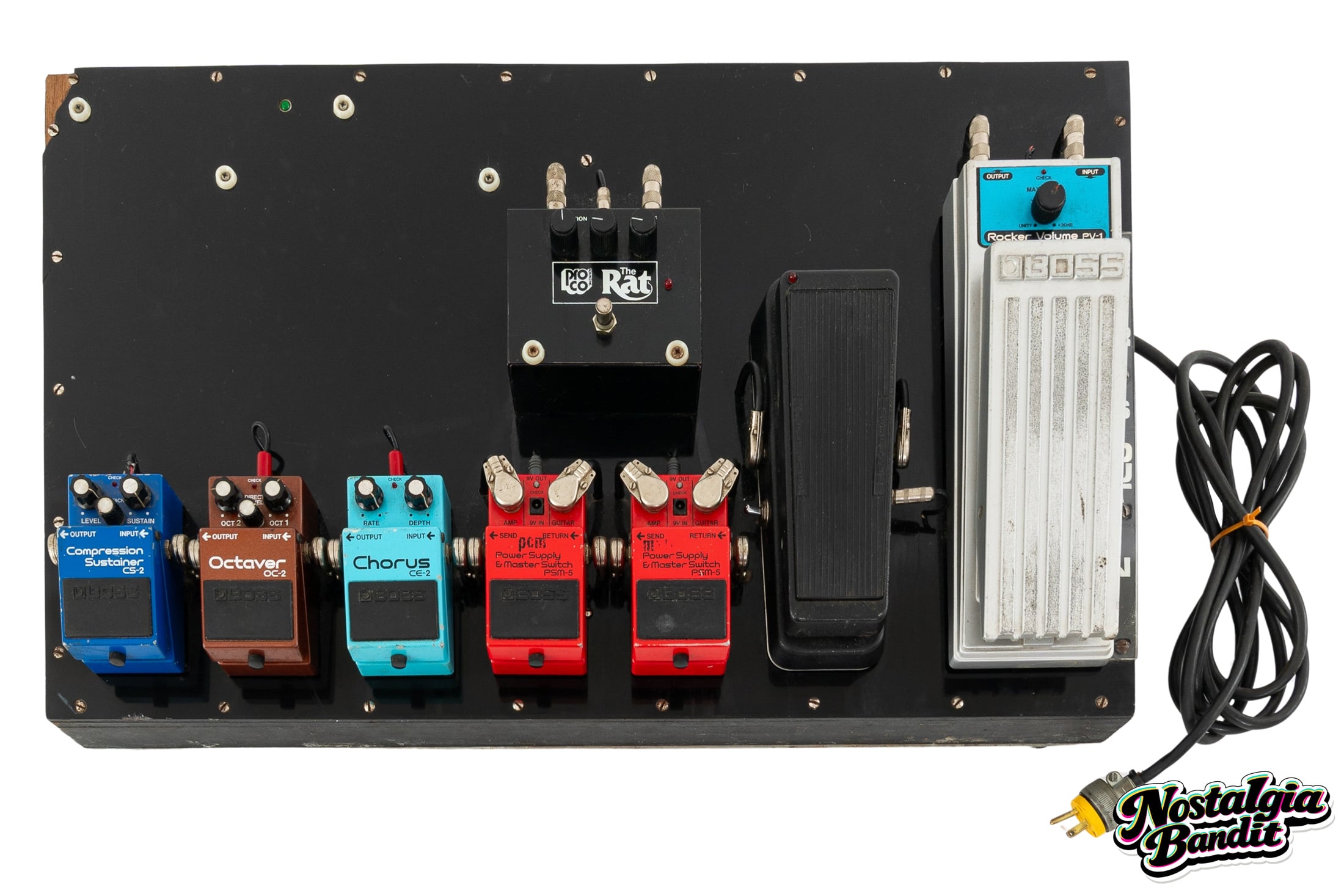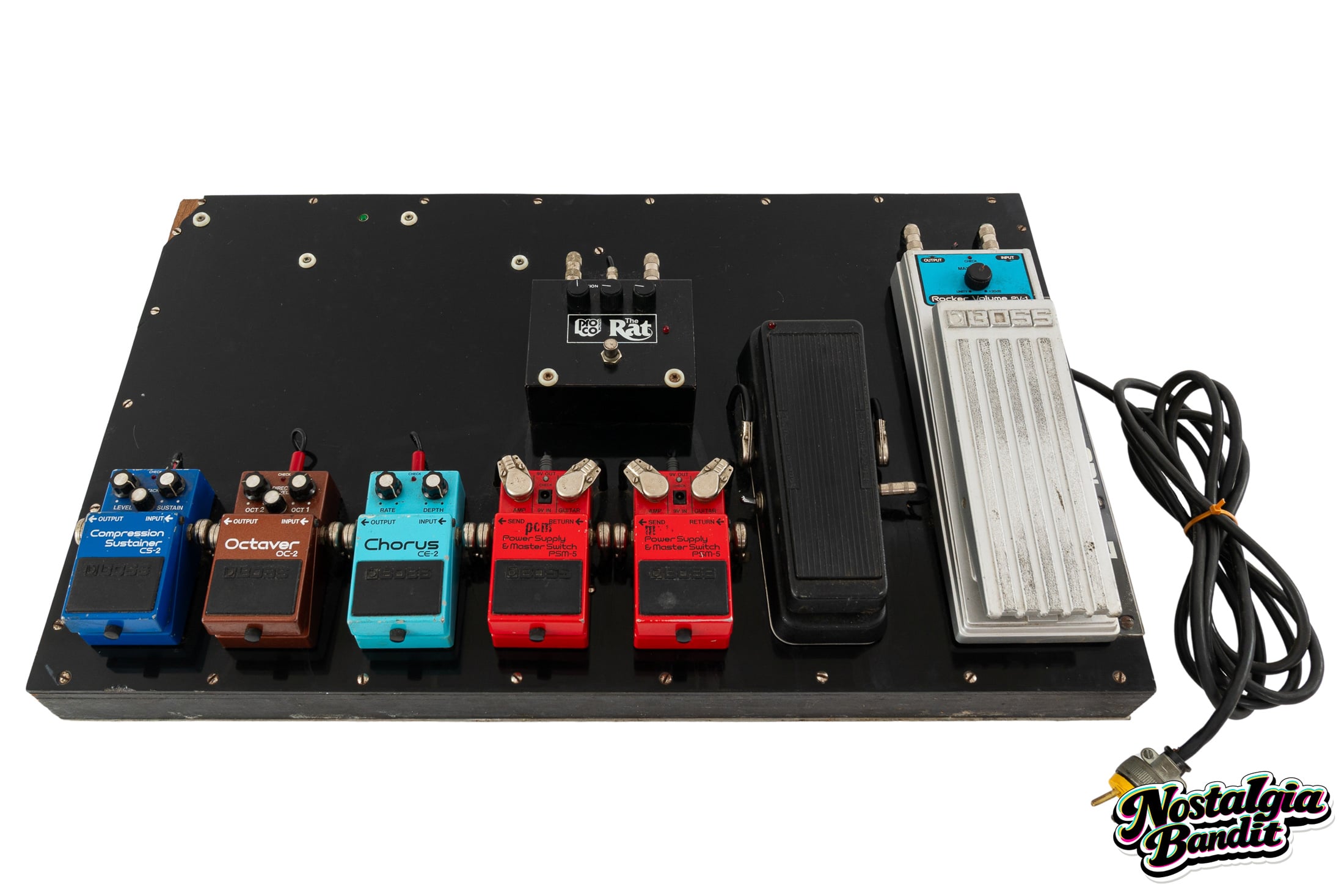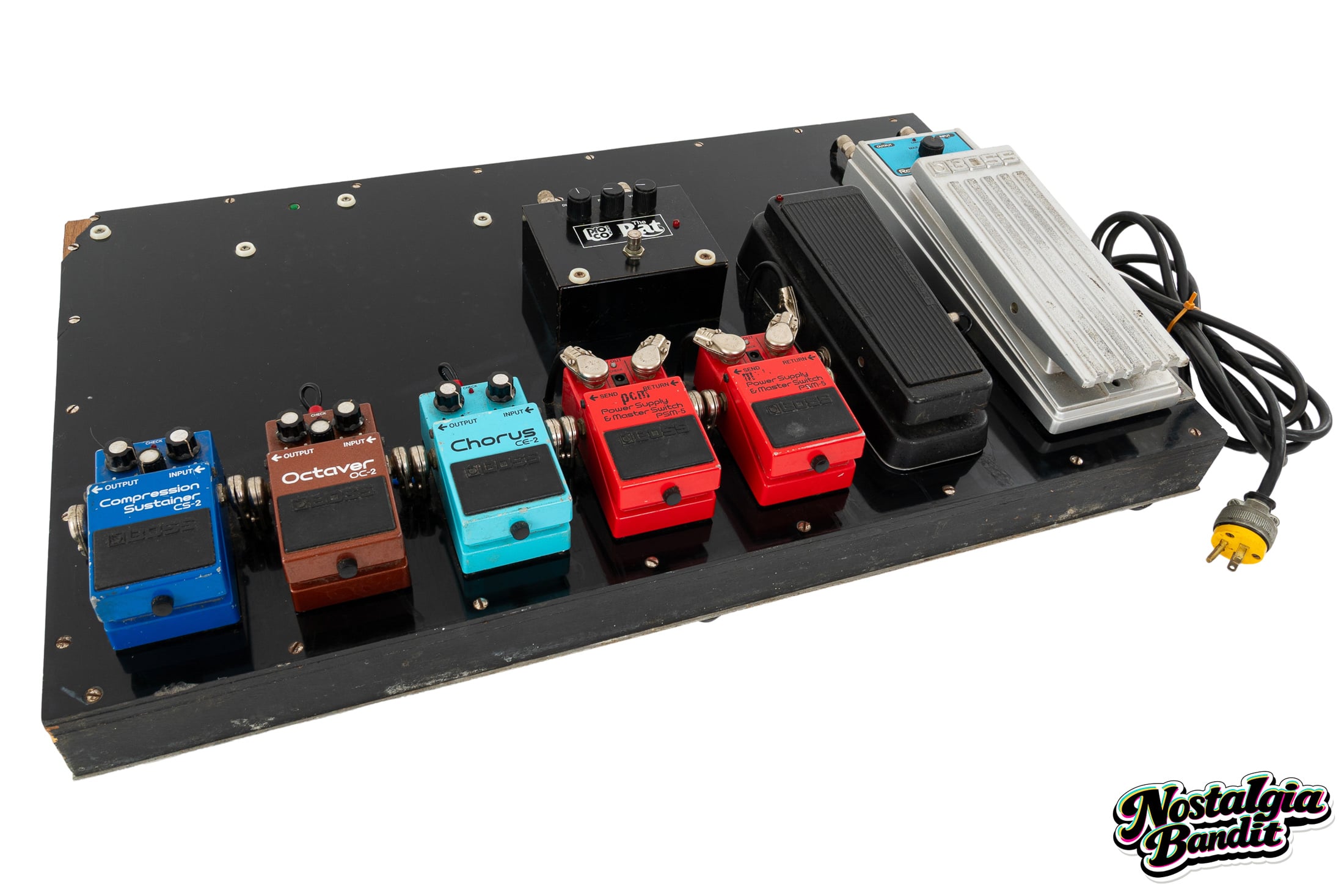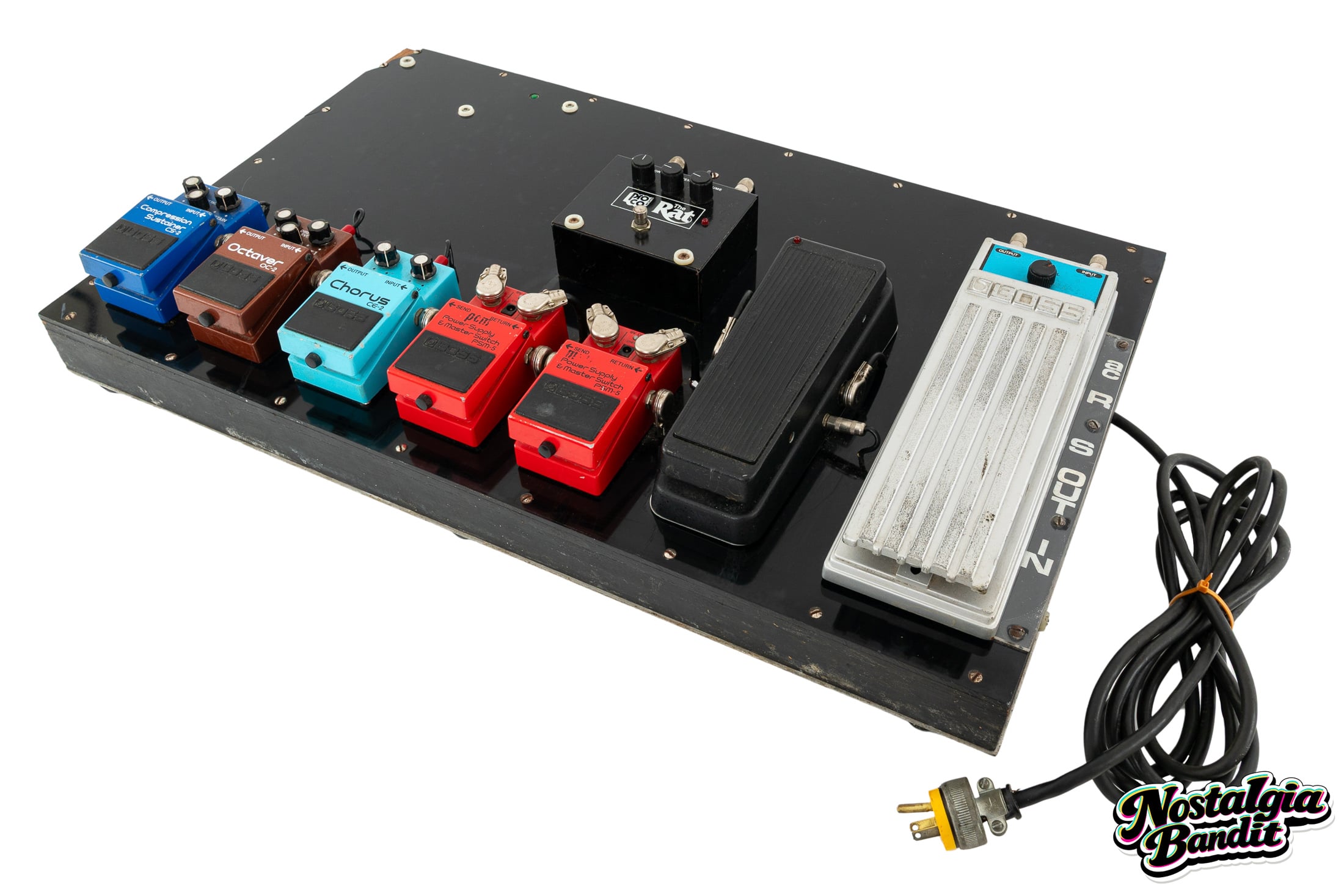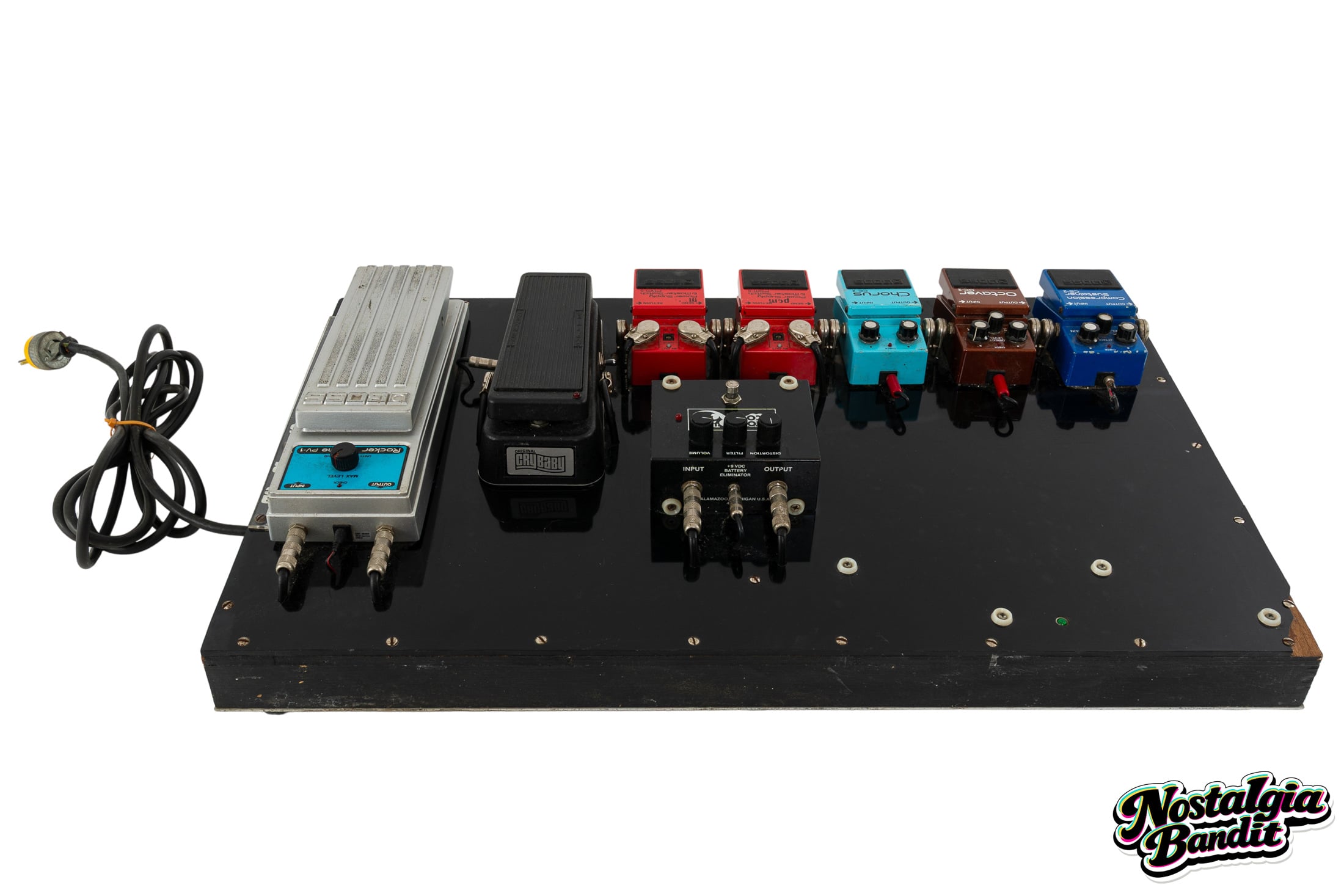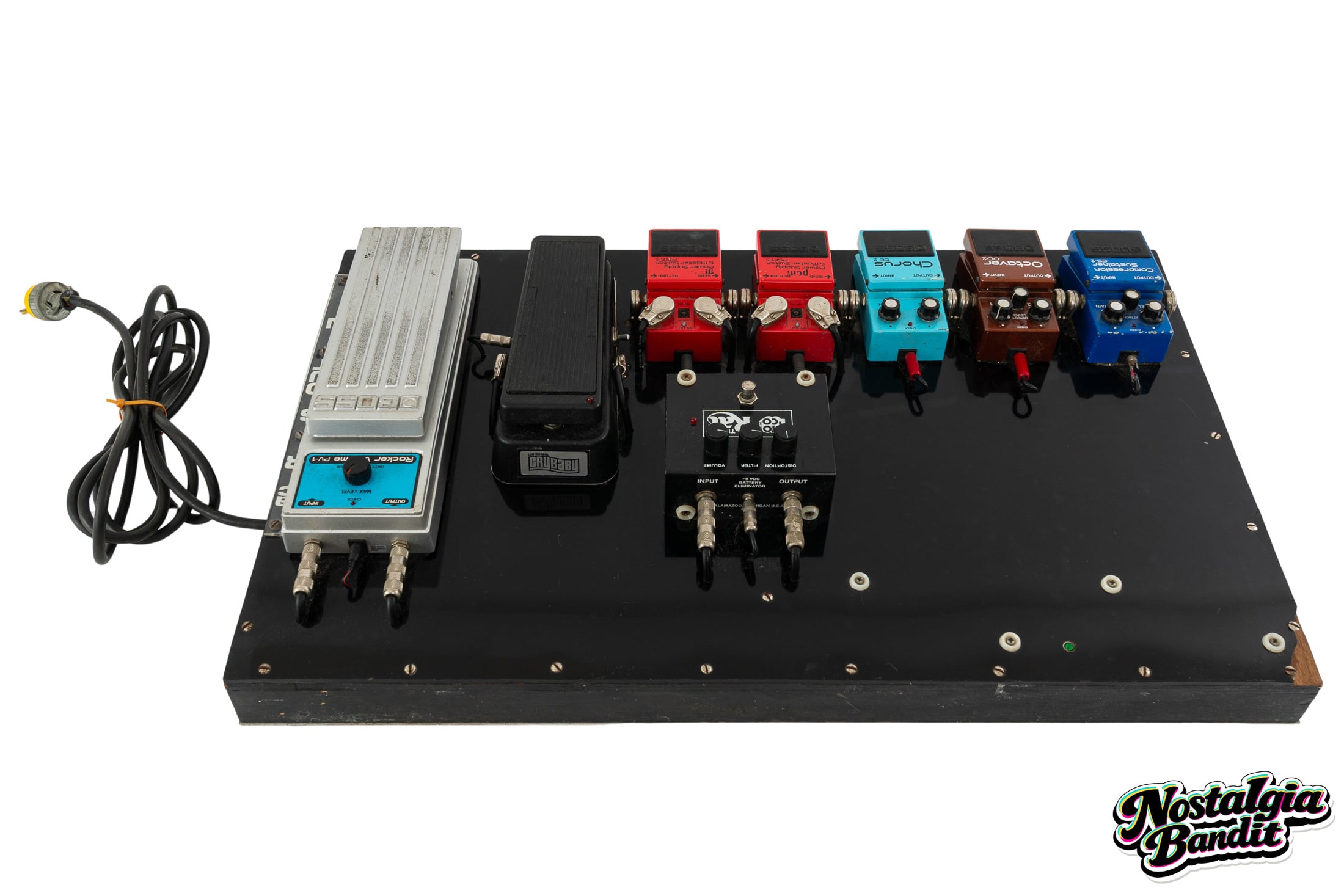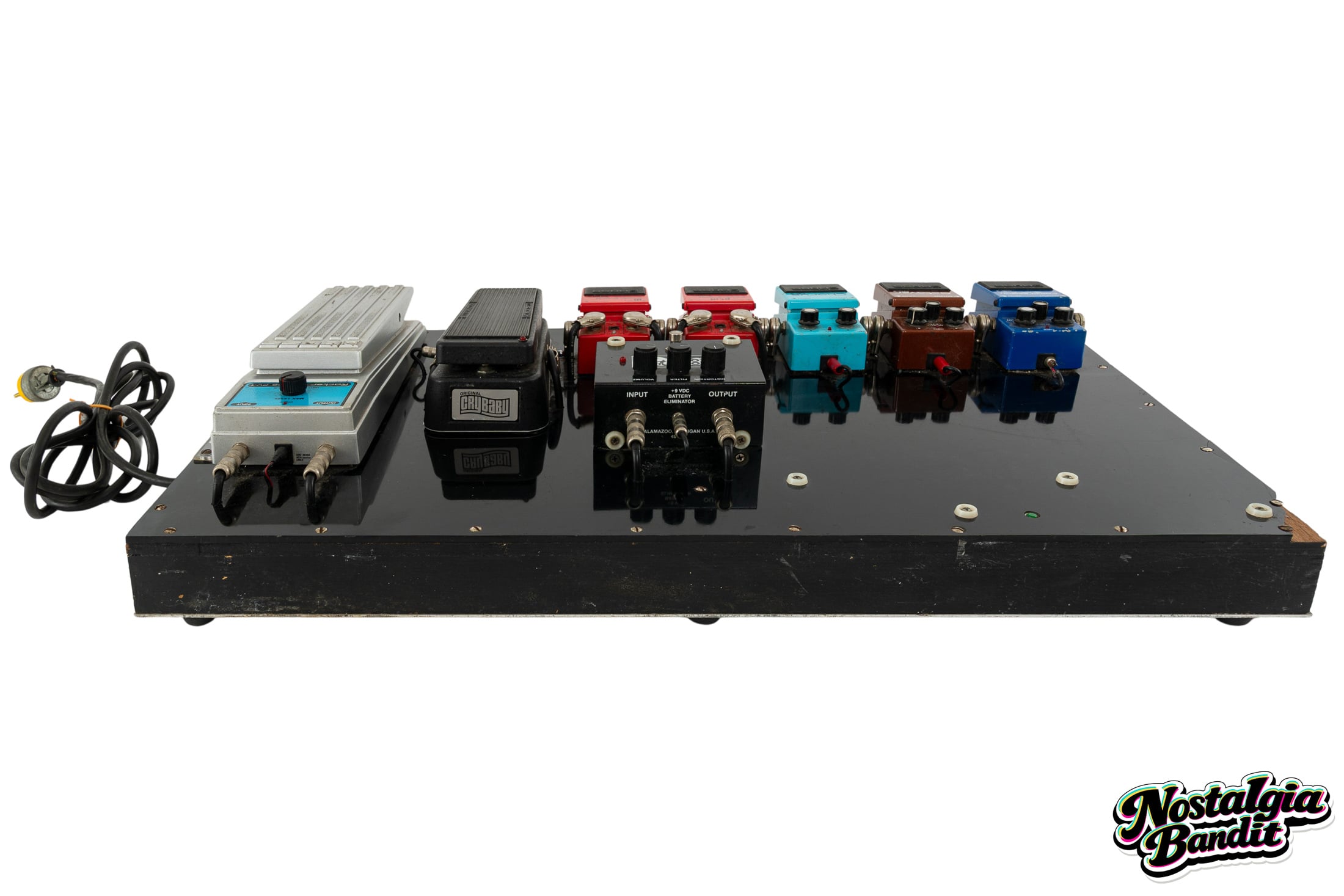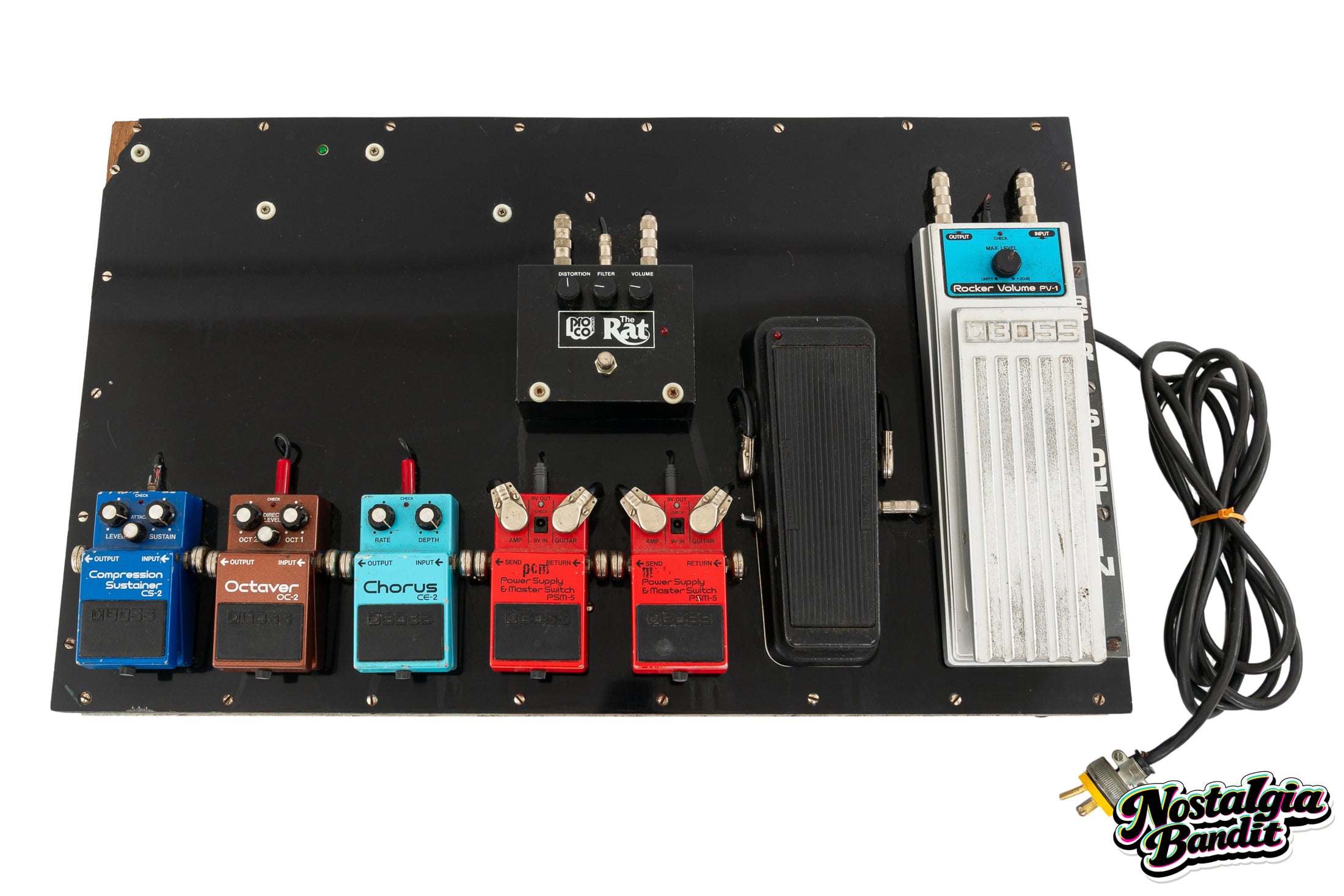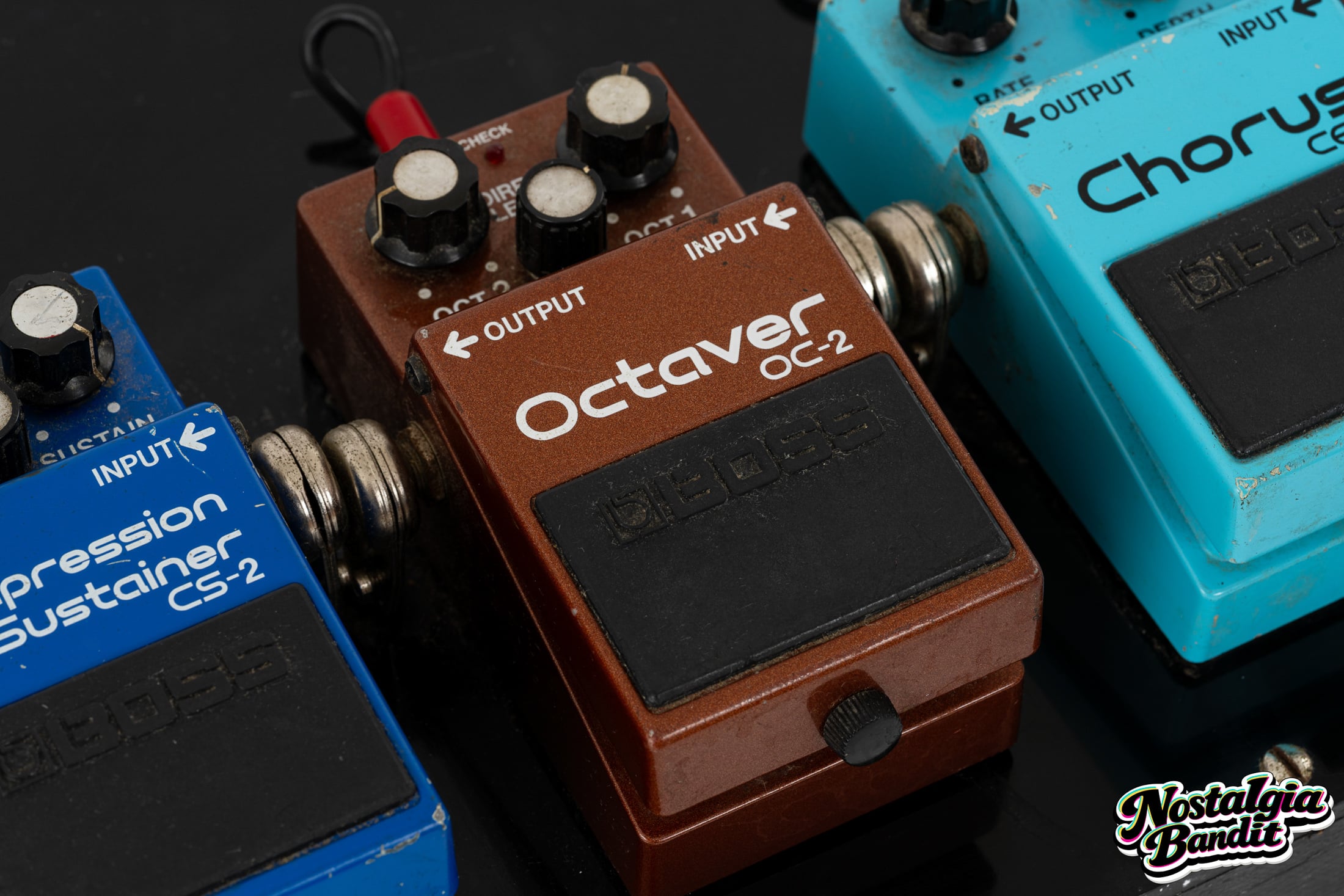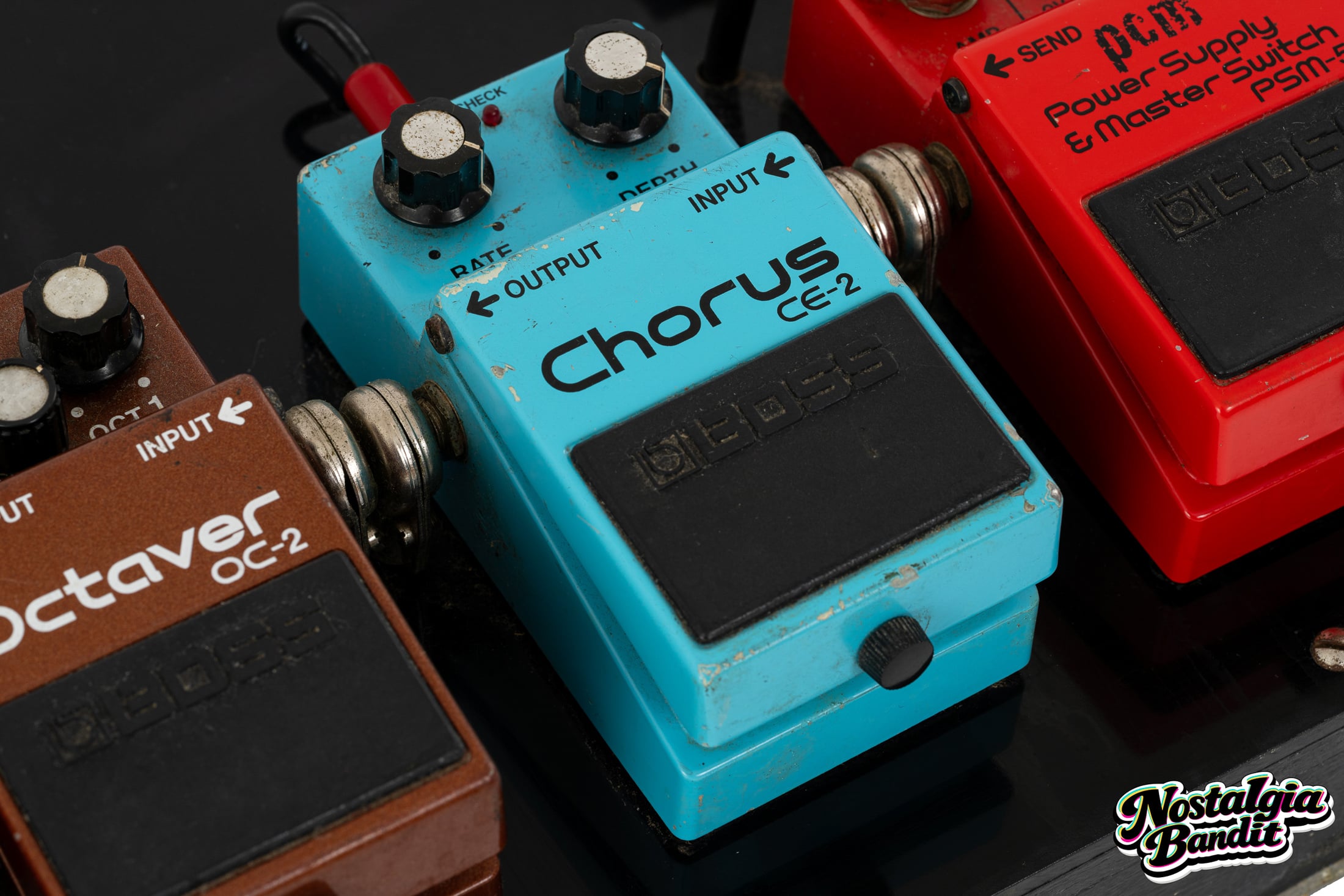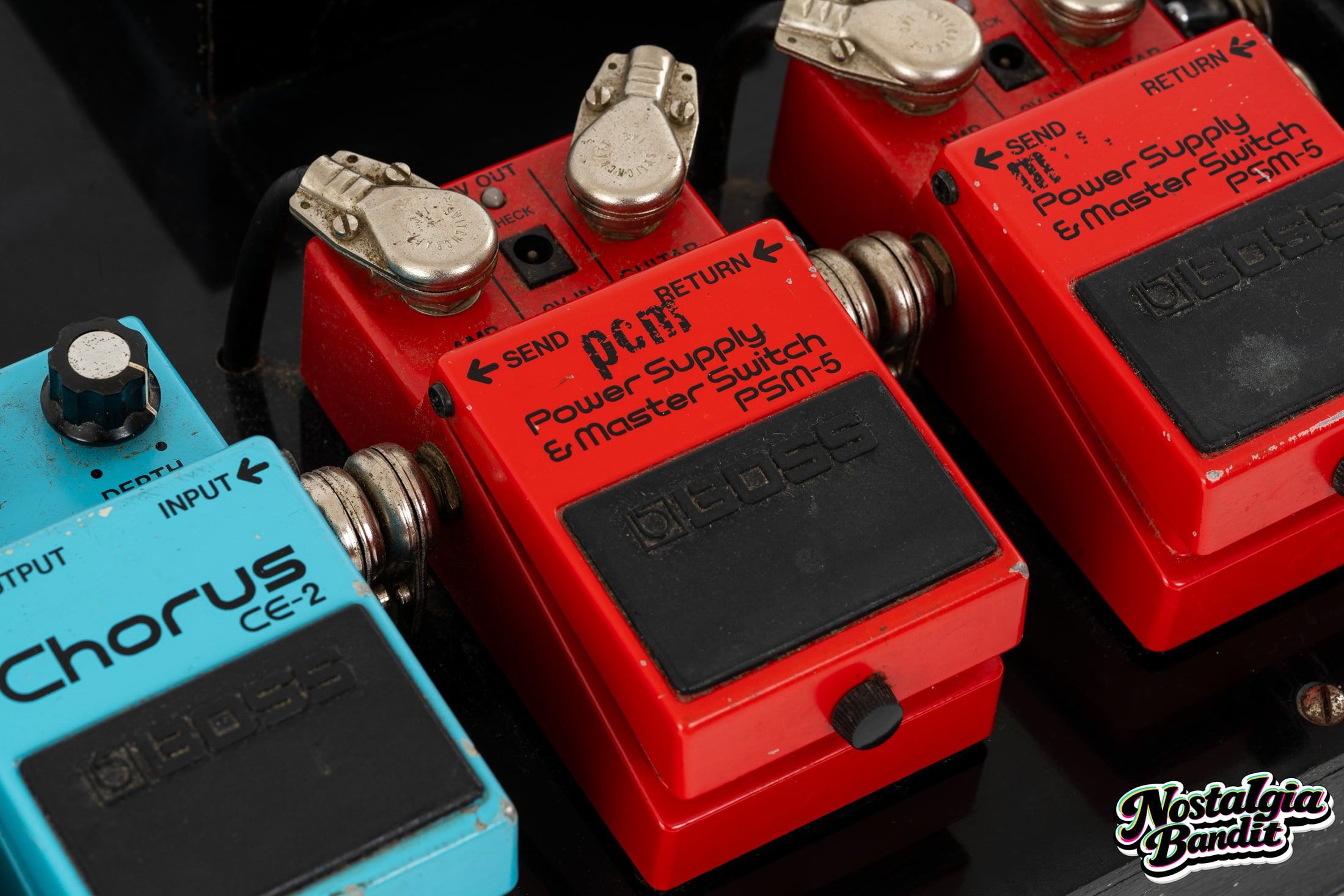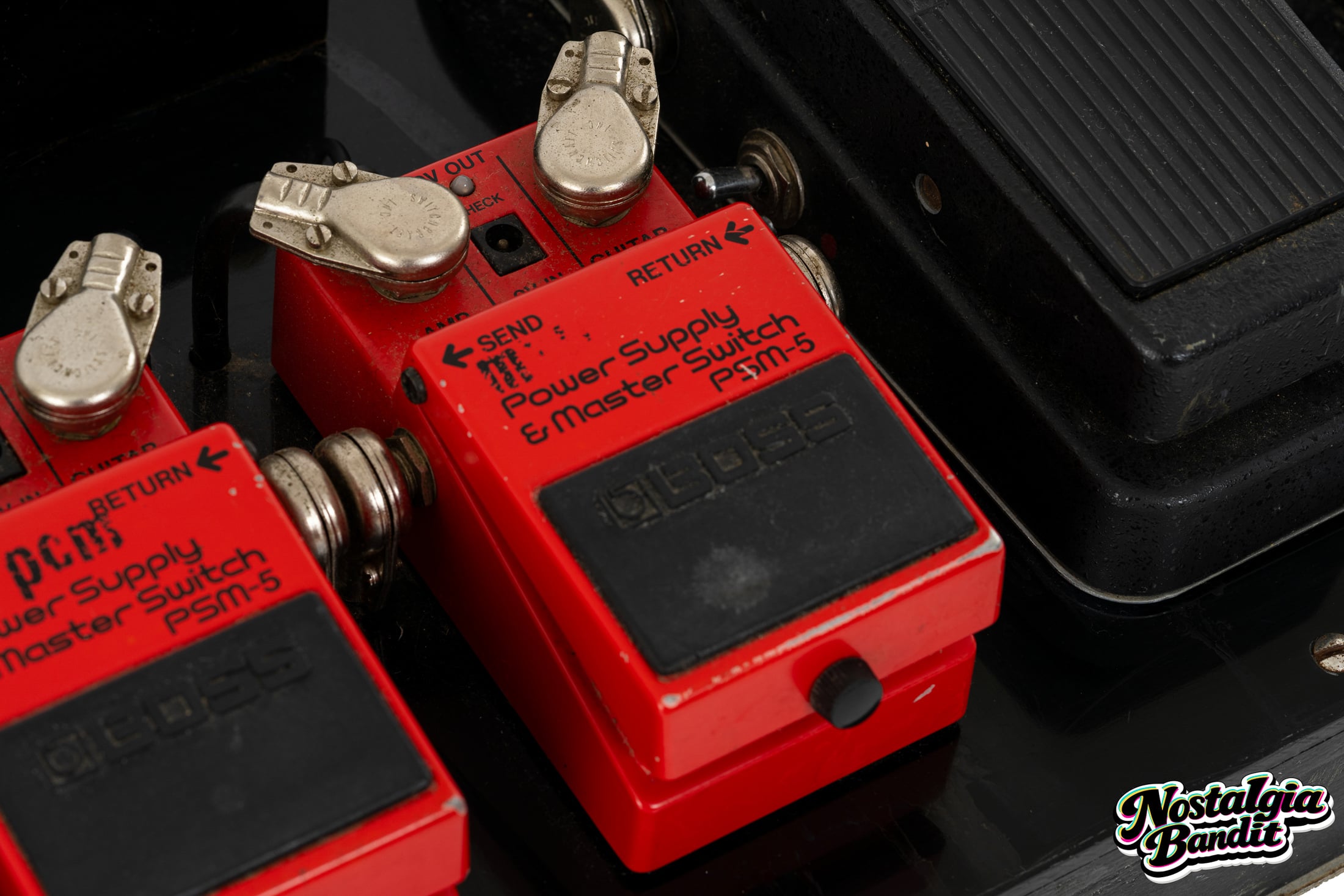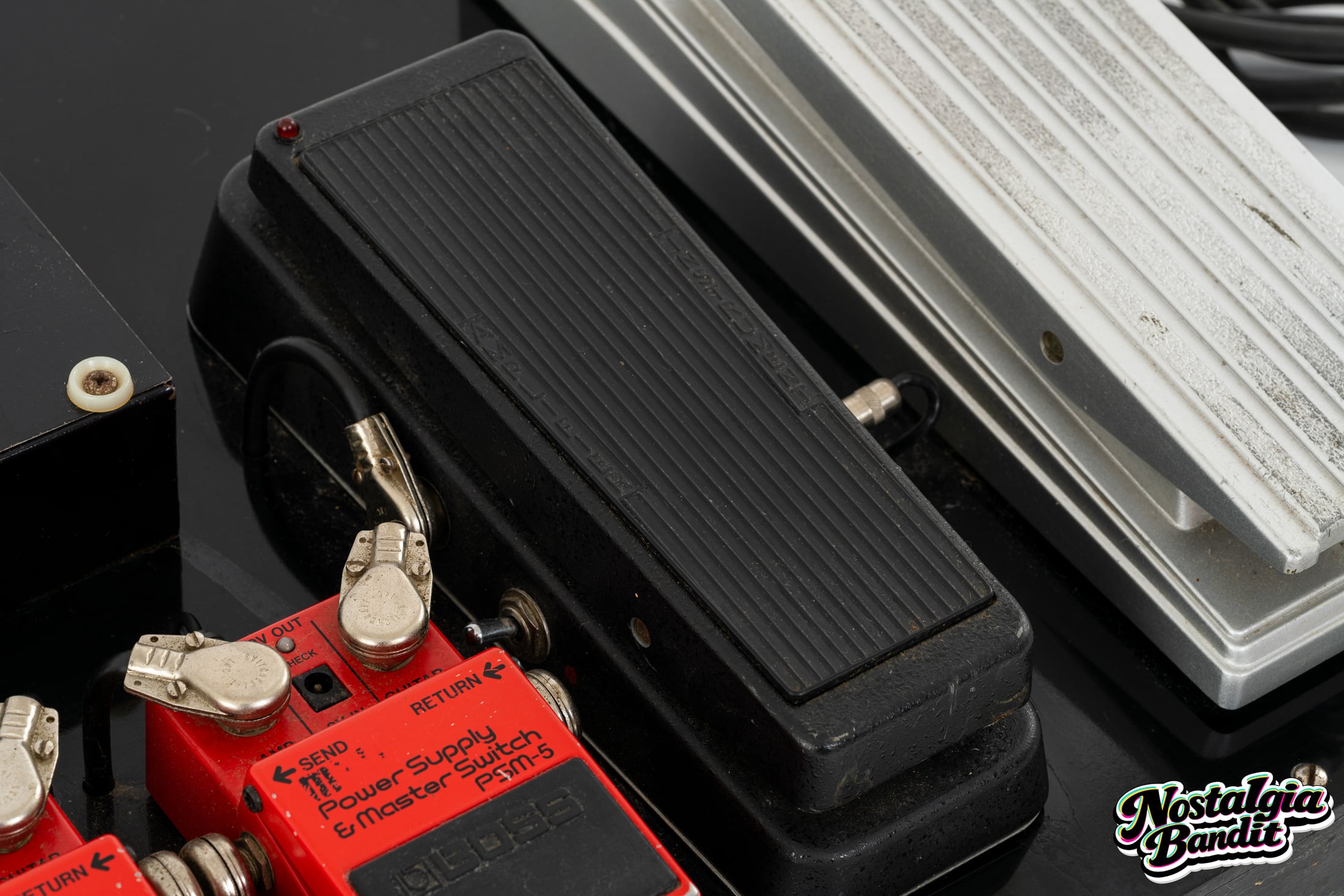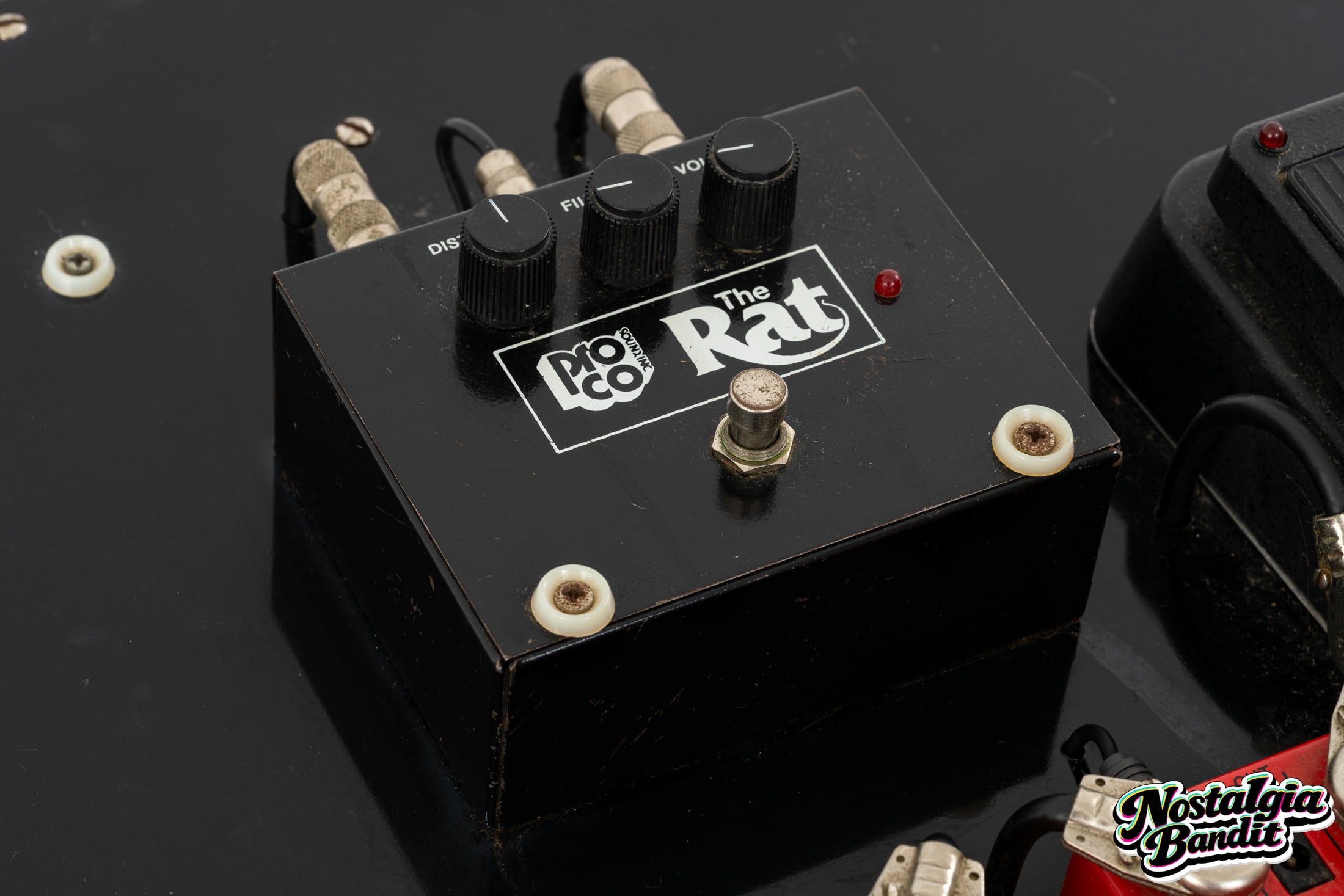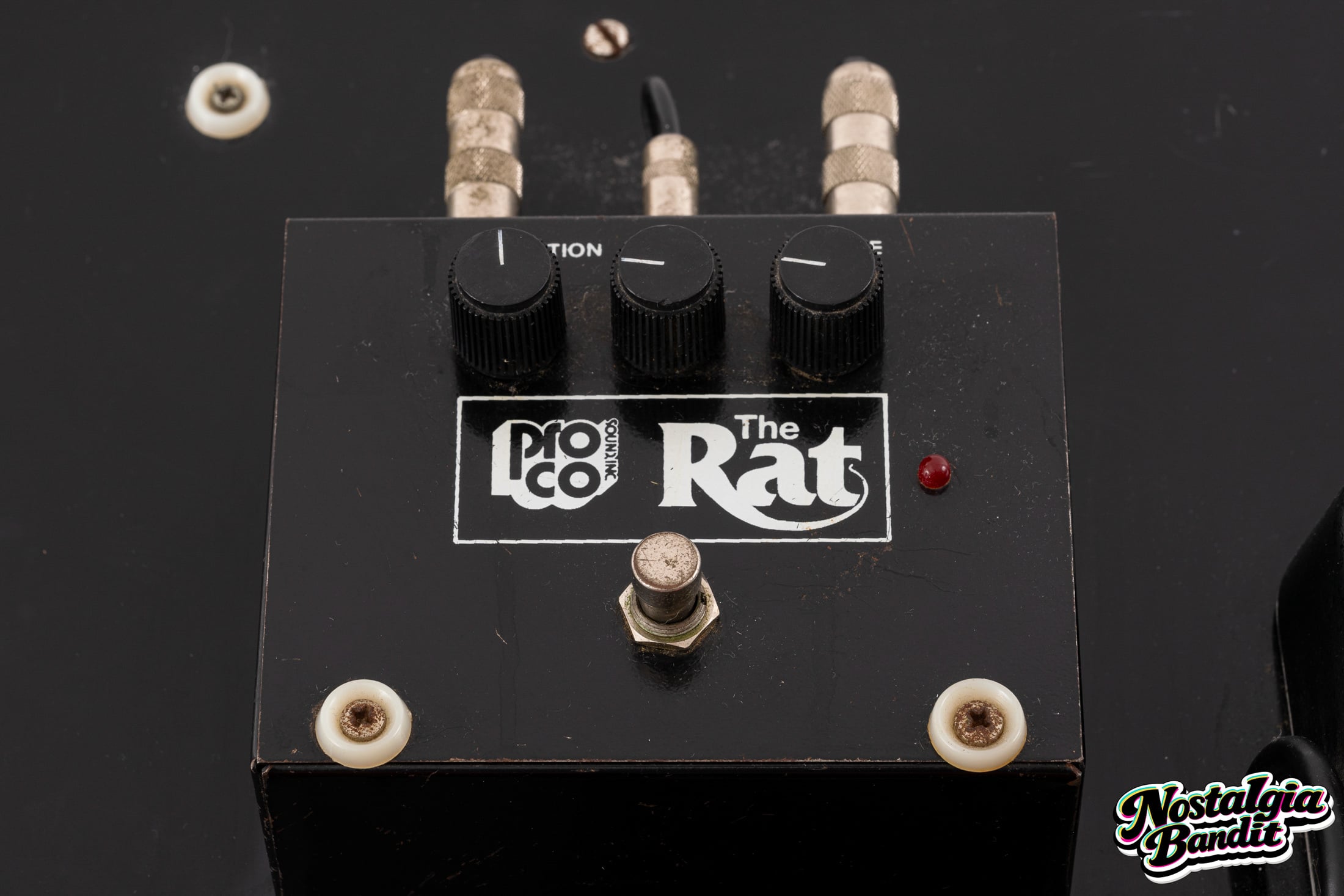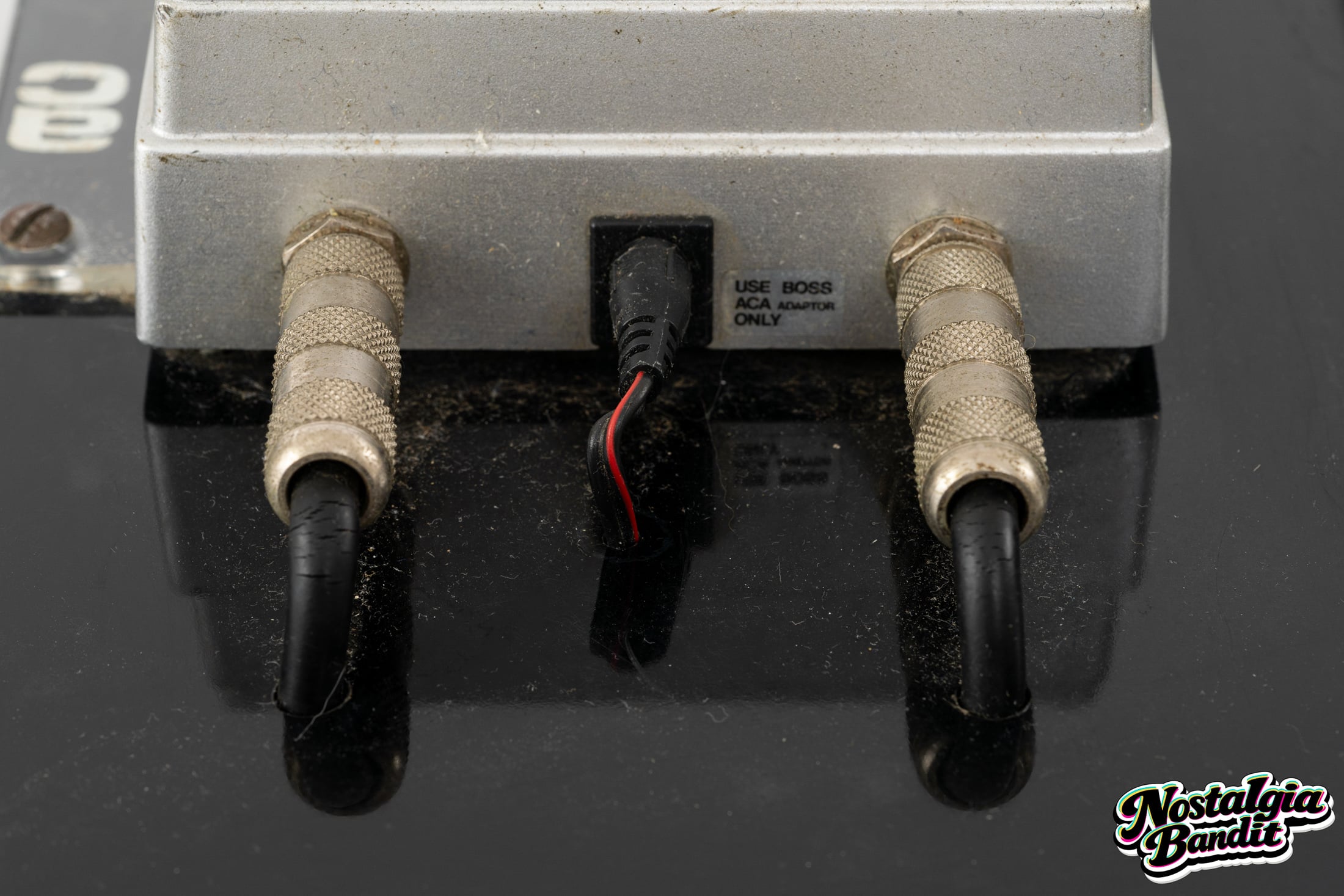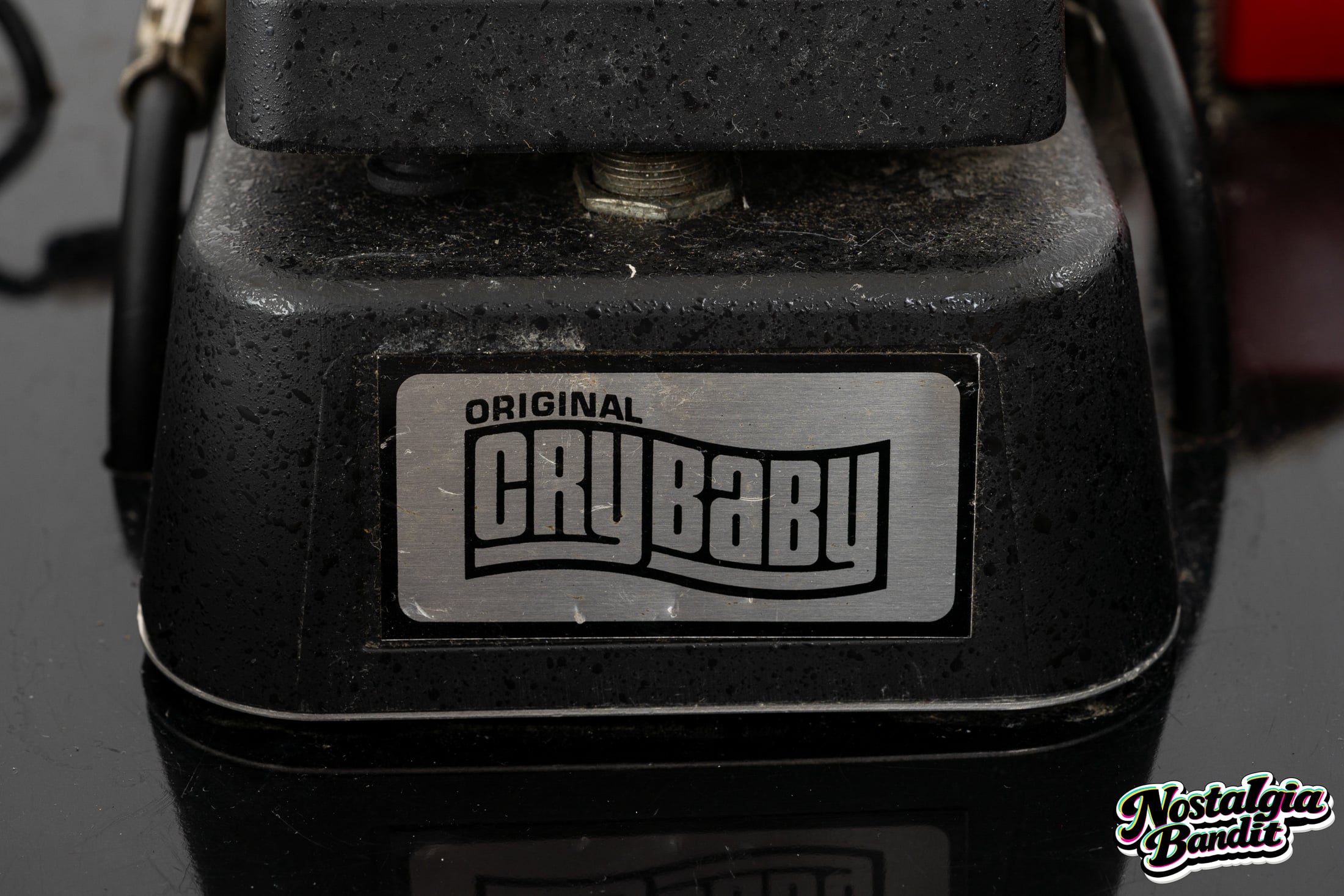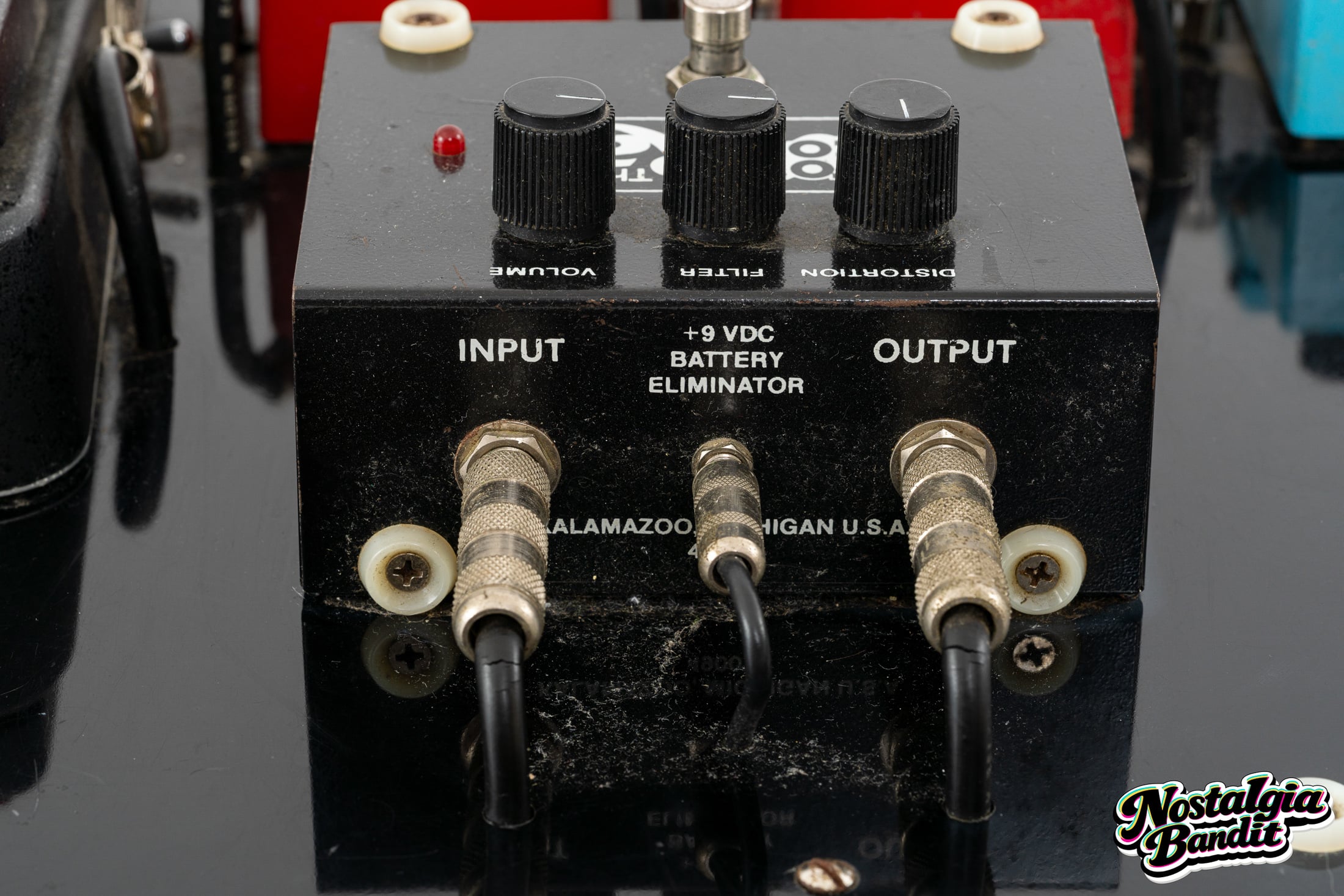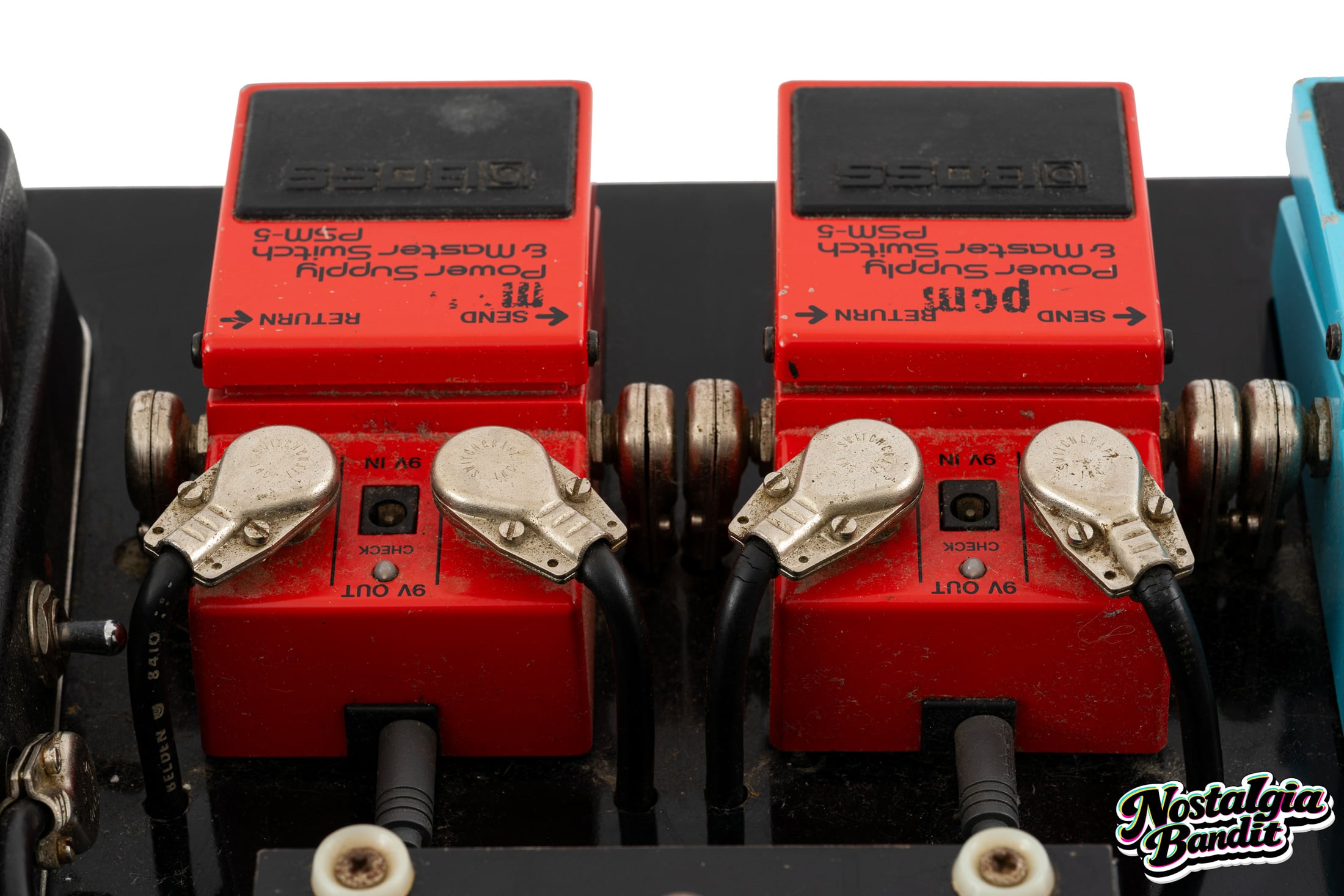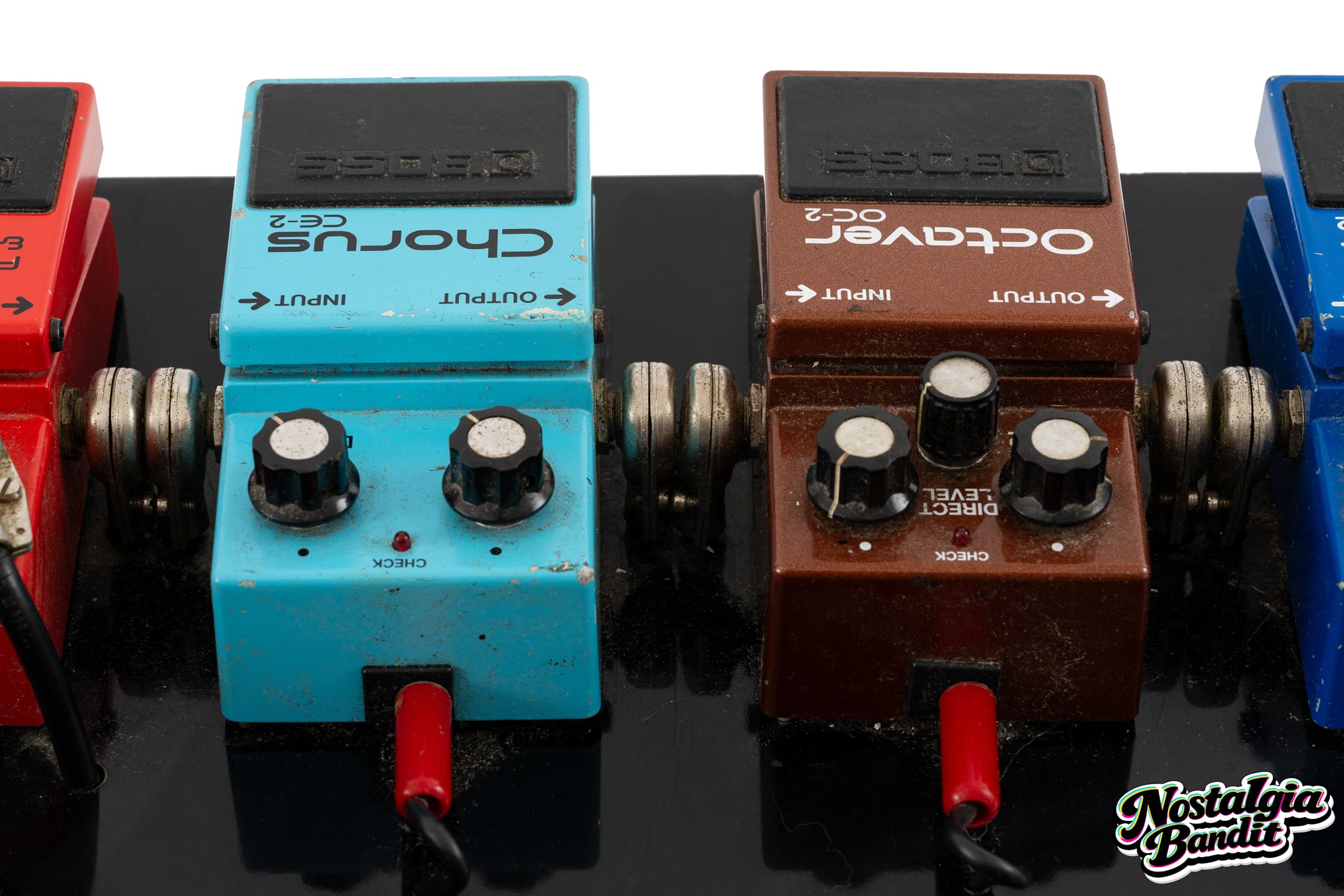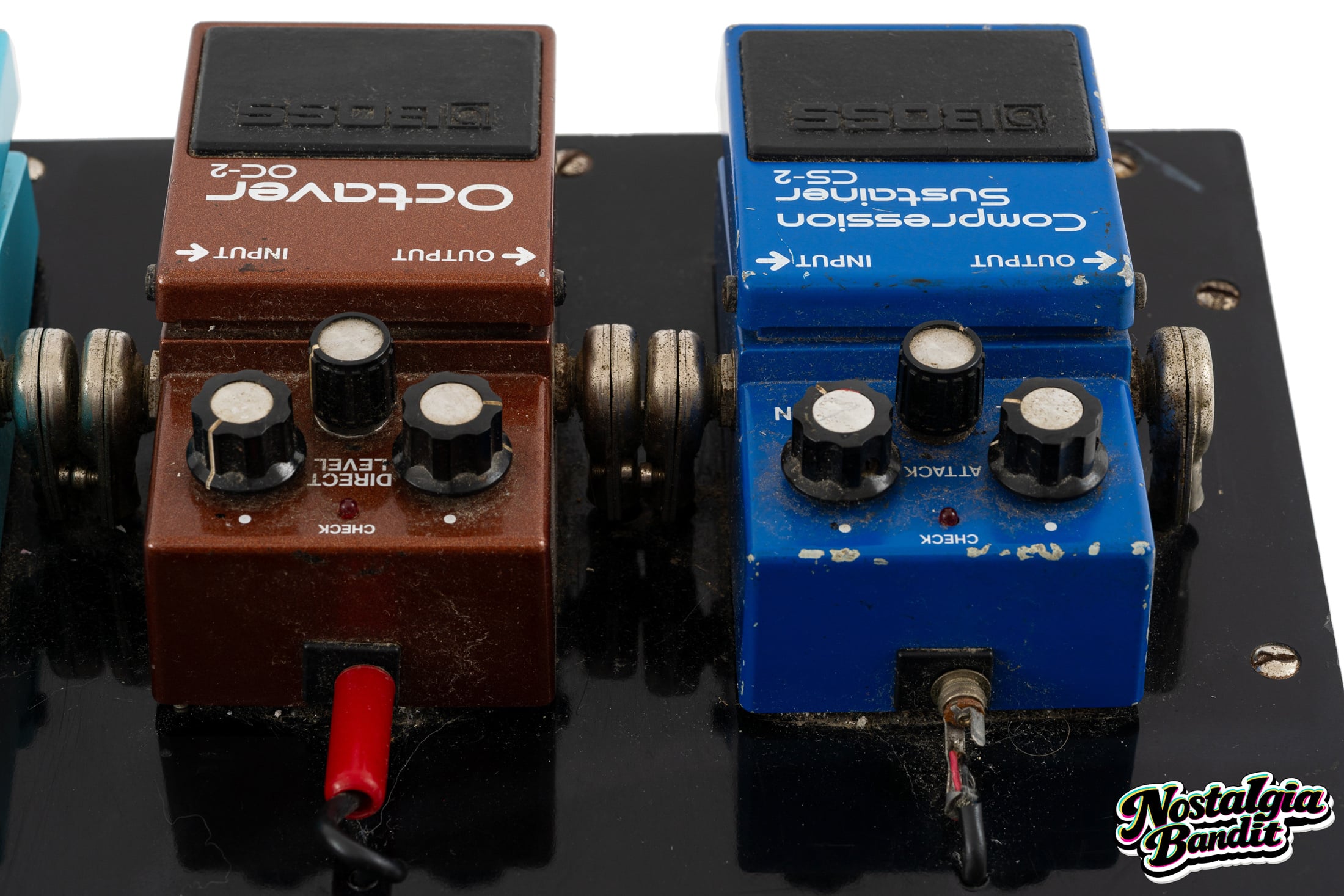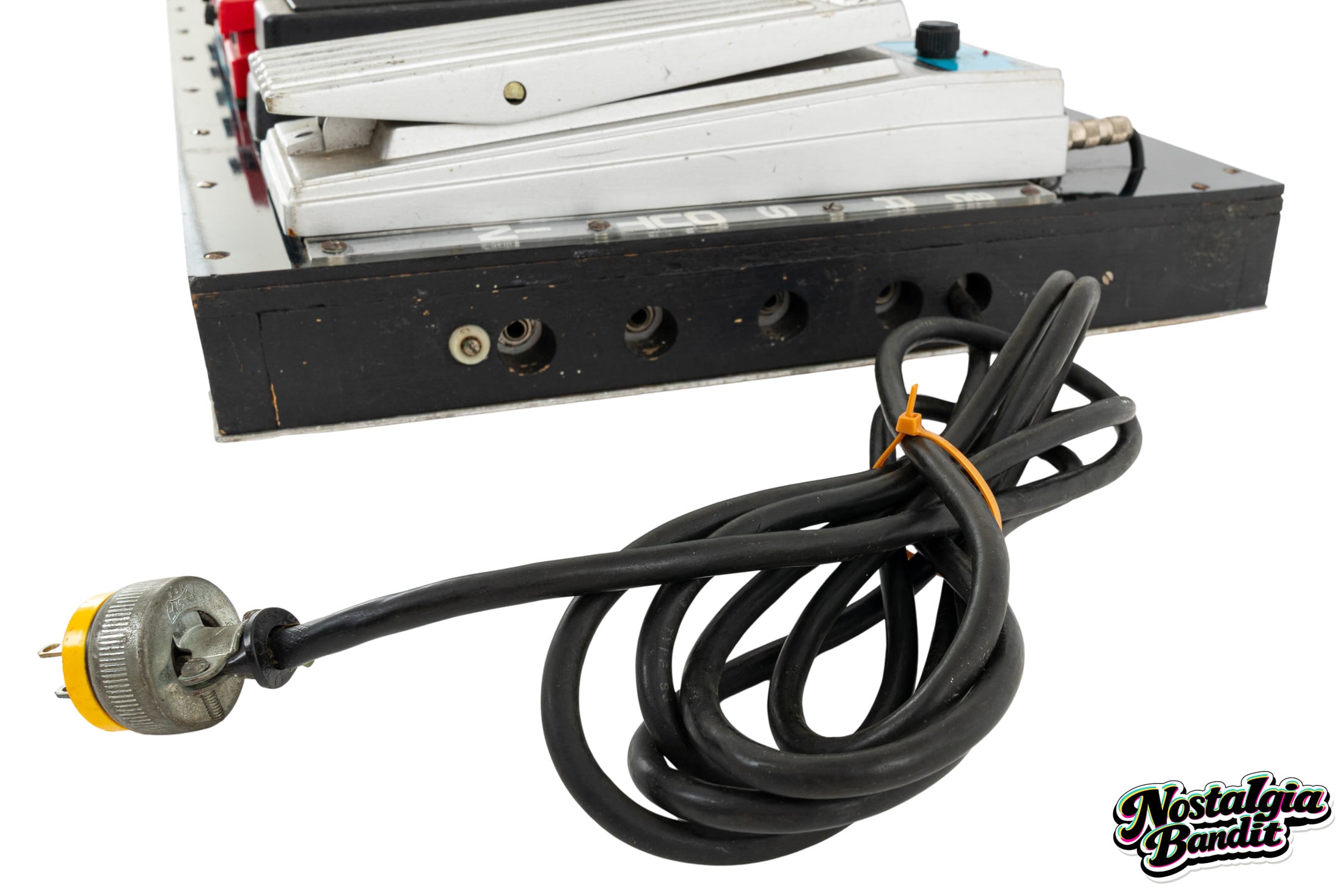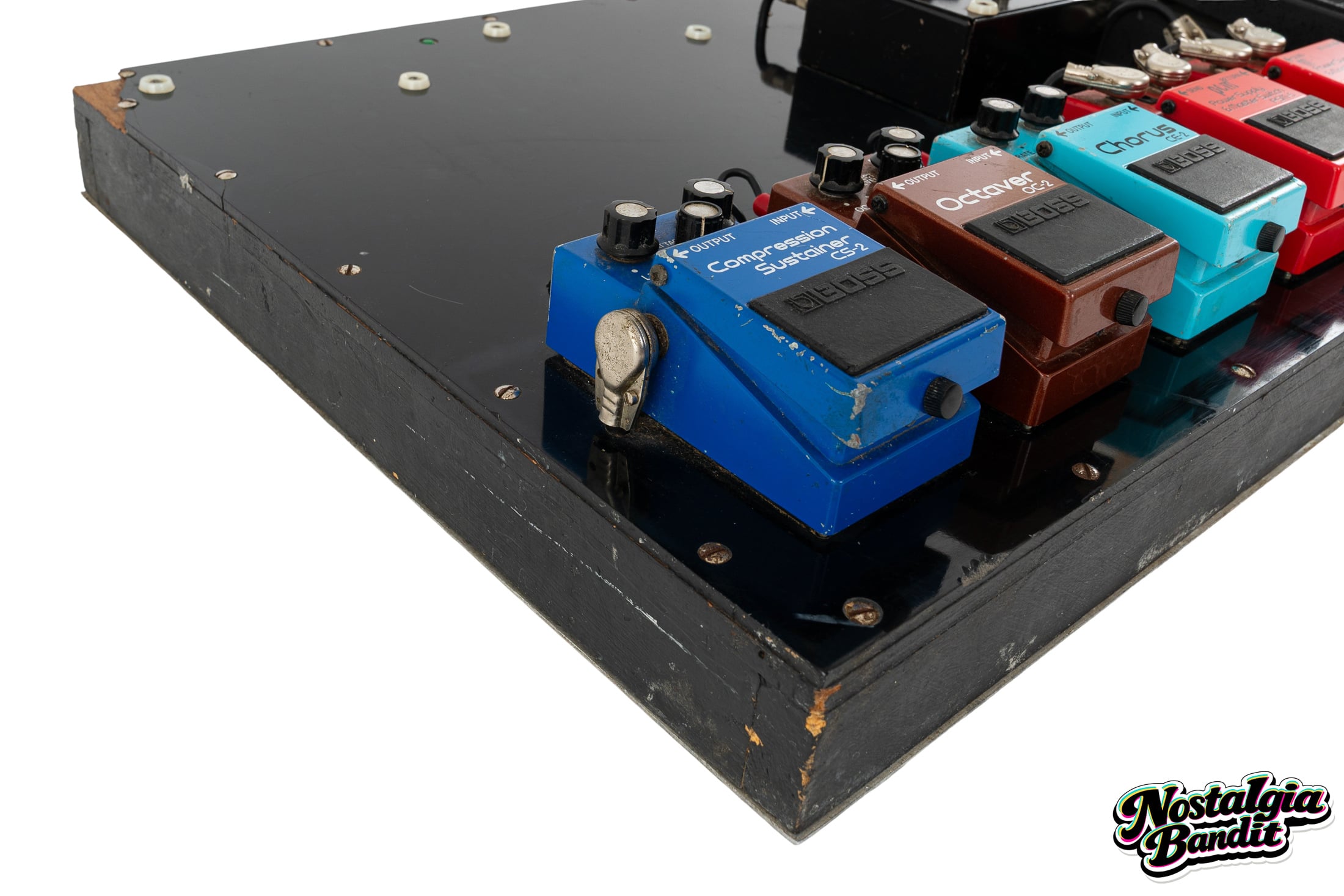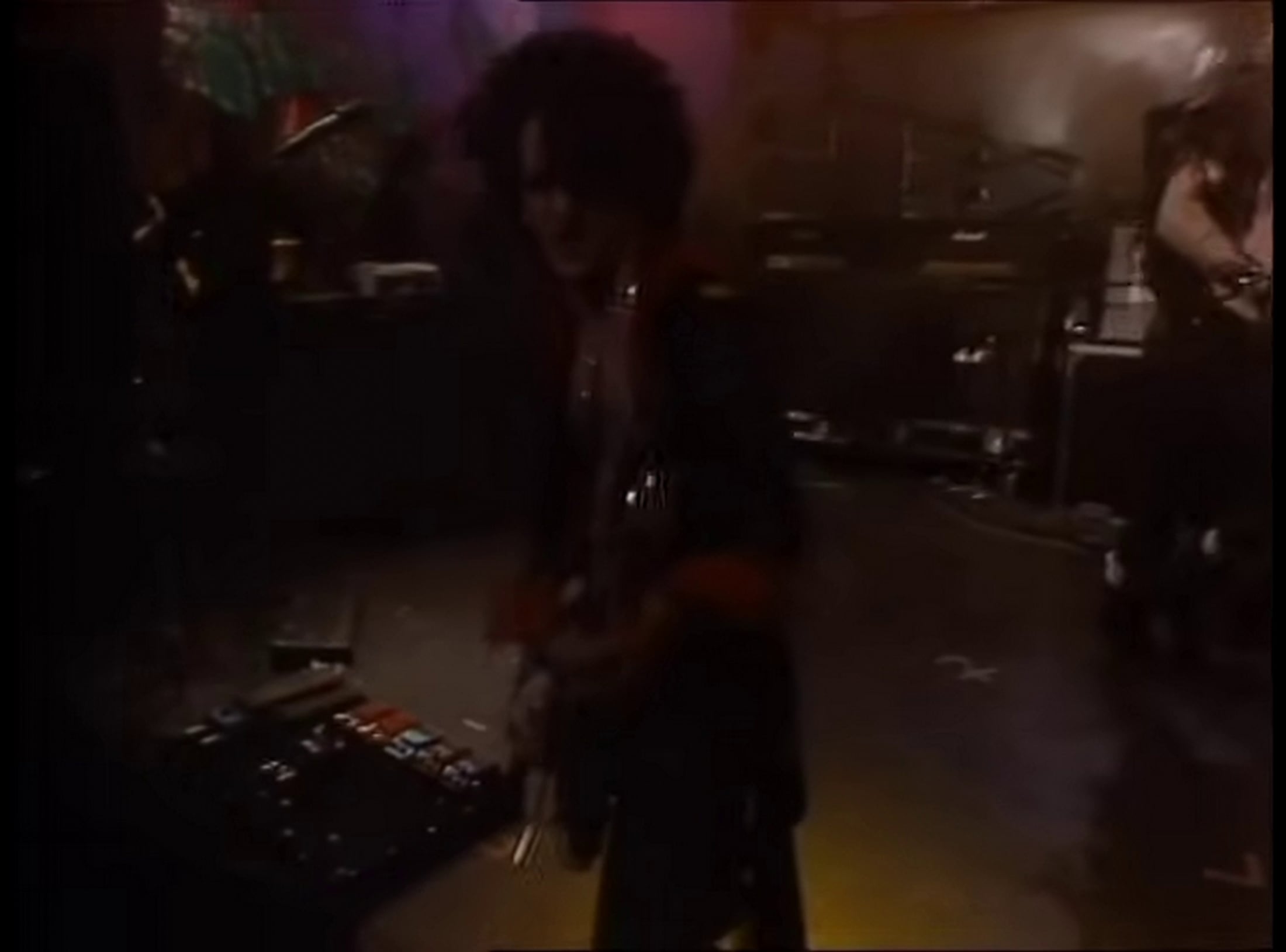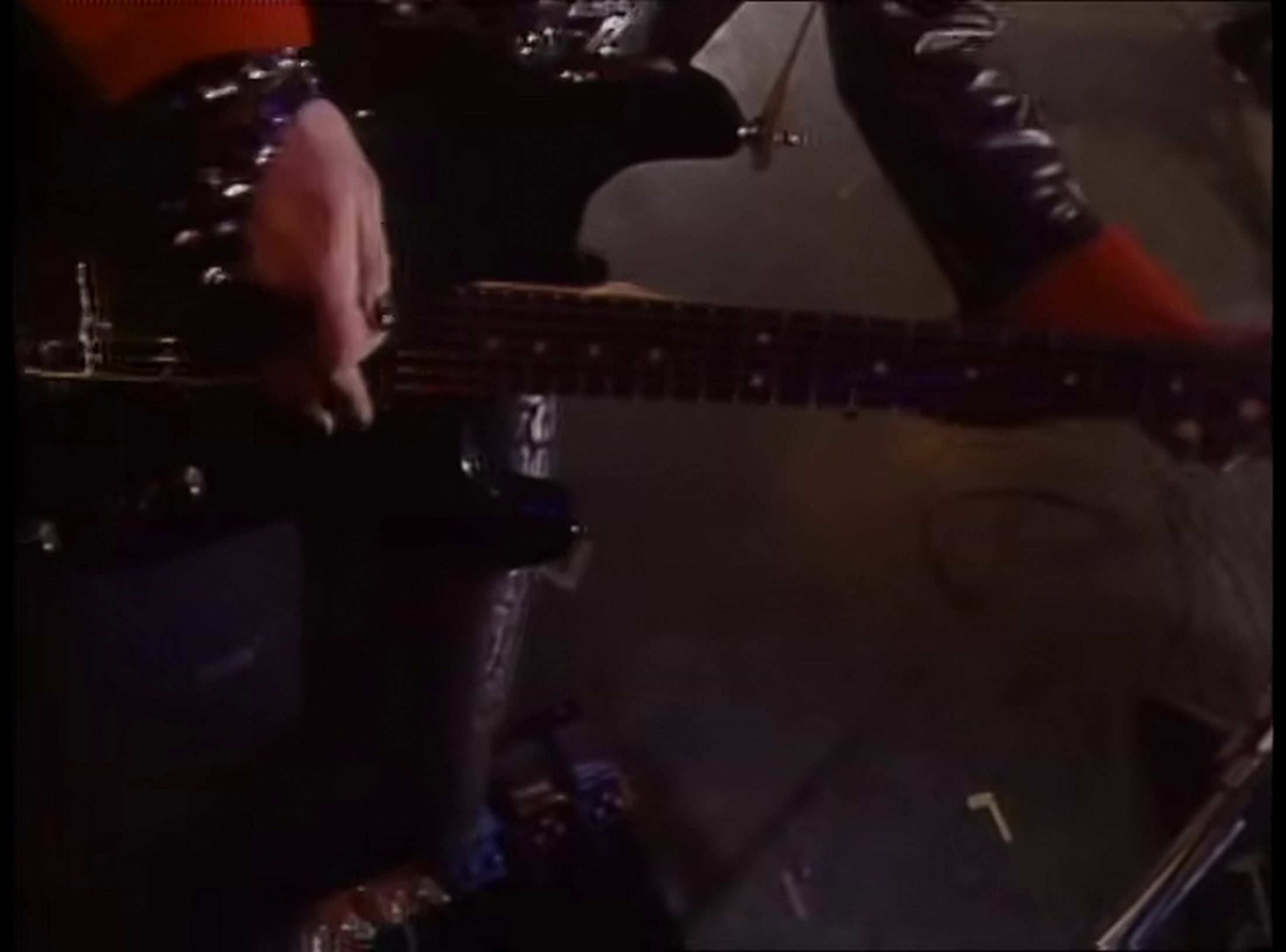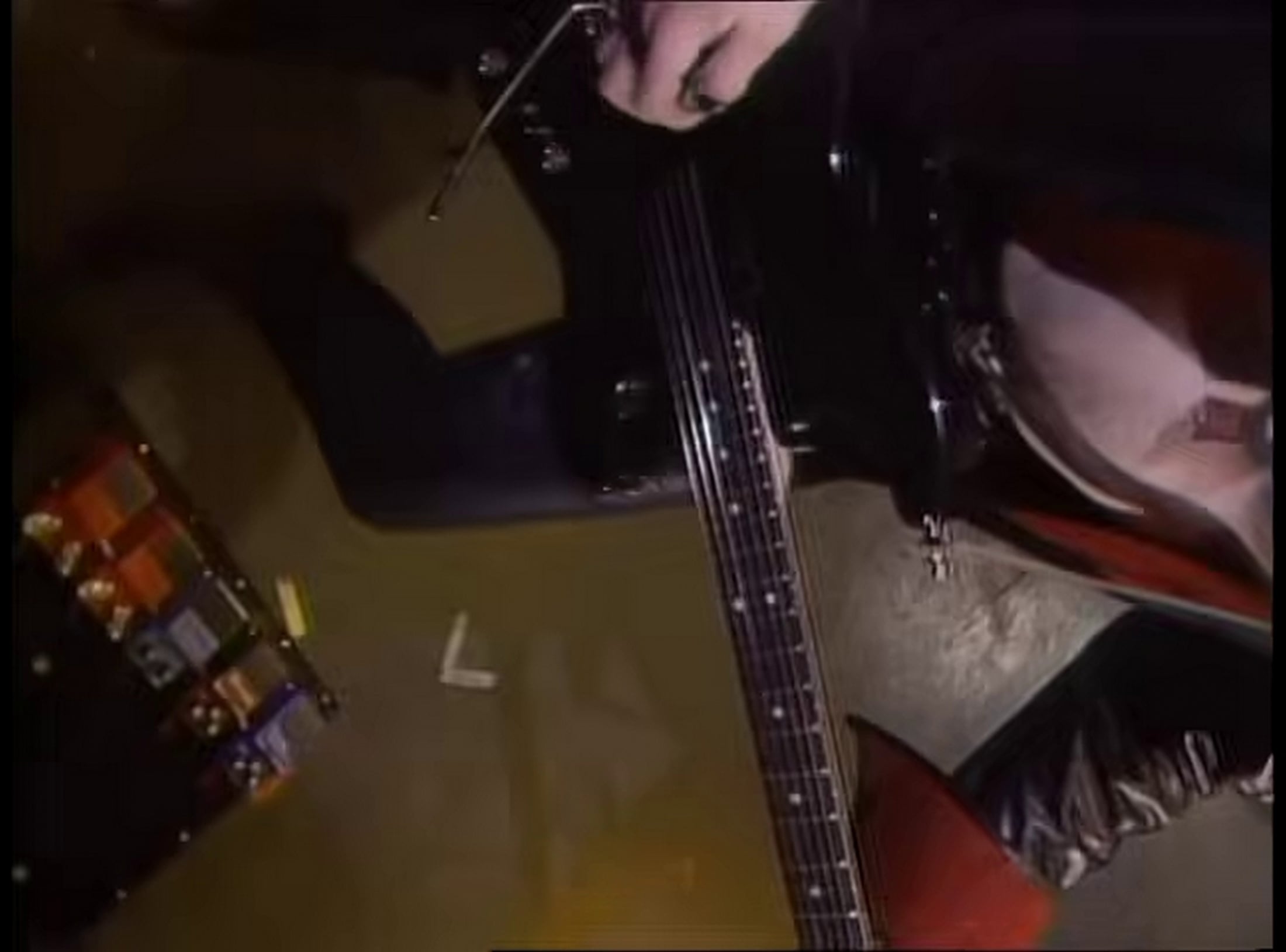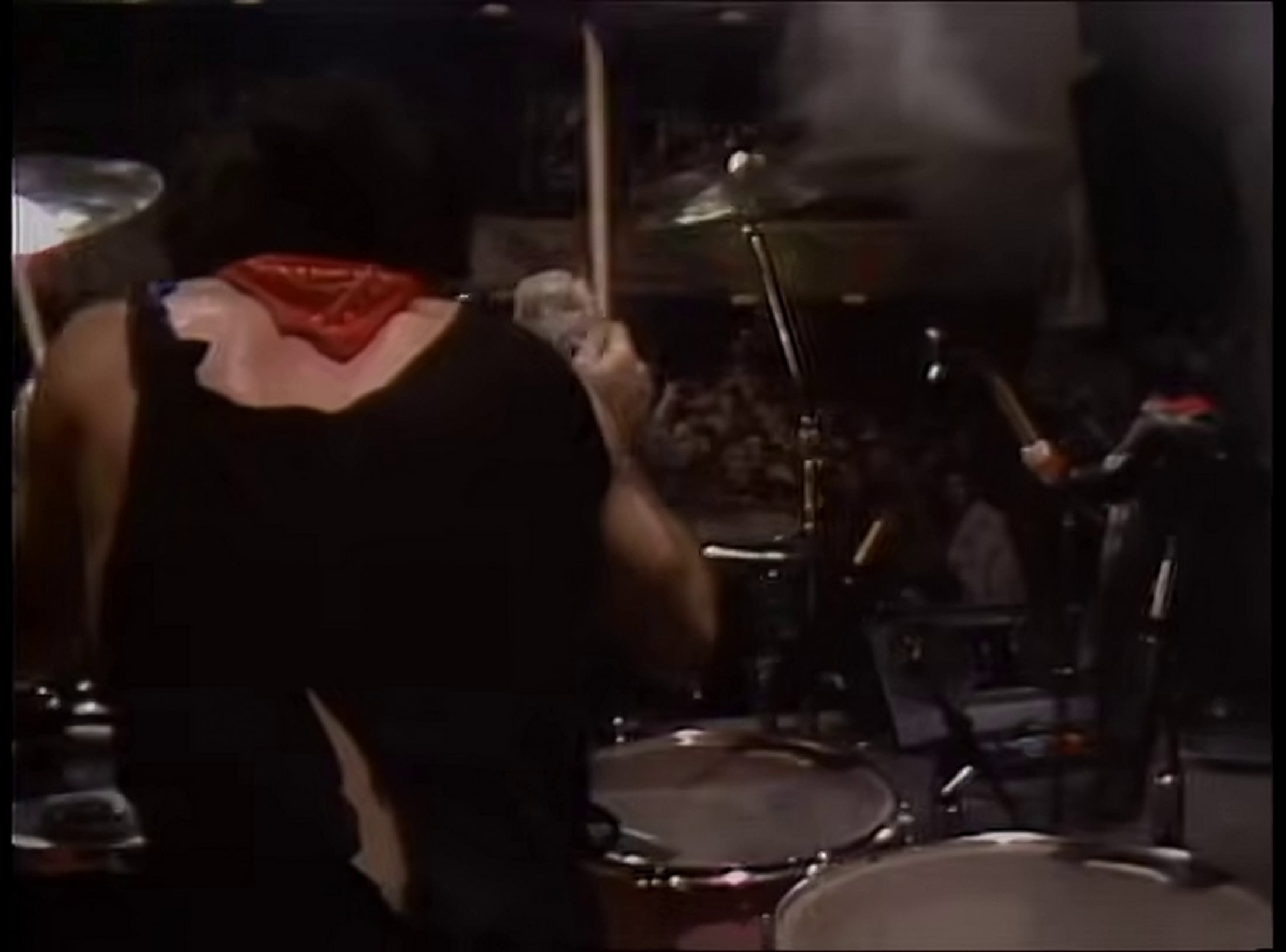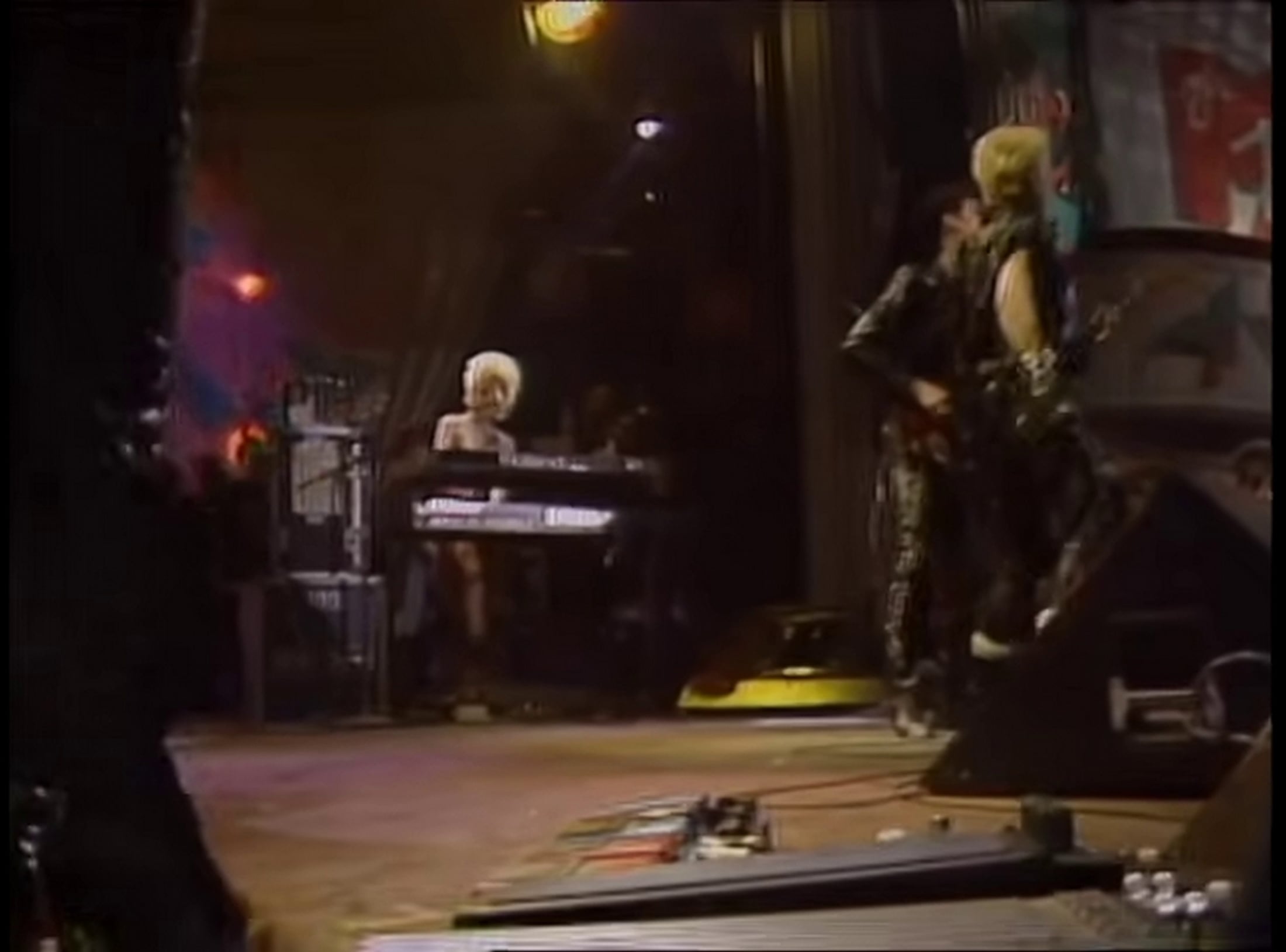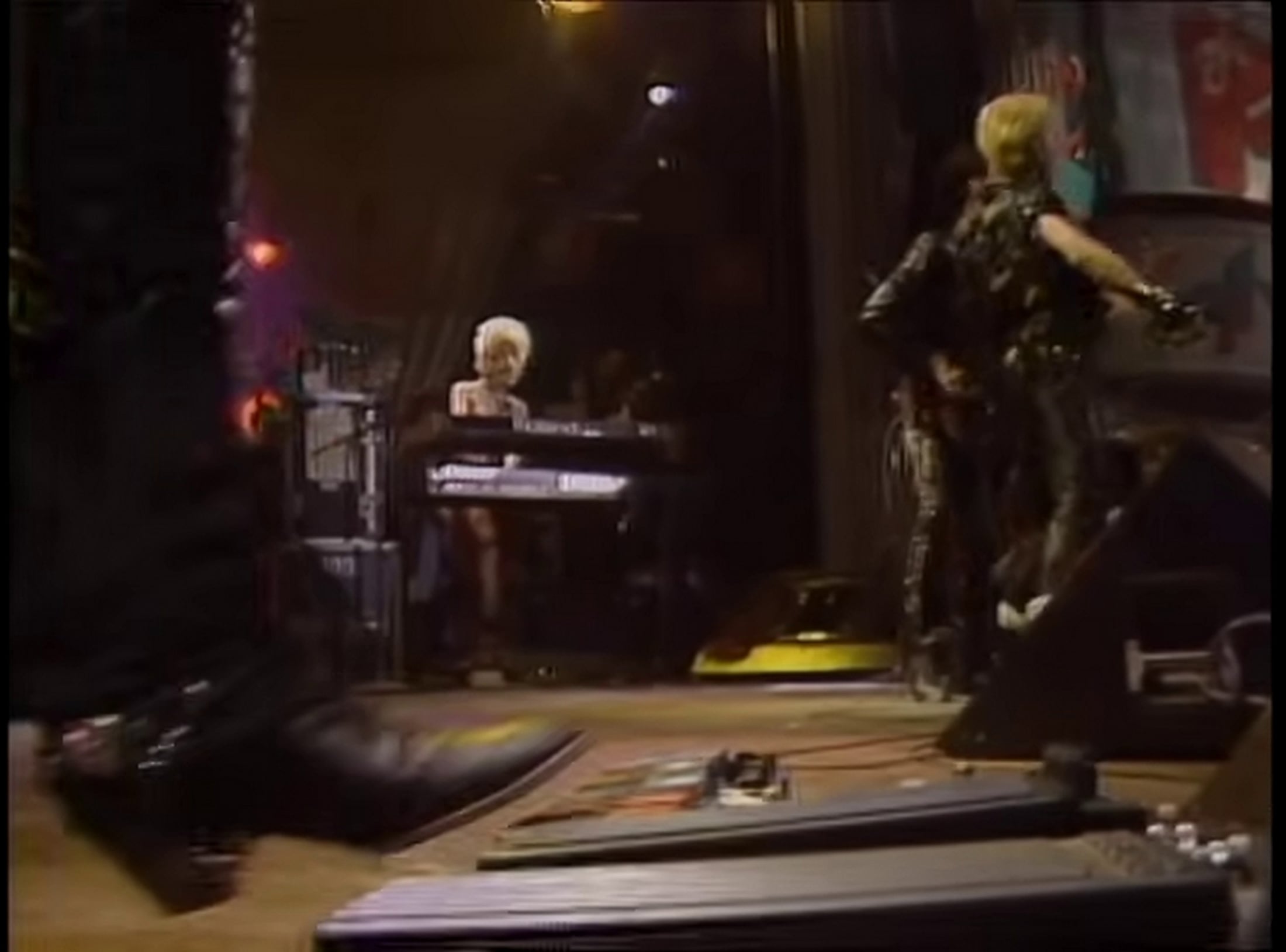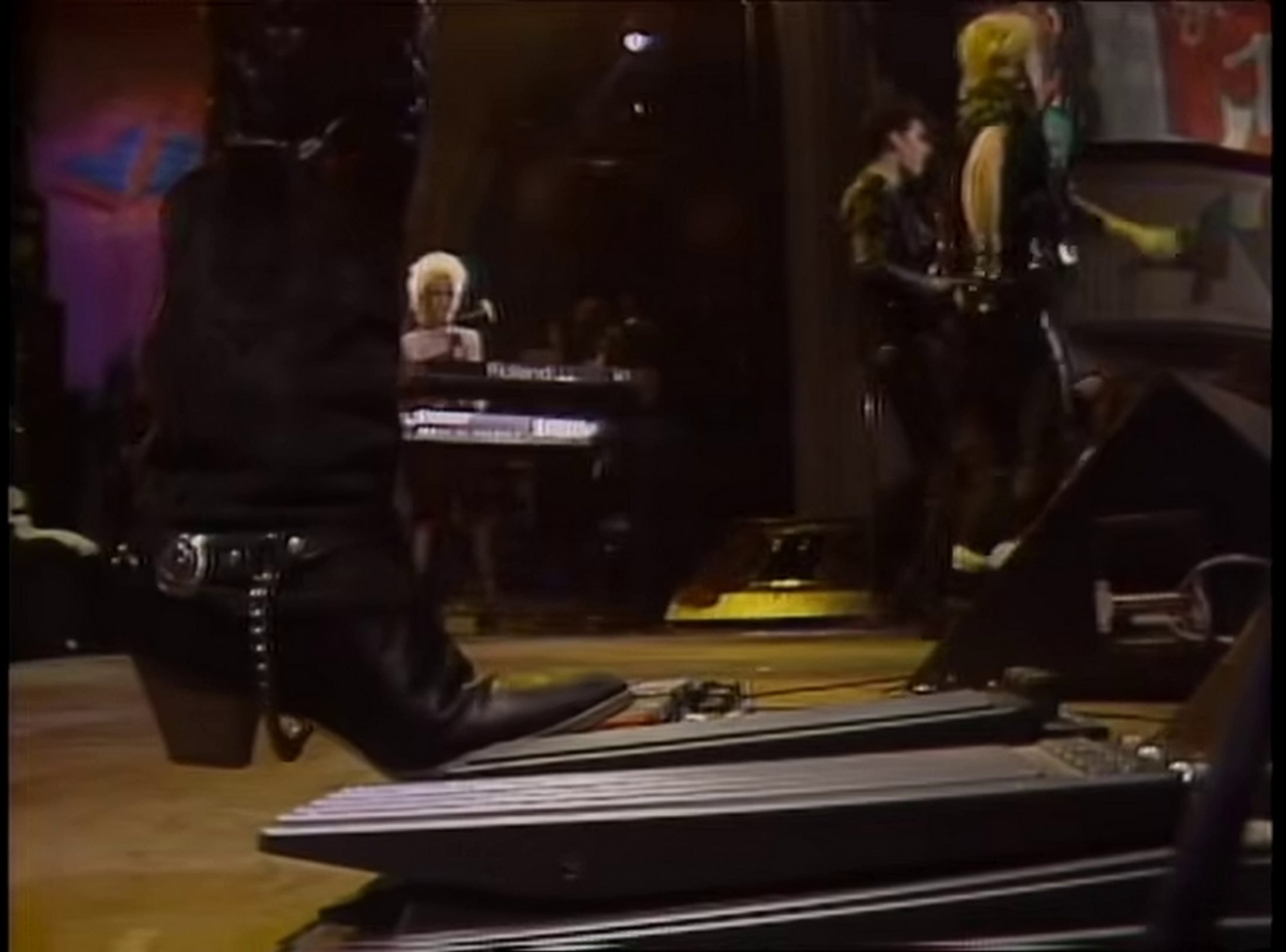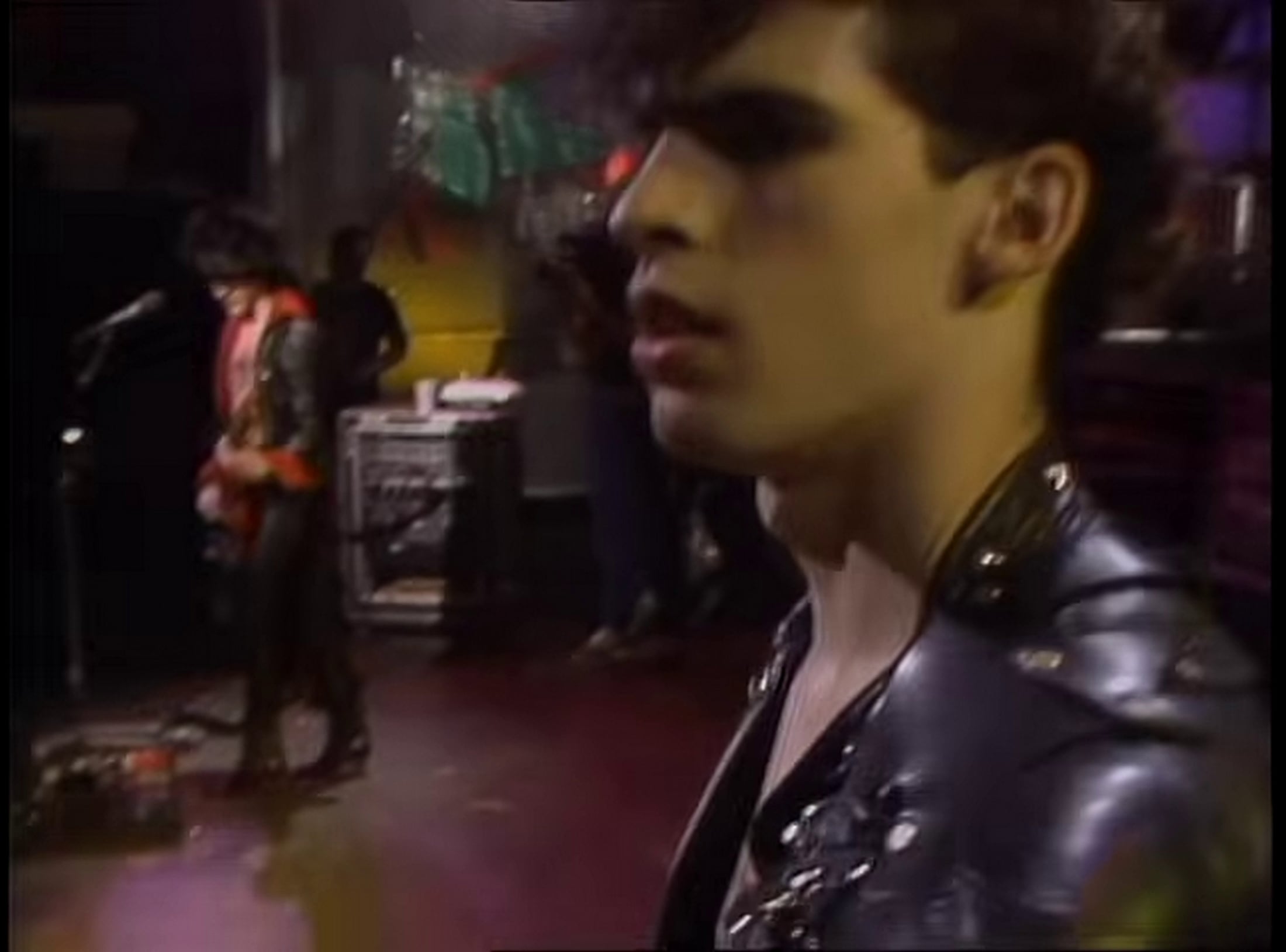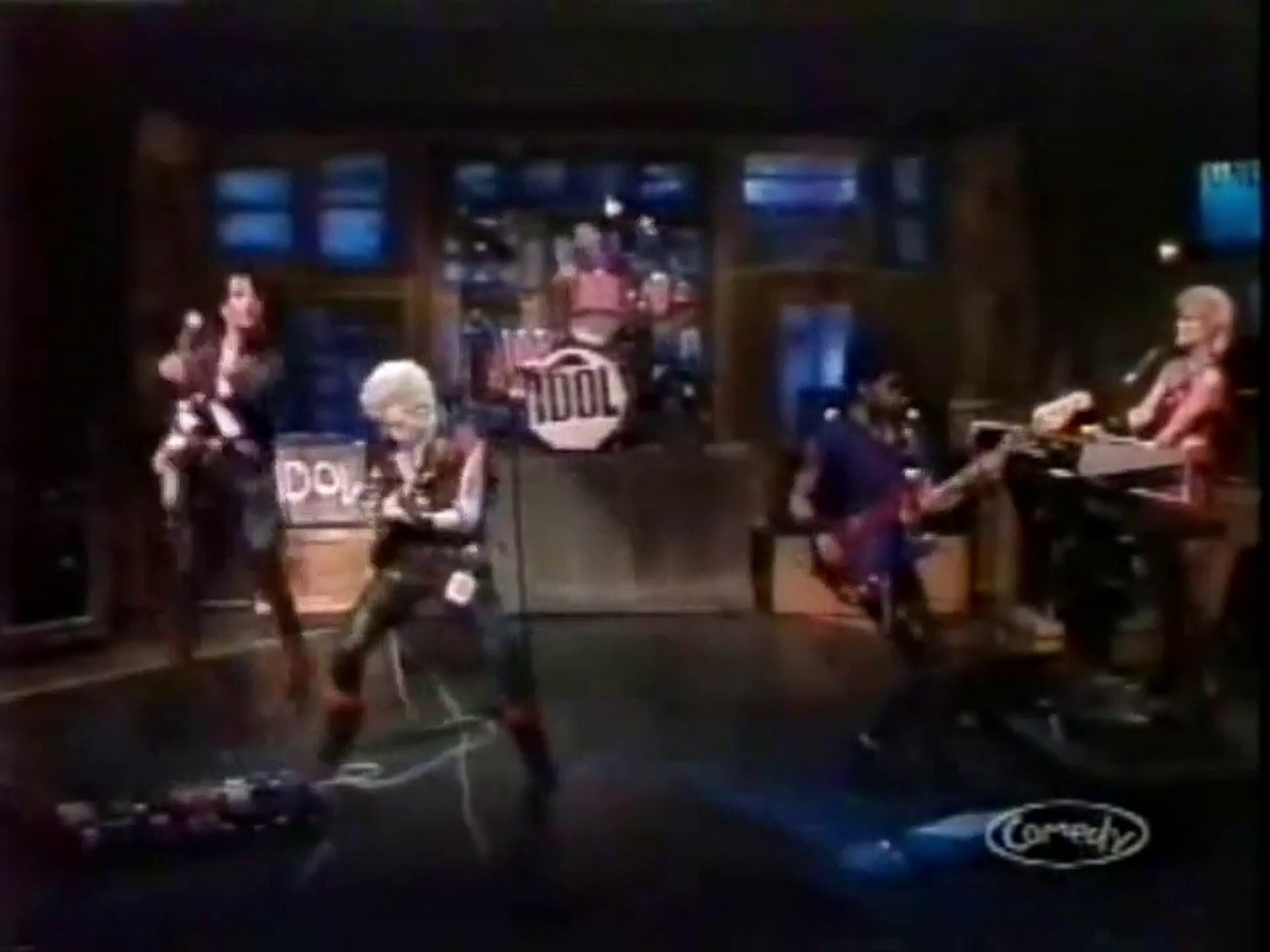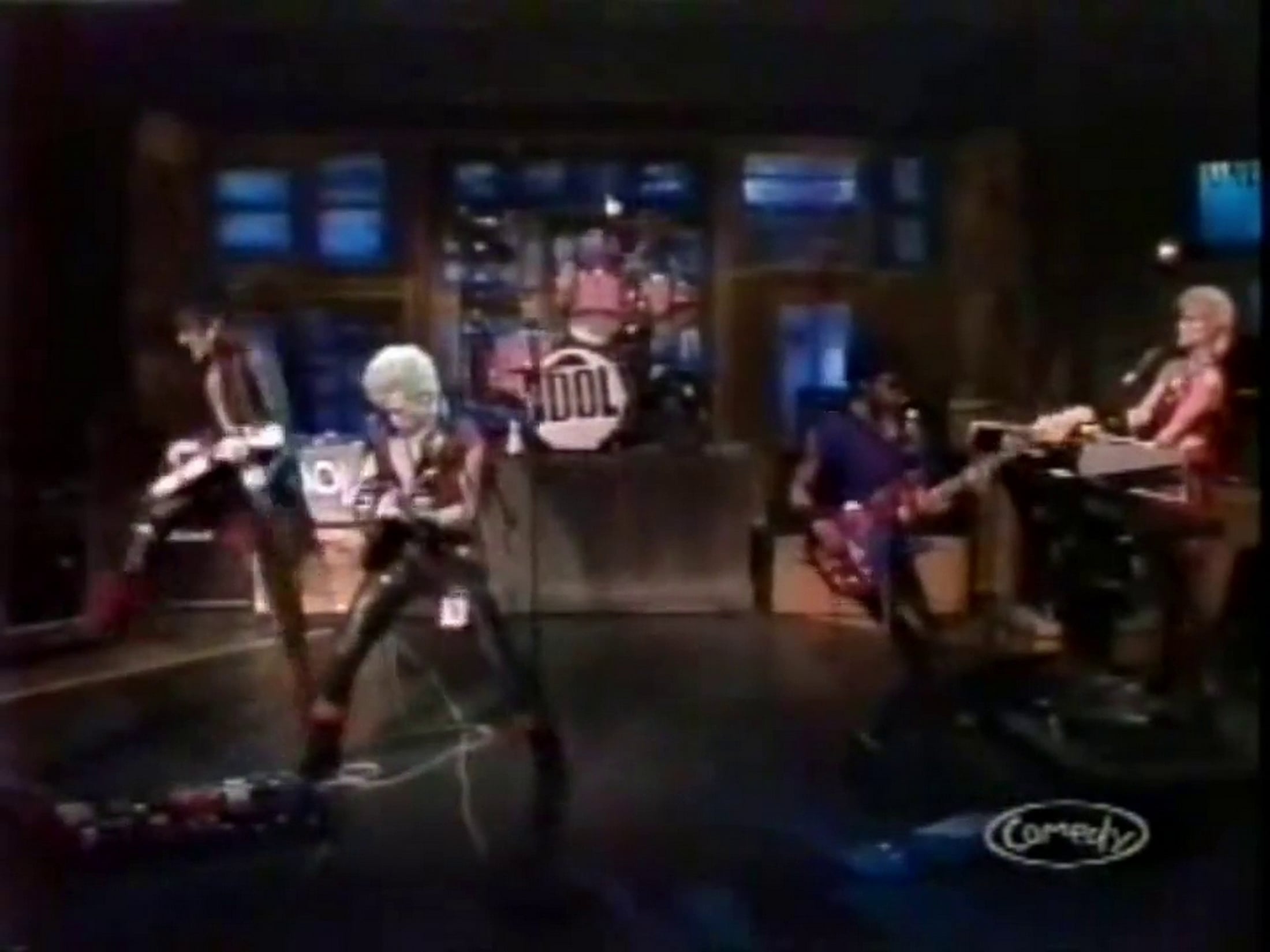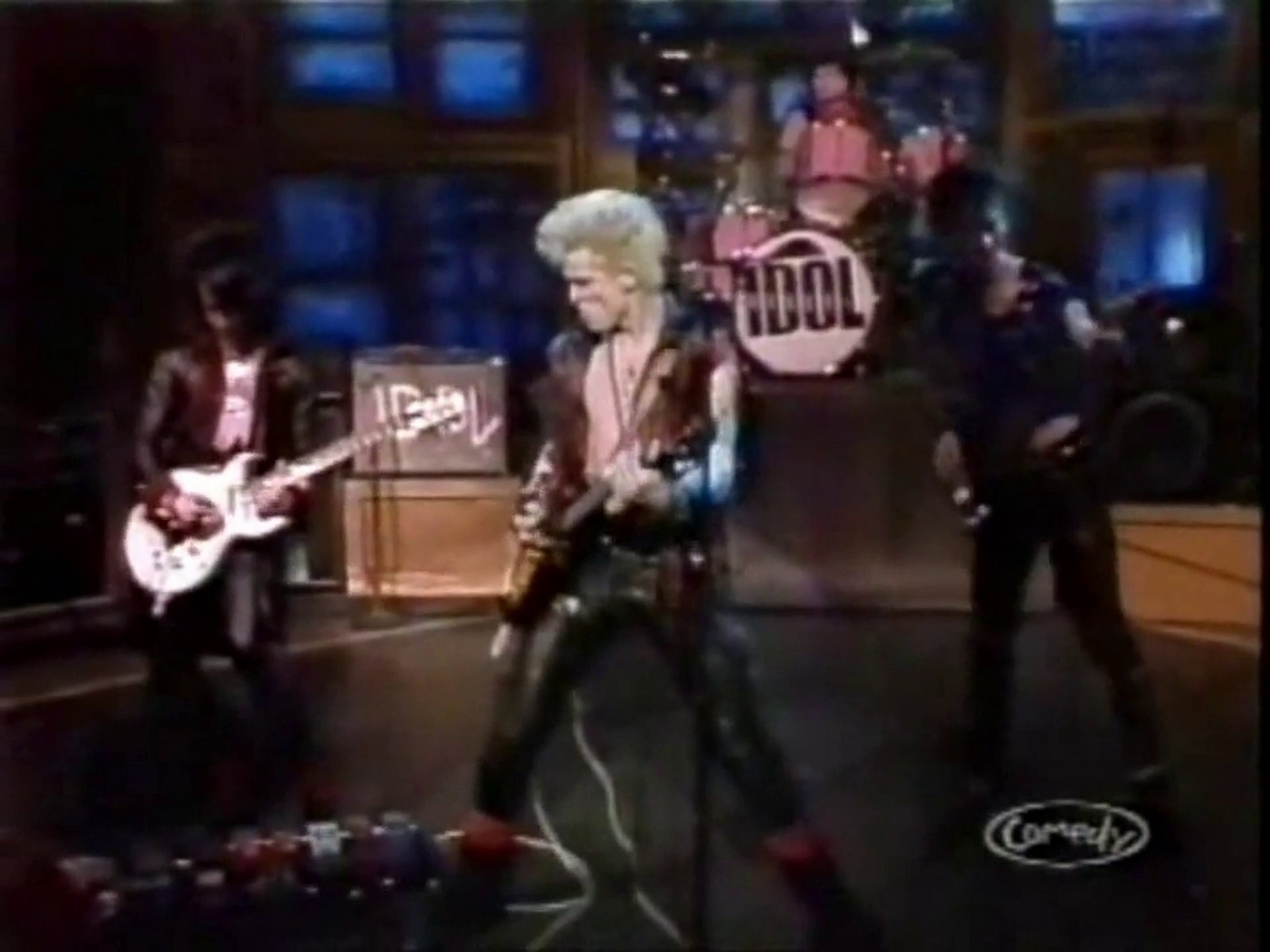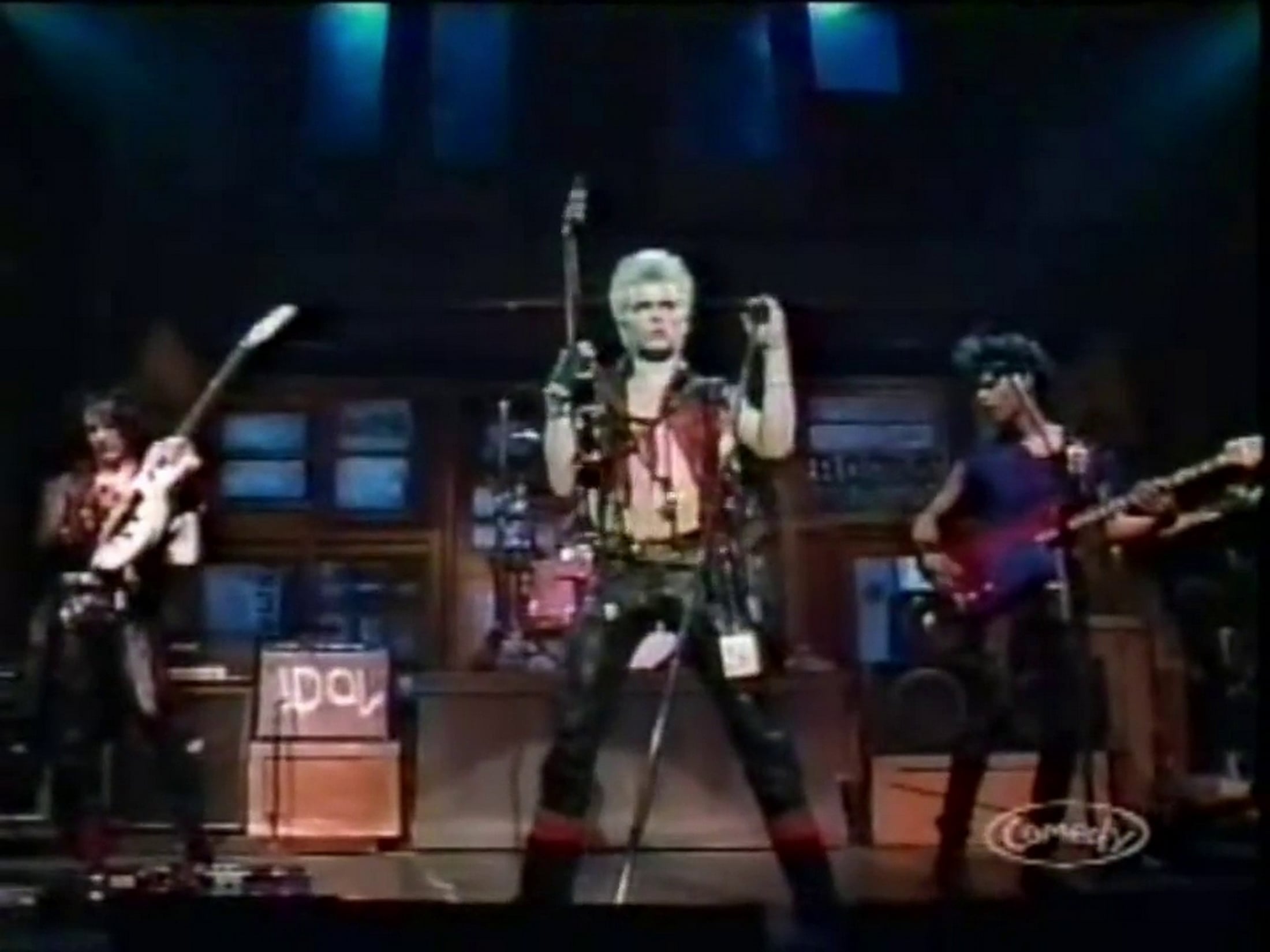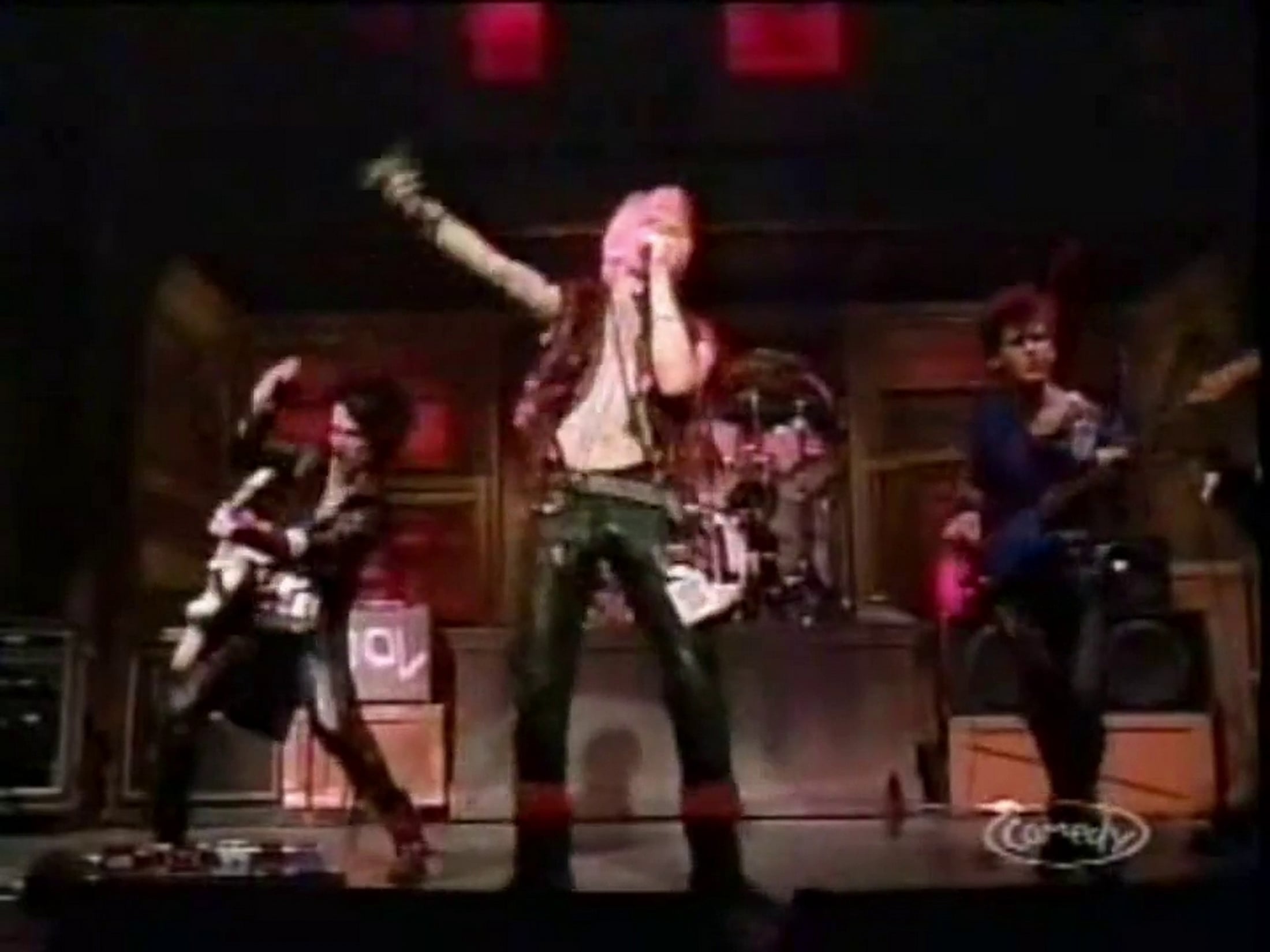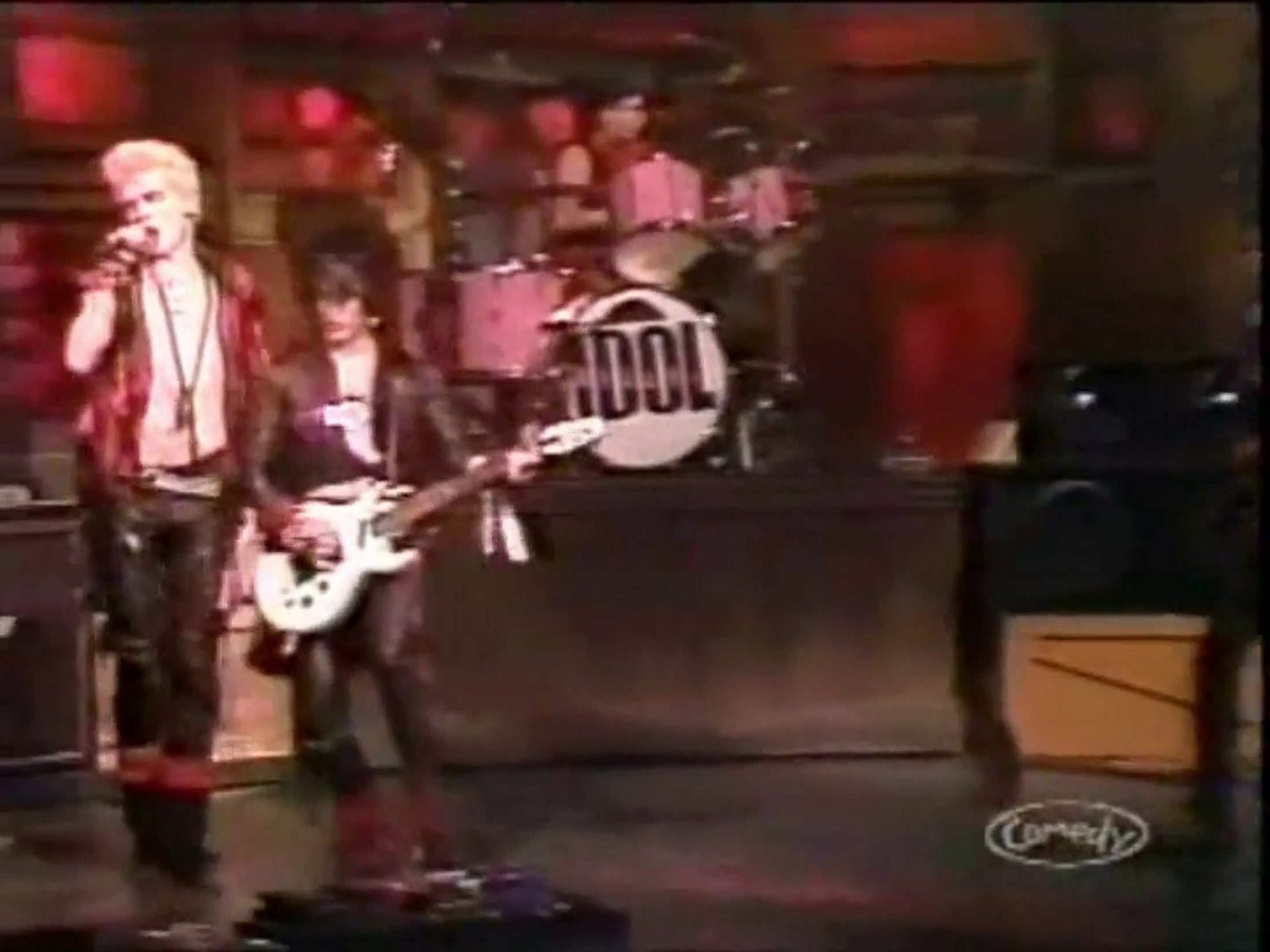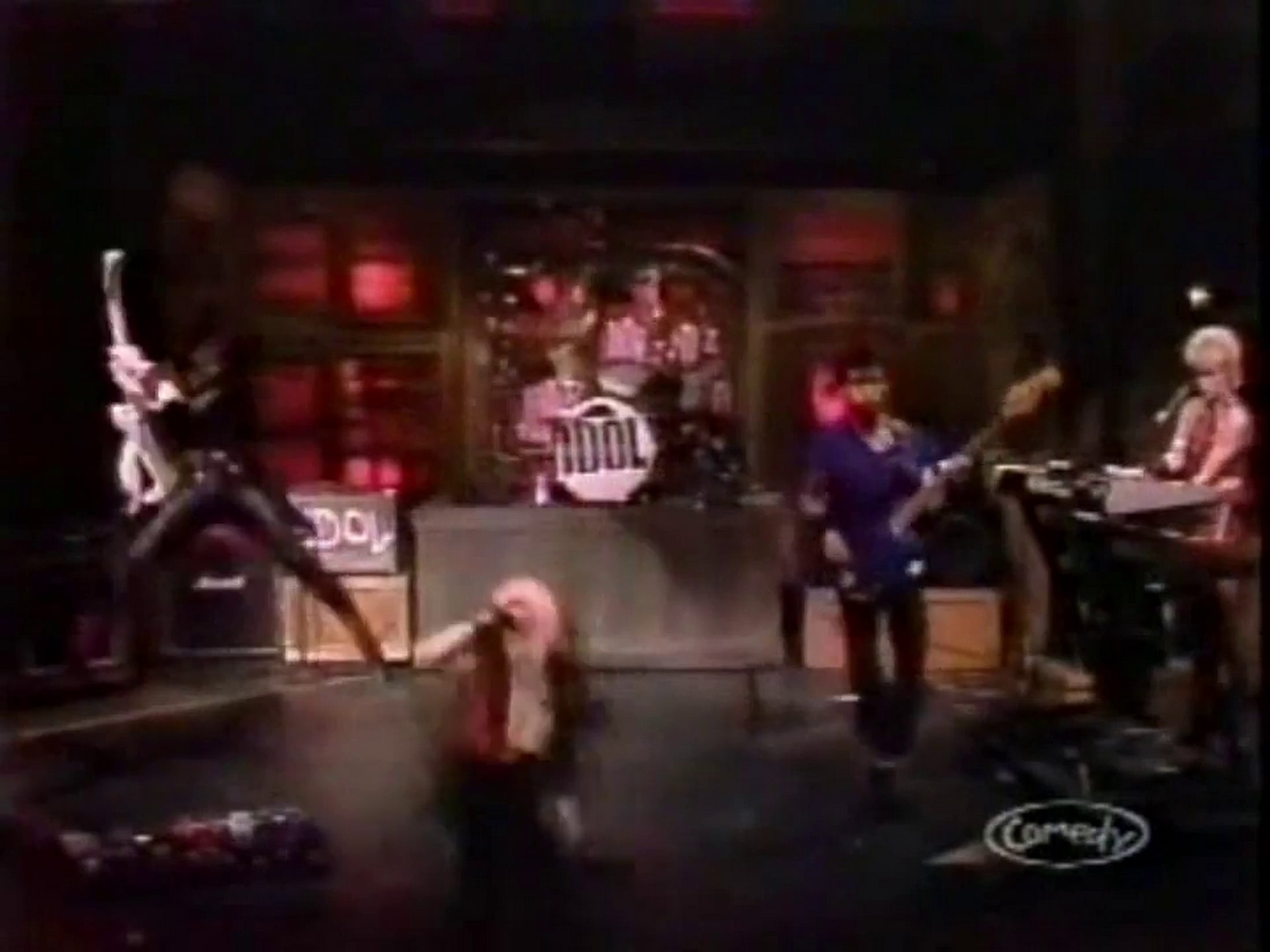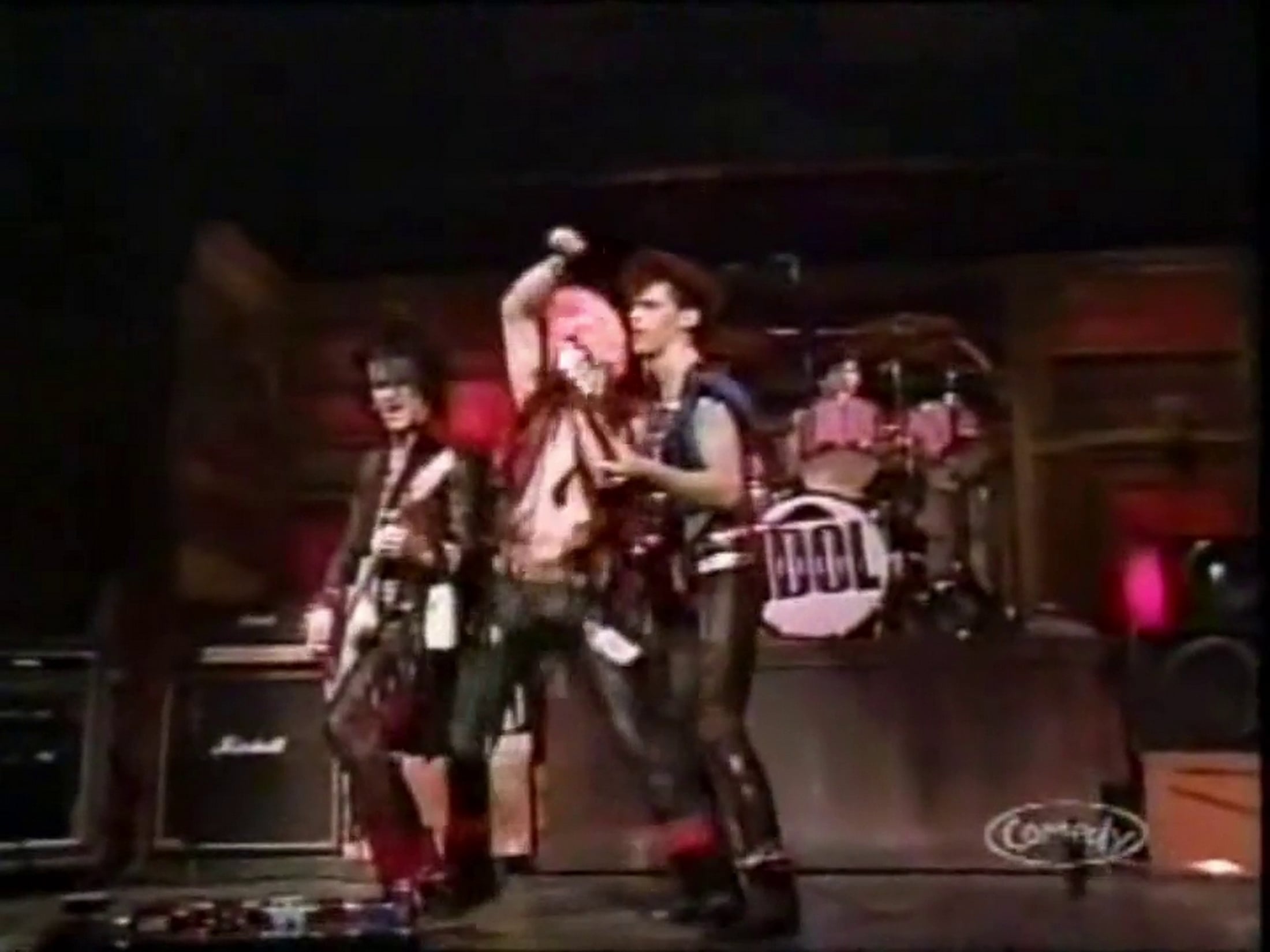
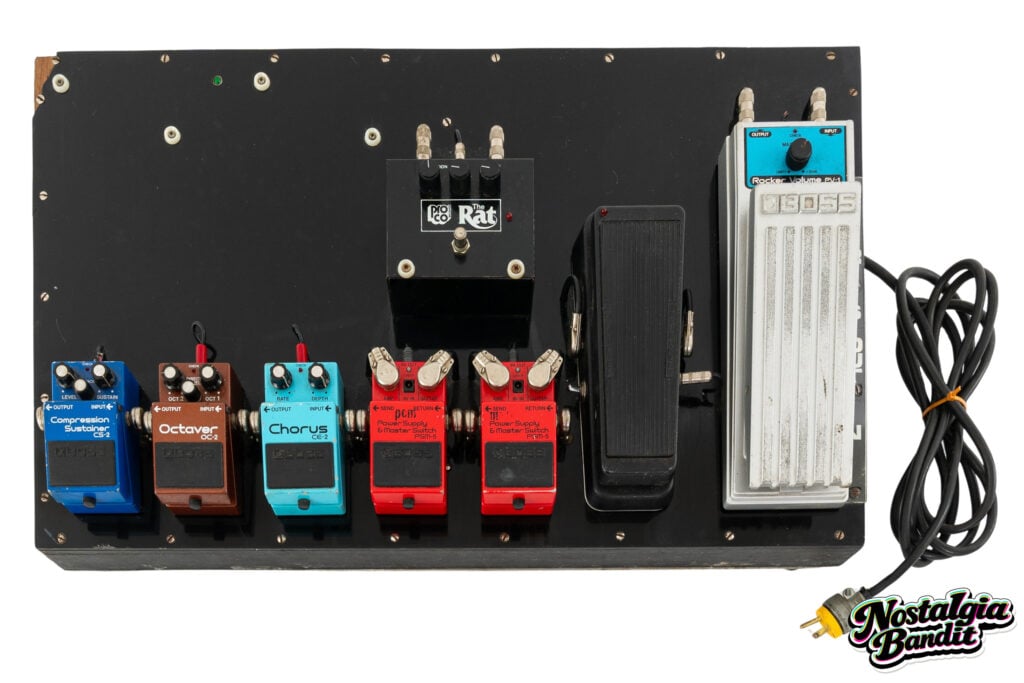
A custom made pedalboard personally built by Steve Stevens and used to record the Rebel Yell album (1983) and throughout Billy Idol’s touring activity from 1983 to 1987 — one of the most documented and storied guitar effects rigs in 1980s rock history. The board is accompanied by a signed Certificate of Authenticity from Steve Stevens and is documented in Stevens’ own public statements, in his BOSS Lifetime Achievement Award citation, and in contemporary press coverage. It is photo-matched to Billy Idol’s January 28, 1984 appearance on Saturday Night Live and screen-matched to the MTV New Year’s Rock N’ Roll Ball performance of December 31, 1983.
Video Documentation
Historical Context
Billy Idol and Steve Stevens recorded Rebel Yell at Electric Lady Studios in New York City in 1983, produced by Keith Forsey and engineered by Dave Whitman. Released in November 1983, Rebel Yell peaked at number six on the Billboard 200, was certified double Platinum, and became the best-selling album in Billy Idol’s catalog. Singles including “Rebel Yell,” “Eyes Without a Face,” “Flesh for Fantasy,” and “Catch My Fall” were all significant MTV and radio presences, placing Idol and Stevens at the center of one of the era’s defining cultural moments.
Stevens has spoken extensively about his approach to Rebel Yell as a deliberate challenge to the synth-dominated sound of 1983: “I remember saying to Billy and Keith Forsey, ‘Give me the opportunity to fill that space and that function with my guitar.'” His solution was built around this pedalboard — a configuration of Boss effects he had assembled himself, which he used throughout the recording sessions and the subsequent touring cycle.
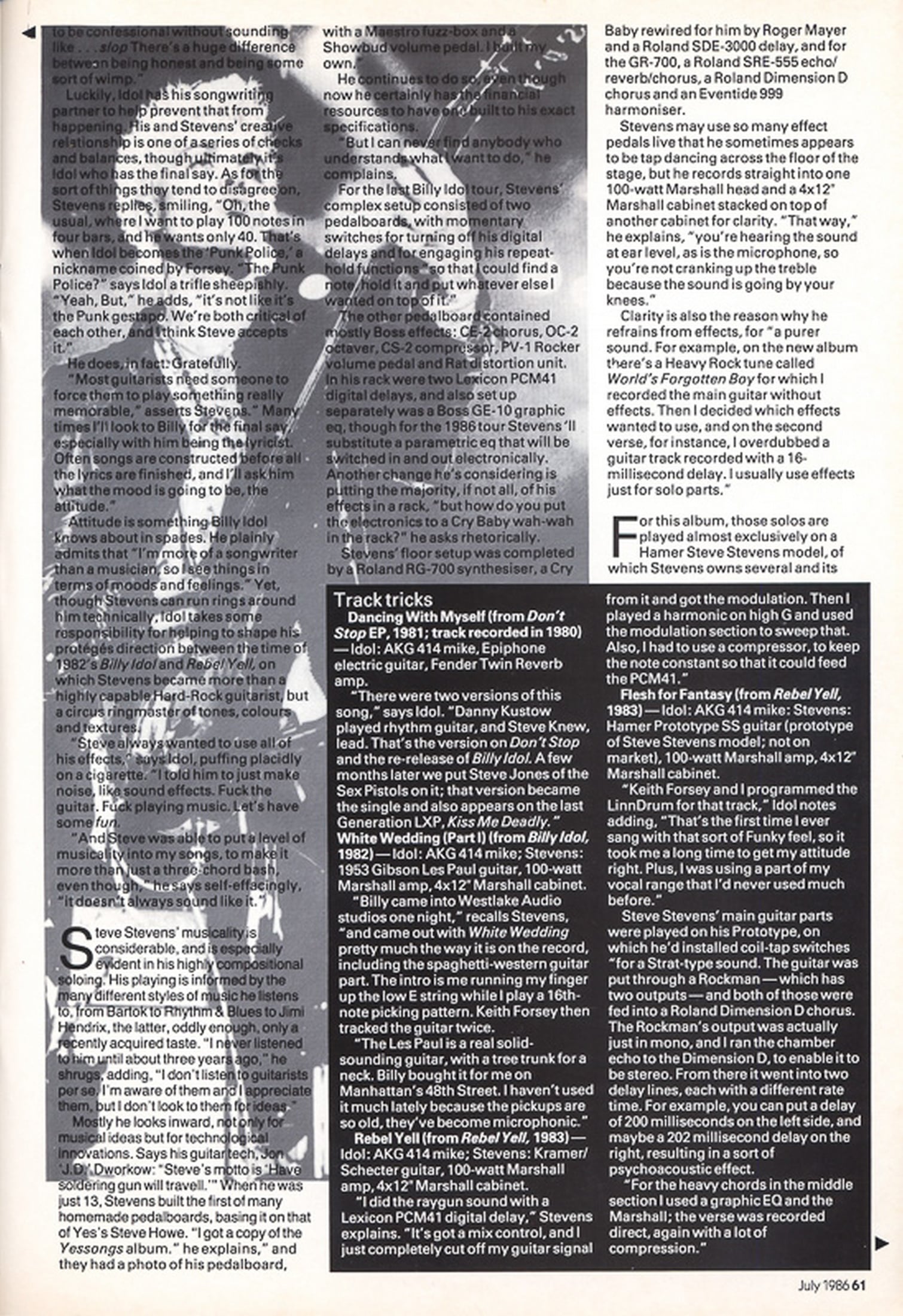
Stevens began building his own pedalboards as a teenager, inspired by seeing Steve Howe’s pedalboard in photos from the Yes Yessongs album. He has described this as a defining influence on his approach to the instrument: the guitar as an orchestral tool, its sonic range expanded and shaped through a carefully chosen effects chain. The Rebel Yell pedalboard represents the full realization of that philosophy — a working instrument assembled by hand, used to create some of the most recognizable guitar sounds of the decade.
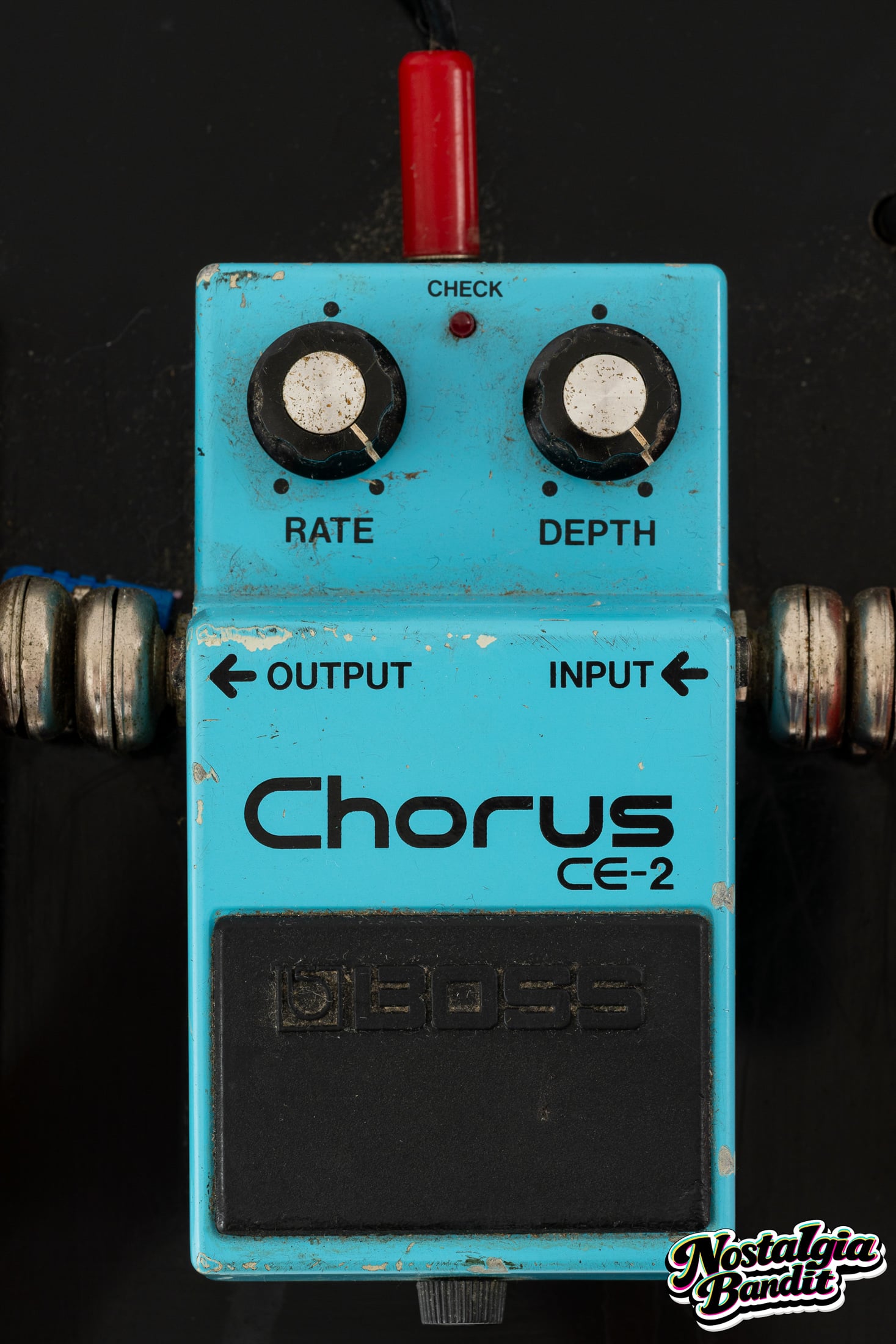
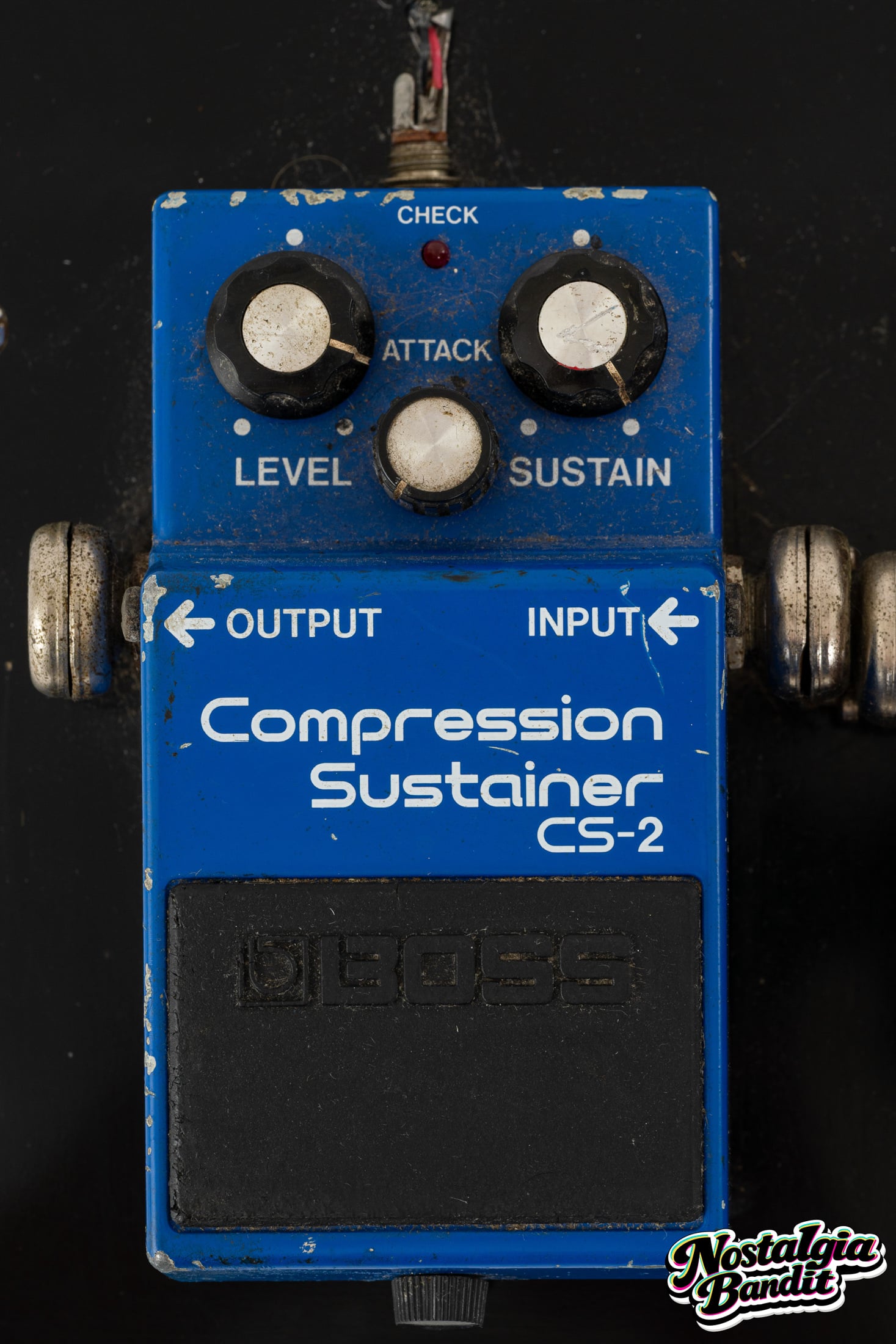
Stevens’ use of Boss effects on Rebel Yell was subsequently recognized by Boss with their Lifetime Achievement Award, in which Stevens stated: “As far back as I can remember, BOSS was there as some of my first guitar effects pedals — from saving paper route money for an OD-1 OverDrive to having a complete BOSS pedalboard for the recording of the Billy Idol Rebel Yell album. Where would songs like ‘Eyes Without a Face’ and ‘Flesh for Fantasy’ be without the CS-2 Compression Sustainer and CE-2 Chorus on my guitar tracks?”
Recording & Stage Use
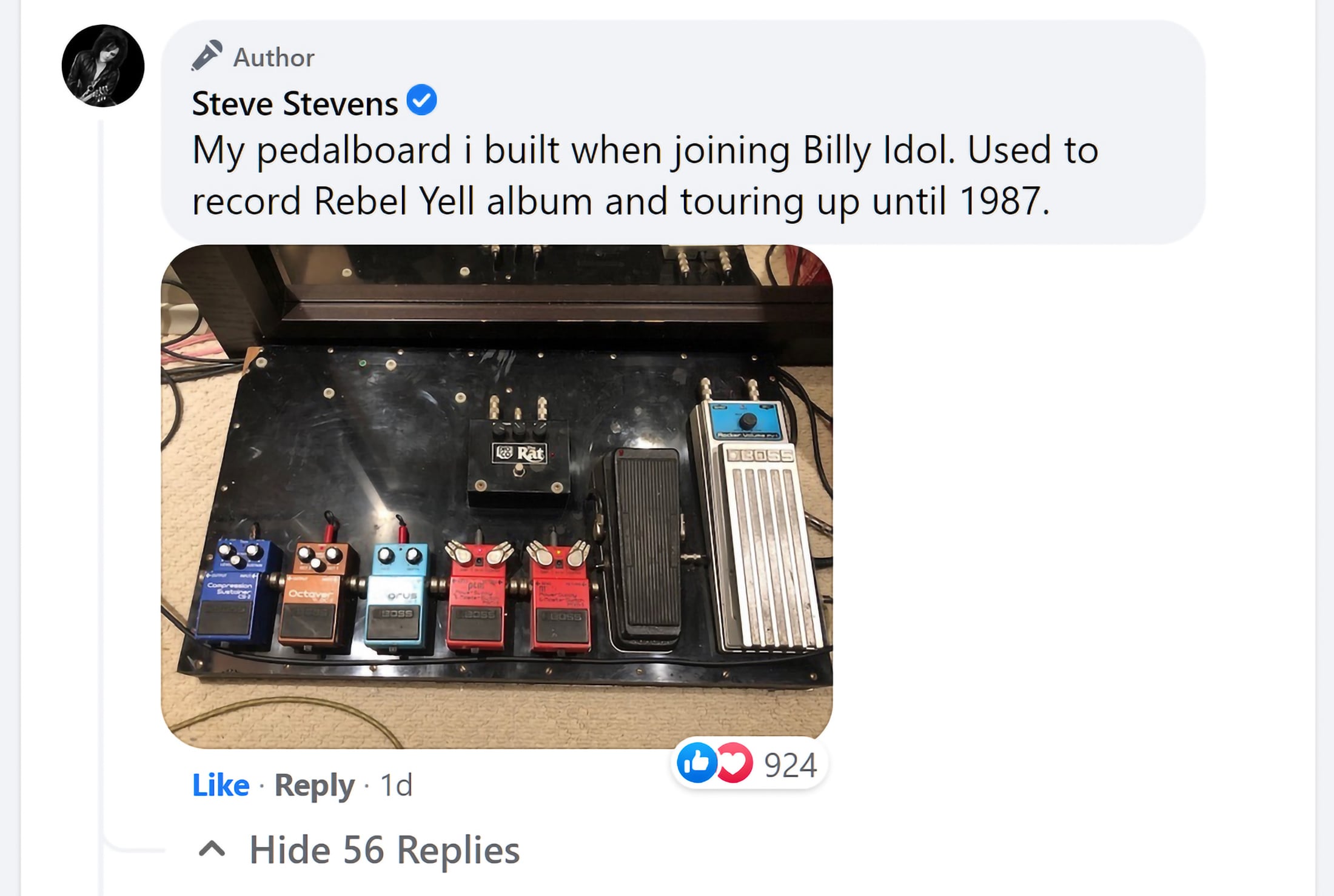
Stevens used this pedalboard throughout the Rebel Yell recording sessions at Electric Lady Studios and across the touring activity that followed, from 1983 through 1987. In his own words, posted publicly alongside a photograph of this board: “My pedalboard I built when joining Billy Idol. Used to record Rebel Yell album and touring up until 1987.”
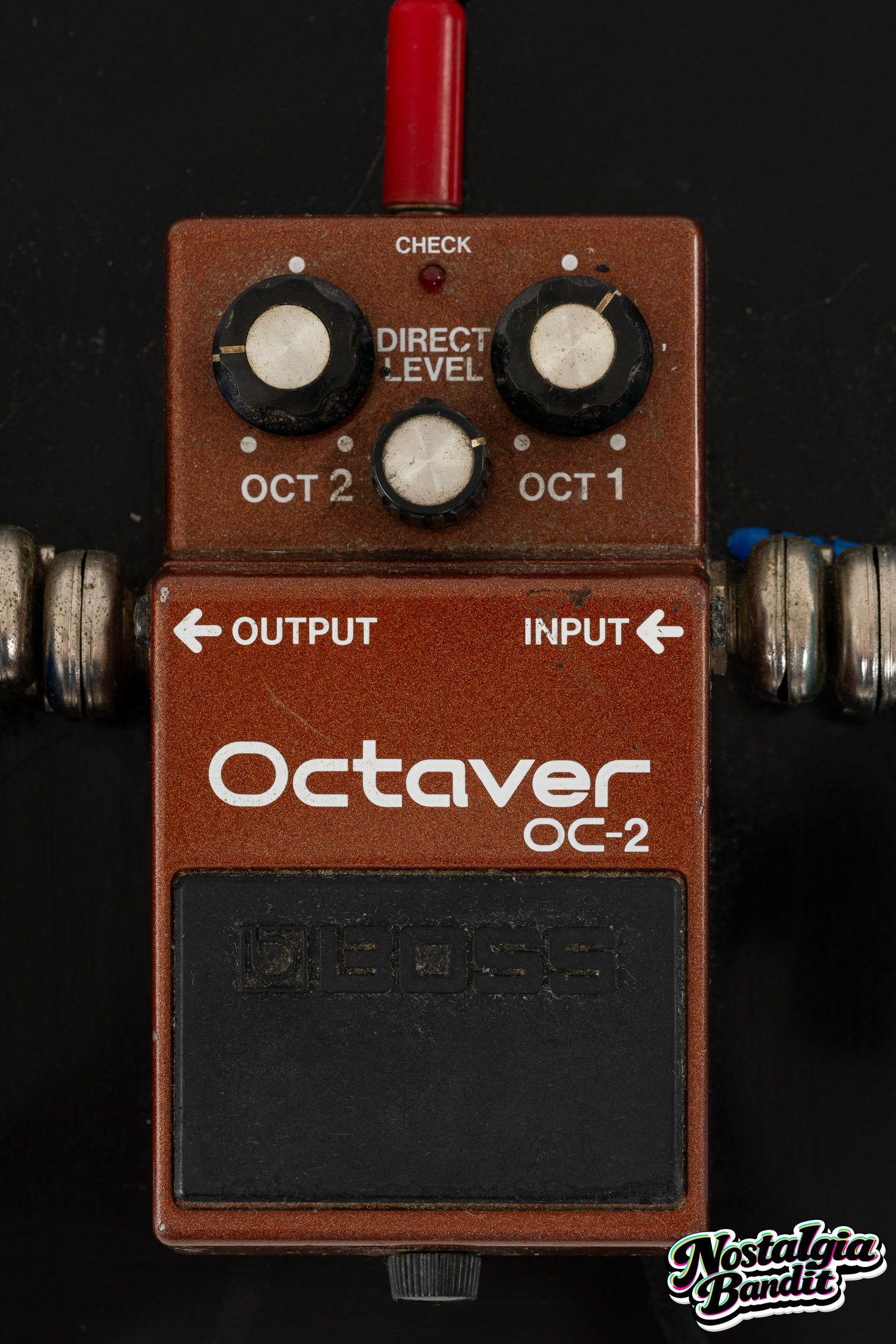
The board’s role in specific Rebel Yell recordings is documented in Stevens’ own commentary. The Boss OC-2 Octaver was used DI’d on “Daytime Drama,” its signal blended with the bass line in a way Stevens described as making “the guitar really meld with the bass.” The Boss CE-2 Chorus and CS-2 Compression Sustainer were integral to the clean tones on “Flesh for Fantasy” and “Eyes Without a Face.” The Pro Co Rat distortion unit contributed to the album’s heavier passages.
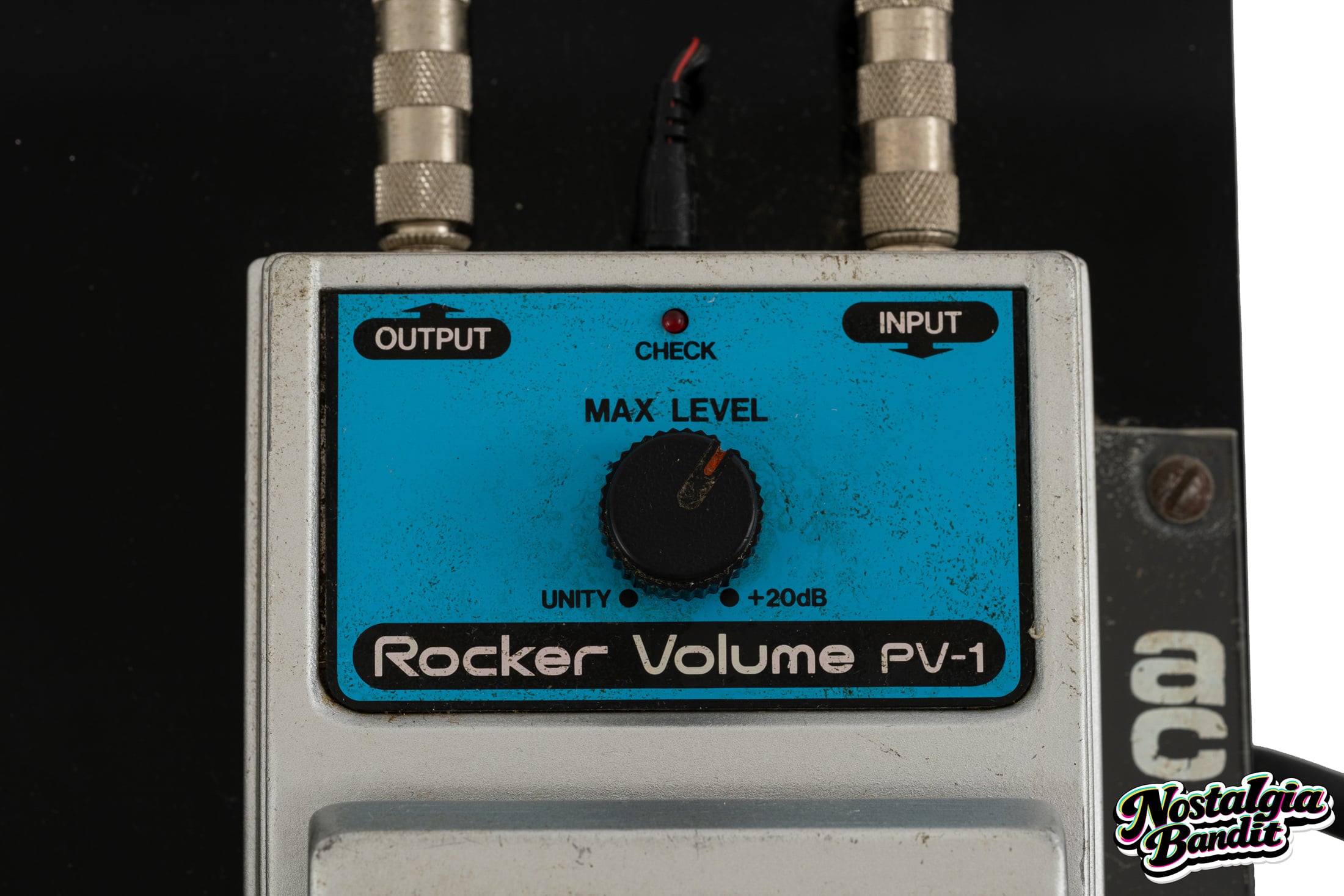
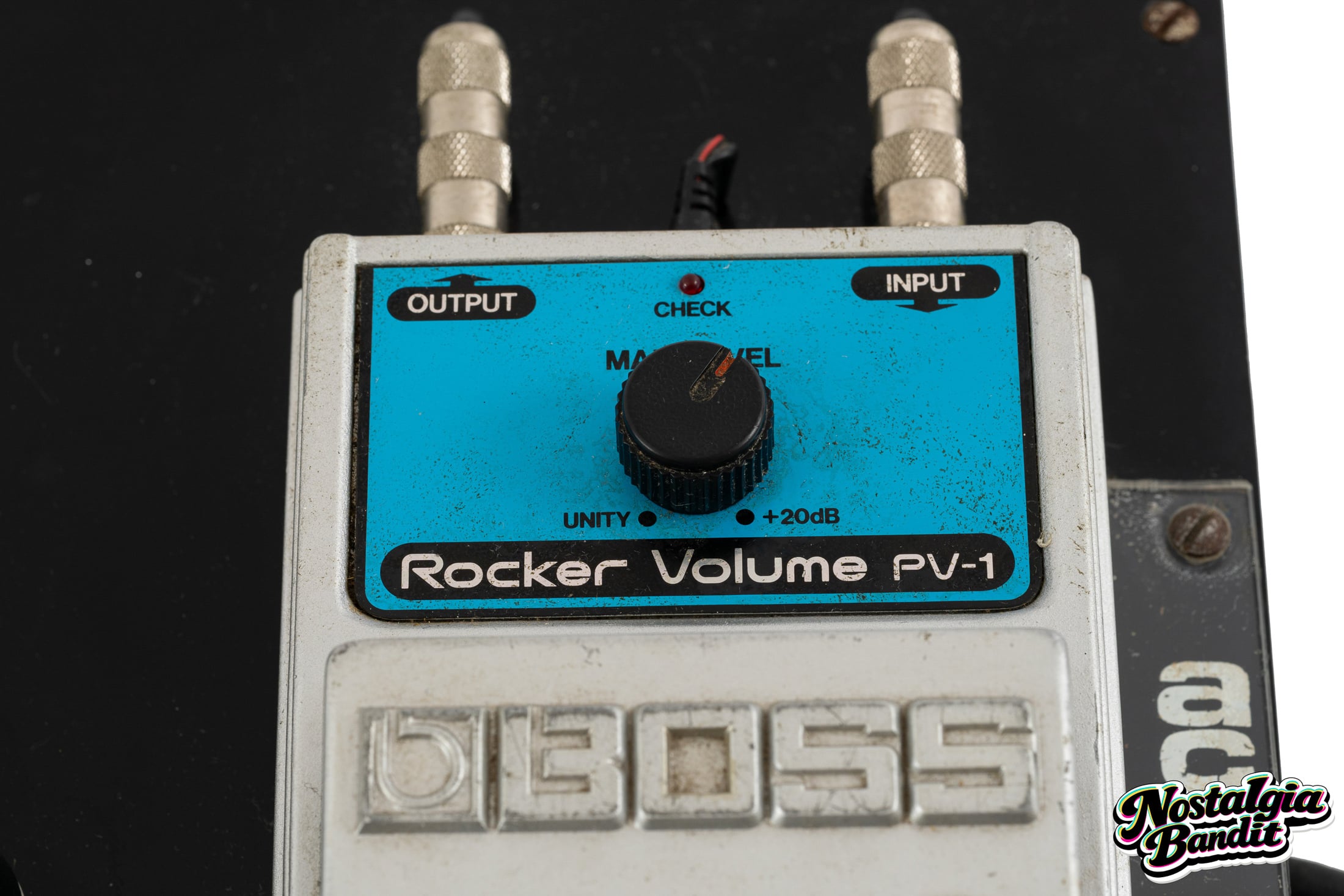
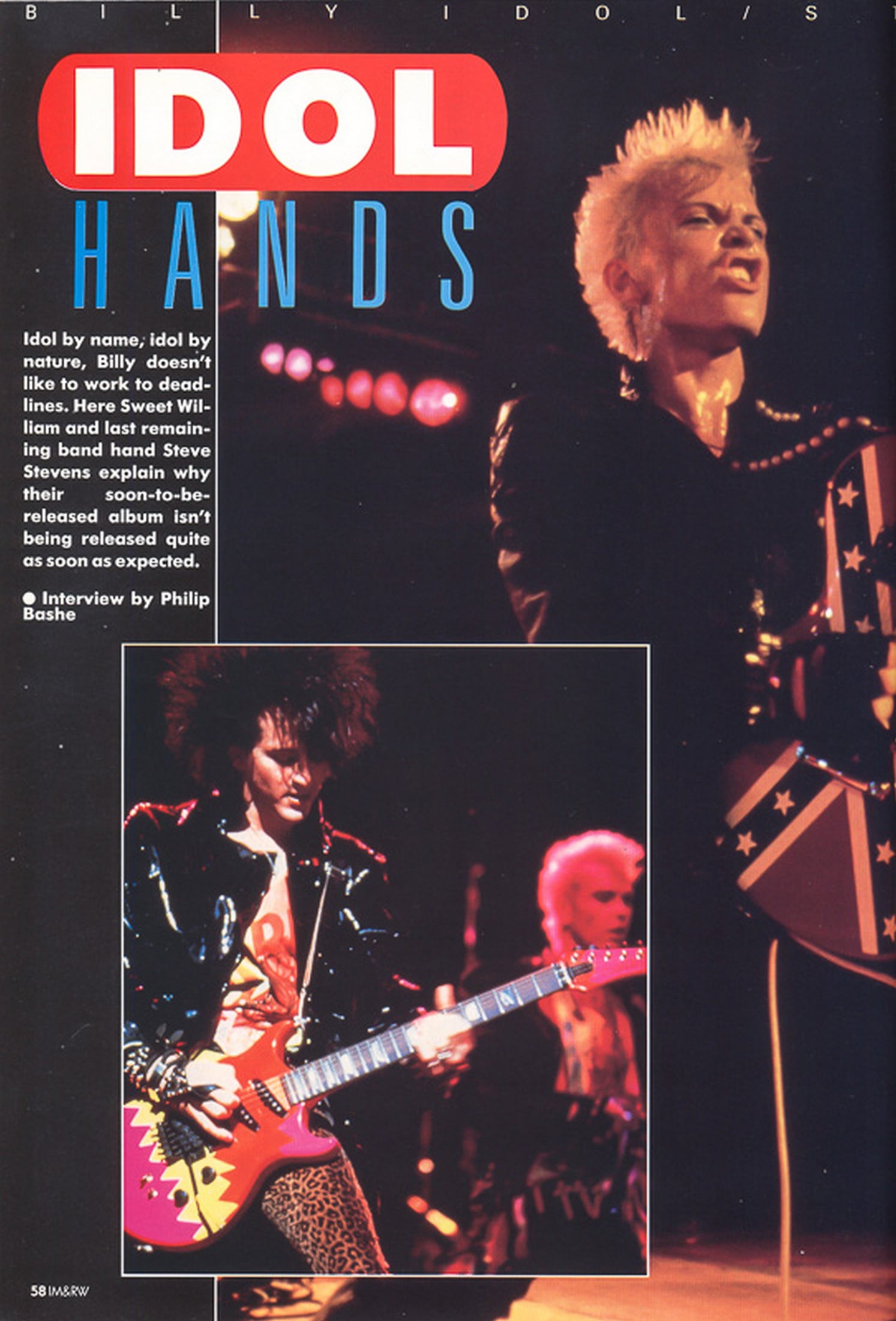
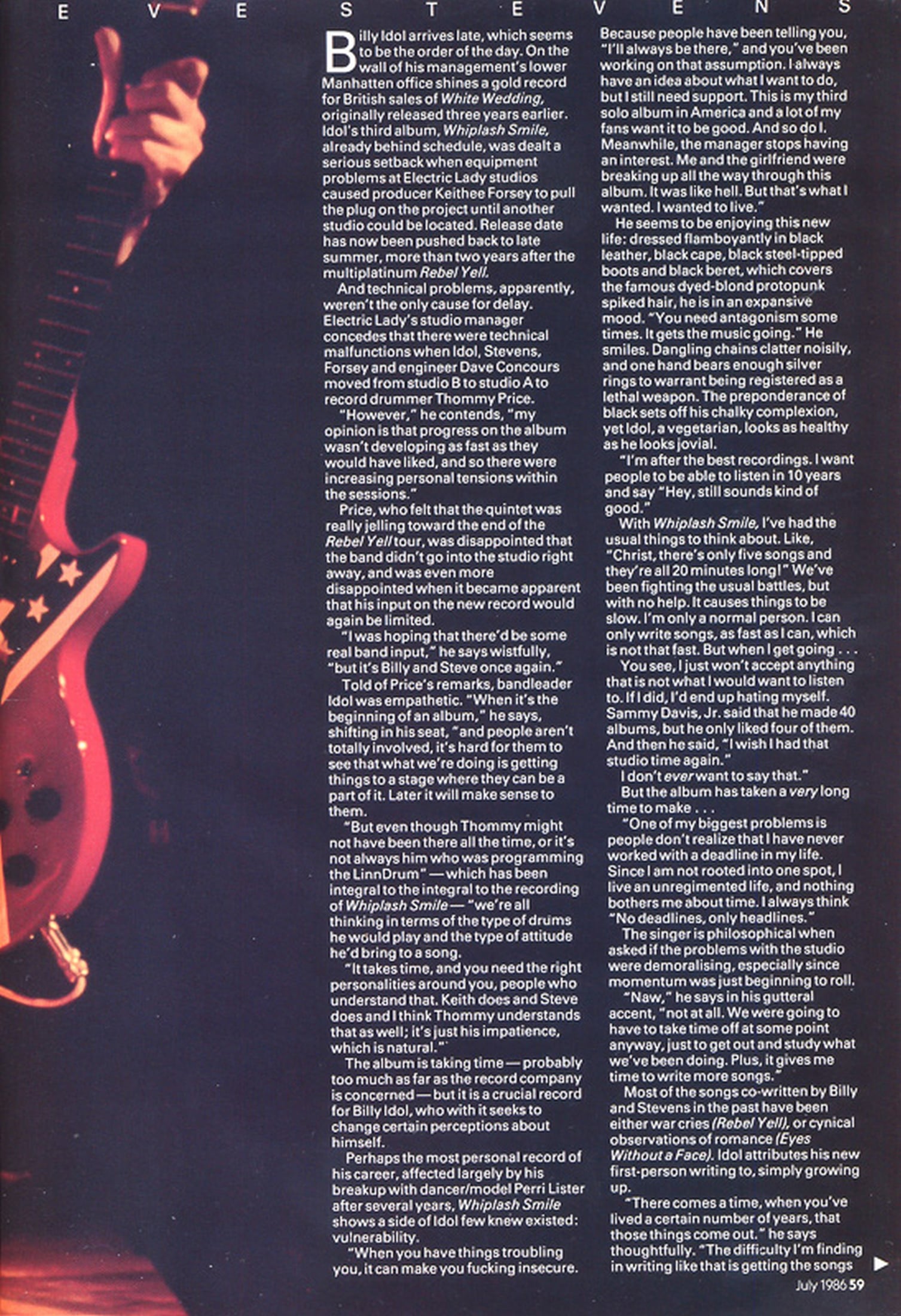
A July 1986 feature in International Musician & Recording World documented Stevens’ live setup in detail, explicitly describing this board: “The other pedalboard contained mostly Boss effects: CE-2 chorus, OC-2 octaver, CS-2 compressor, PV-1 Rocker volume pedal and Rat distortion unit” — an exact match to the board as currently configured.
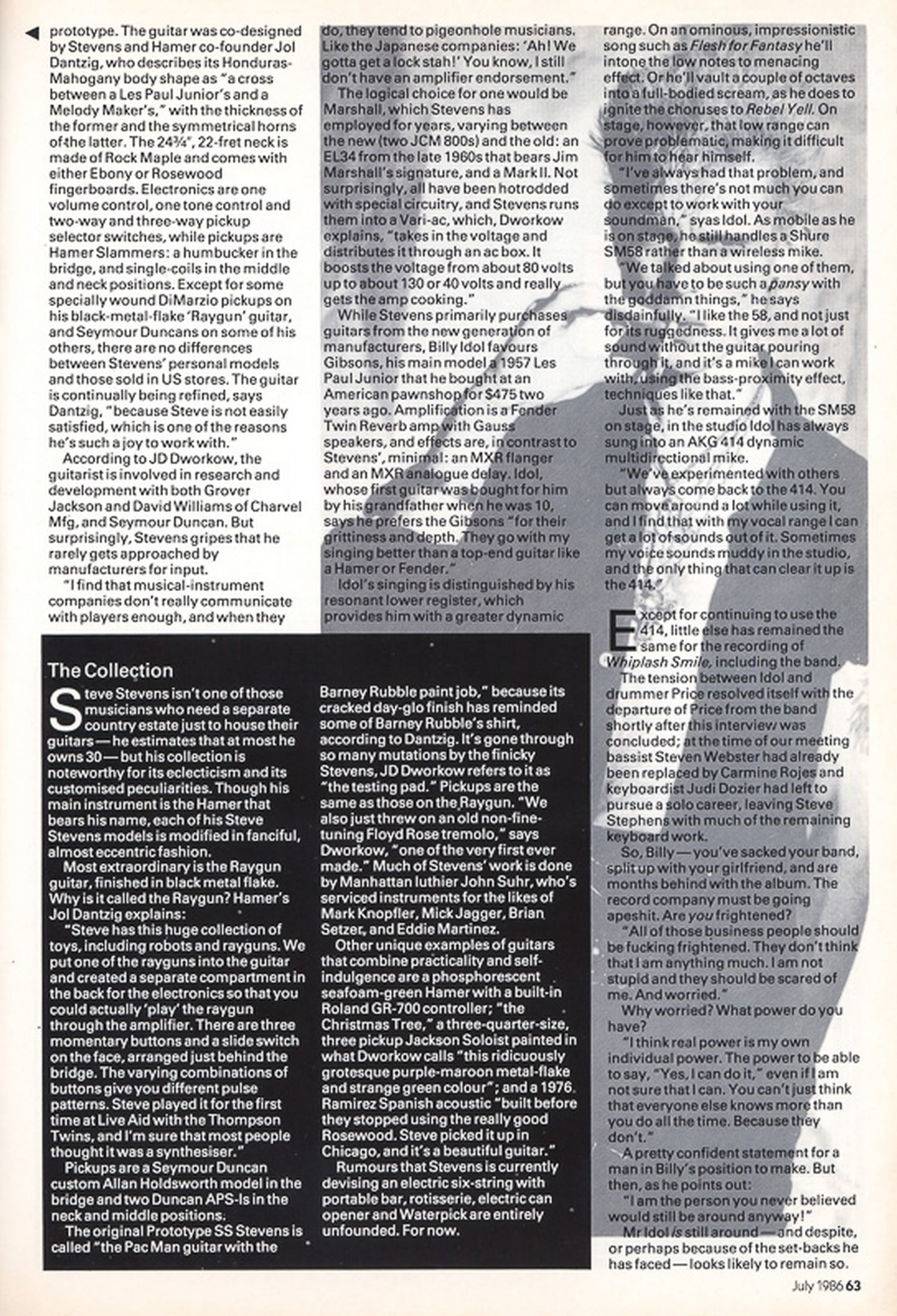
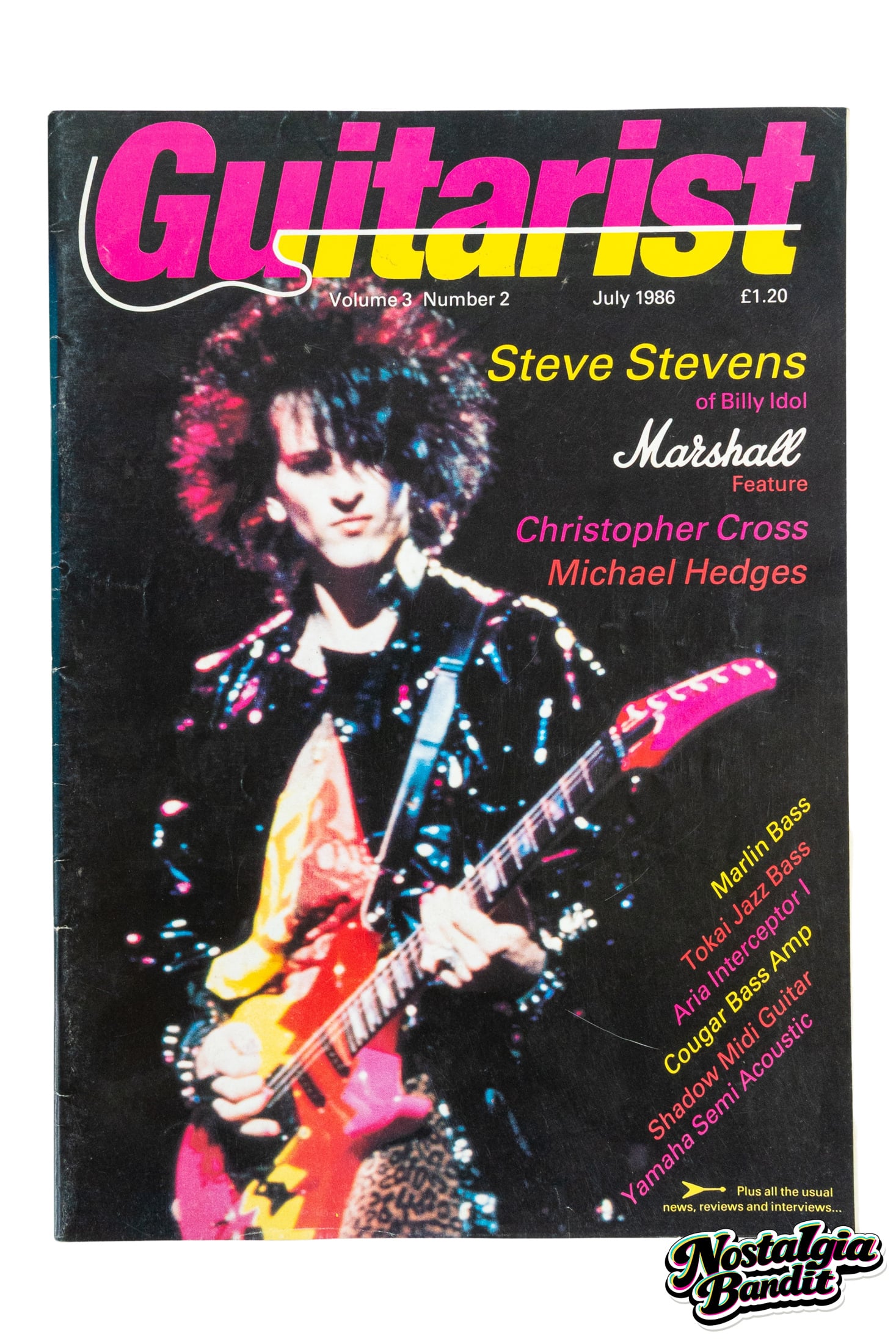
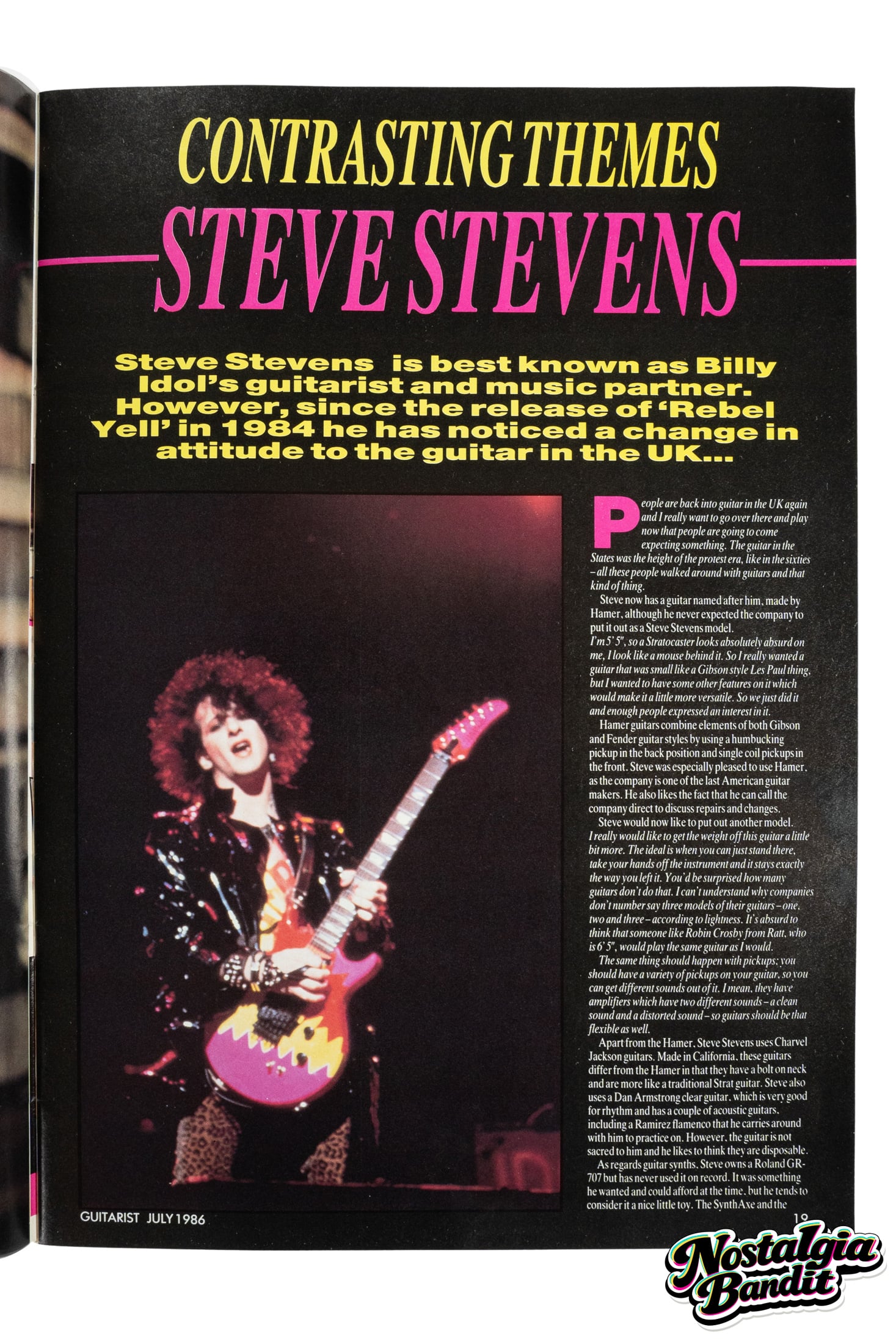
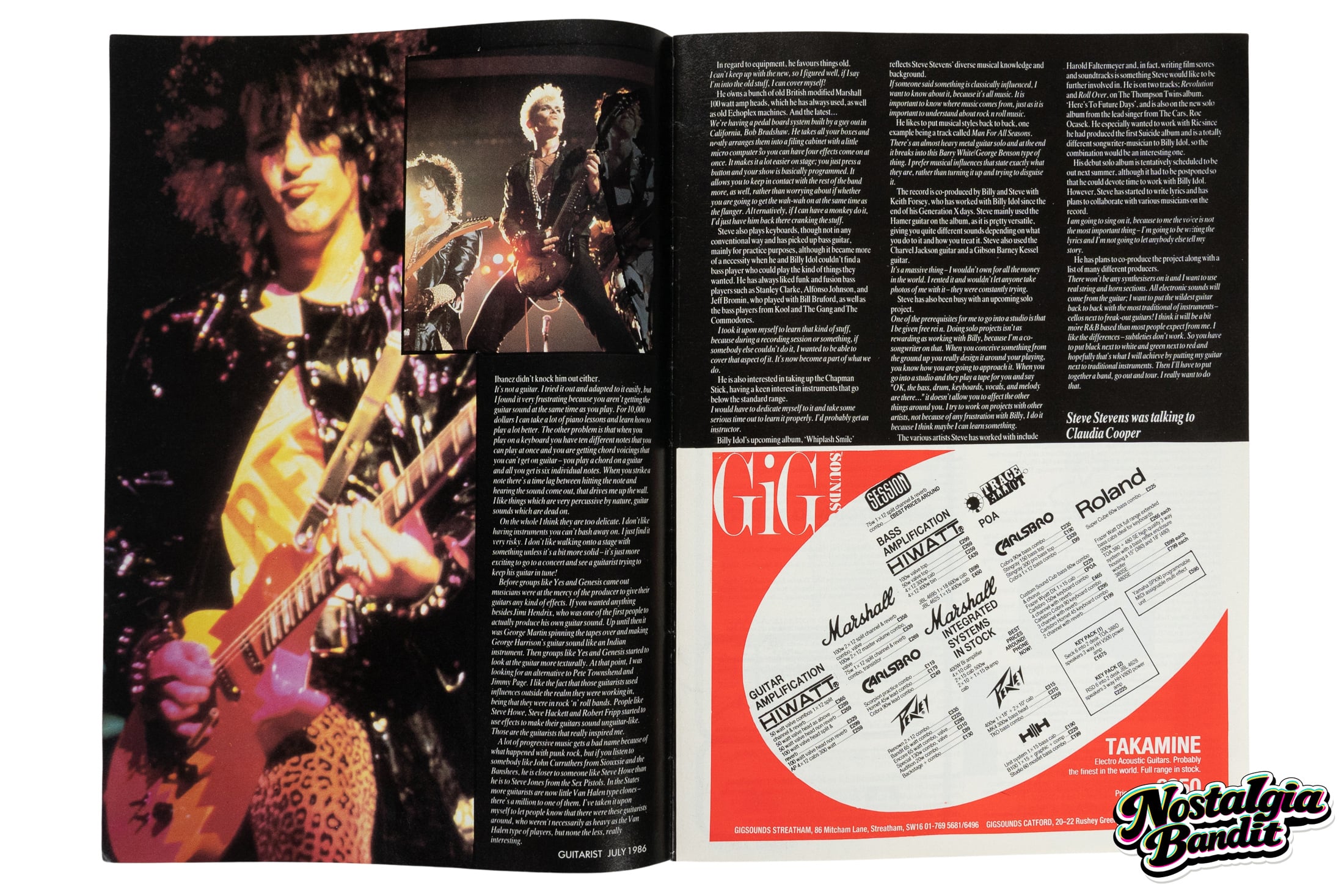
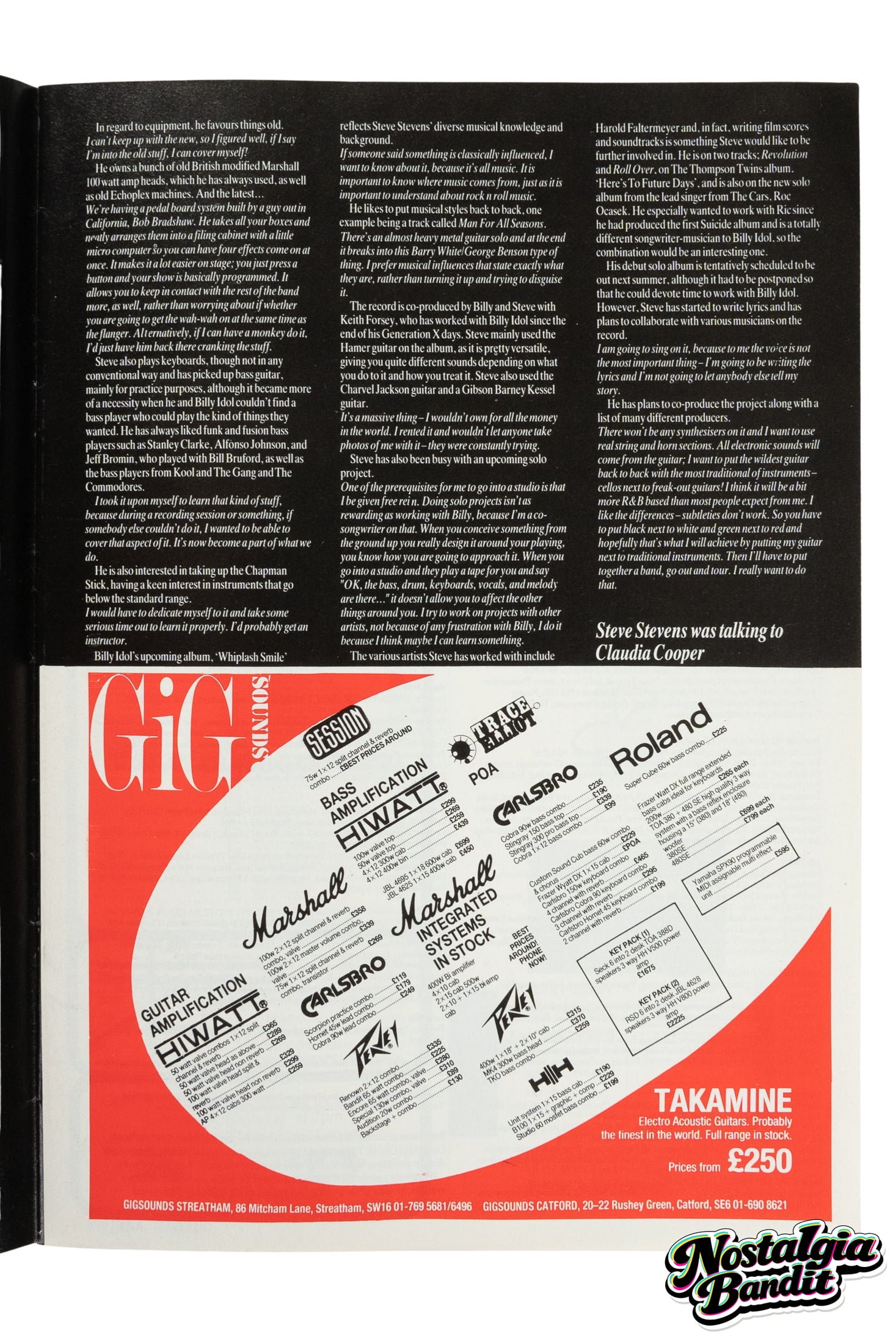
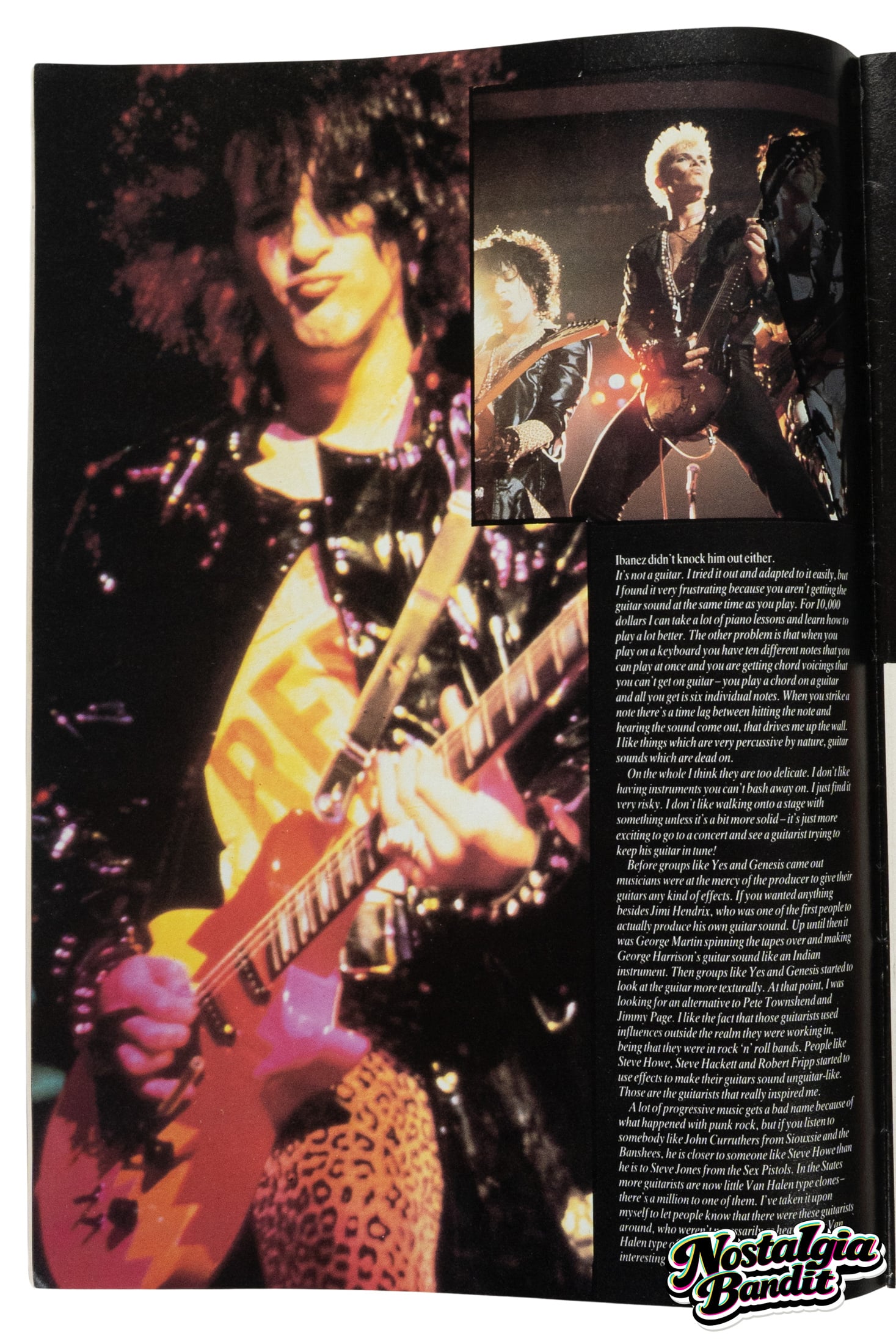
A cover story interview in Guitarist magazine (Vol. 3, No. 2, July 1986) — the original issue of which is included with this lot — provides further period documentation of Stevens’ equipment thinking during this cycle. In the interview, Stevens discusses his approach to building his own pedalboards and describes the Bob Bradshaw-built rack system then under construction in California, contextualizing the handbuilt Rebel Yell board as the foundation of his approach prior to commissioning more elaborate professional systems. The Guitarist issue and the Bradshaw rack faceplate (Lot 84, from the same source) together tell a continuous story of Stevens’ rig evolution across the Rebel Yell and Whiplash Smile eras.
The individual pedals on this board are each directly associated with specific tonal contributions to Rebel Yell: the Boss OC-2 Octaver provided the “ray gun” synth-like octave-down character on the title track’s solo; the Boss CE-2 Chorus produced the shimmering clean tones and atmospheric parts on “Eyes Without a Face” and “Flesh for Fantasy”; the Boss CS-2 handled sustain and signal chain evenness; and the Pro Co Rat delivered the aggressive distortion underpinning the heavier passages. The Boss PV-1 controlled volume swells and overall output on stage.
During this same period Stevens was also active on studio sessions for the Thompson Twins, Ric Ocasek, Peter Criss, Harold Faltermeyer’s “Top Gun Anthem,” and other projects, as well as the Live Aid concert (July 13, 1985). Stevens has confirmed that this pedalboard was used exclusively on Billy Idol studio recordings — his studio work with other artists during this period used separate equipment. Touring with the board continued through 1987.
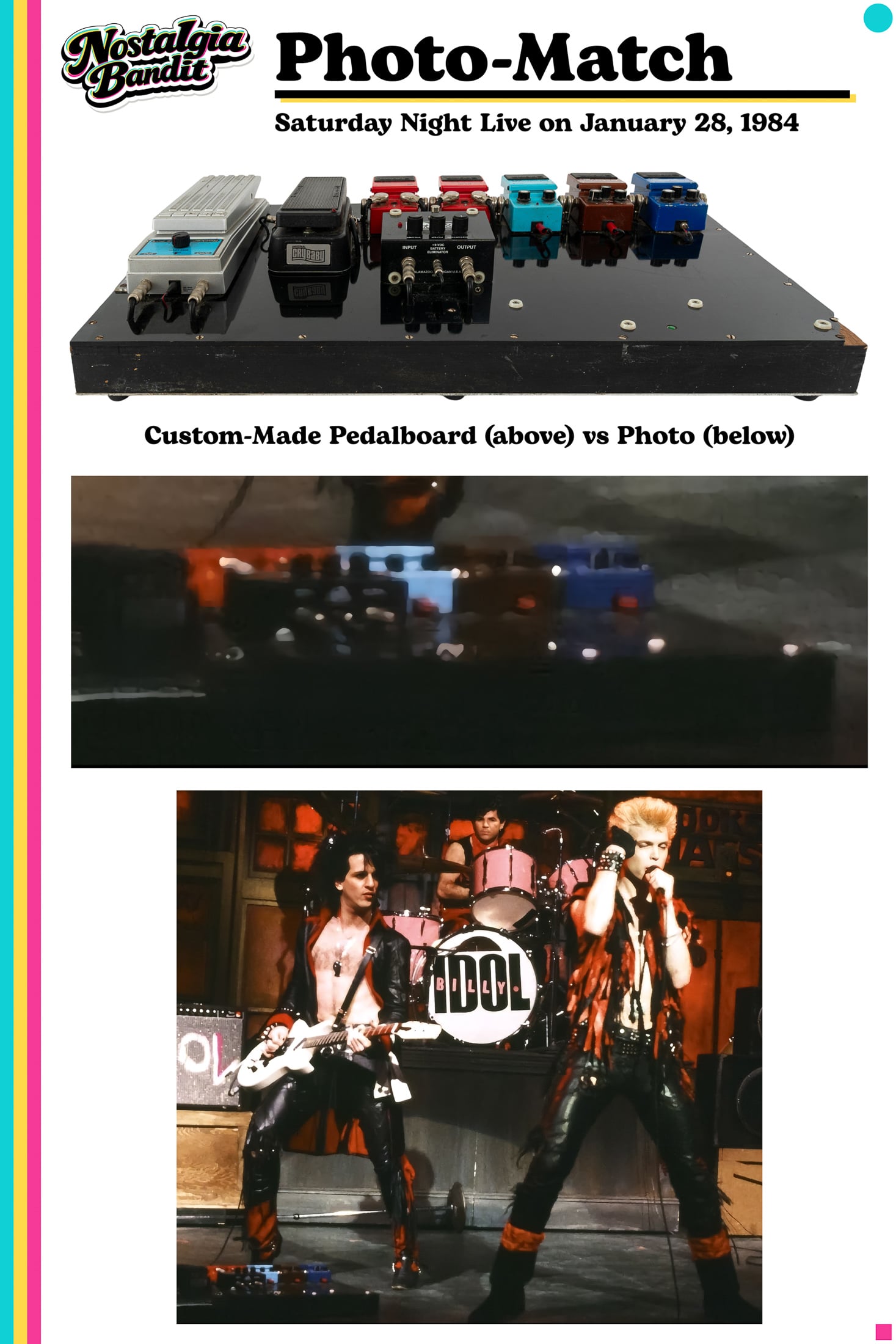
Photo-Match
This pedalboard is photo-matched to Billy Idol’s January 28, 1984 appearance on Saturday Night Live — one of the most significant early television appearances of the Rebel Yell touring cycle, broadcast nationally on NBC. The board is visible on stage in photographs from the performance. Dedicated photo-match and screen-match graphics are included in the photographic documentation accompanying this listing.
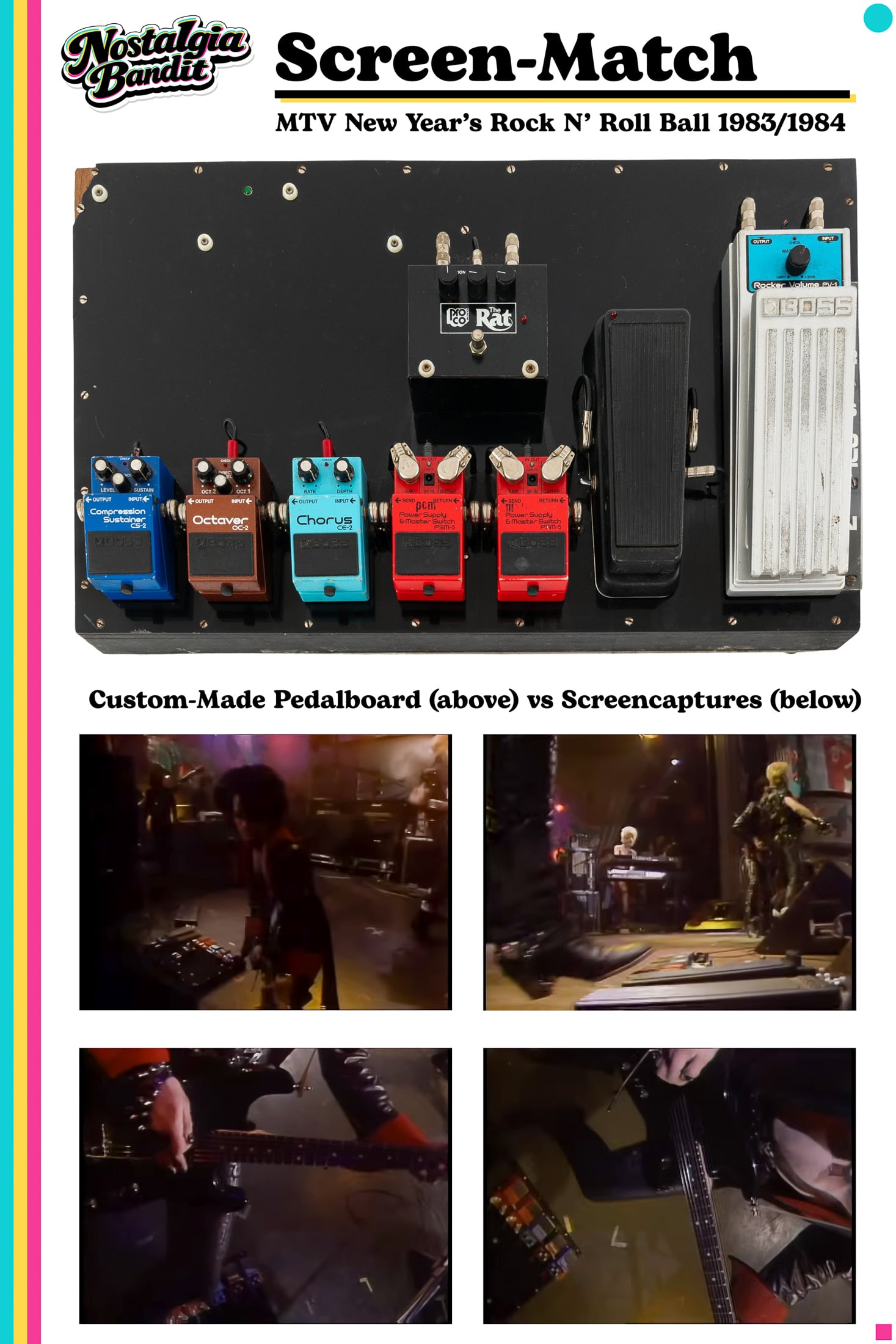
Screen-Match
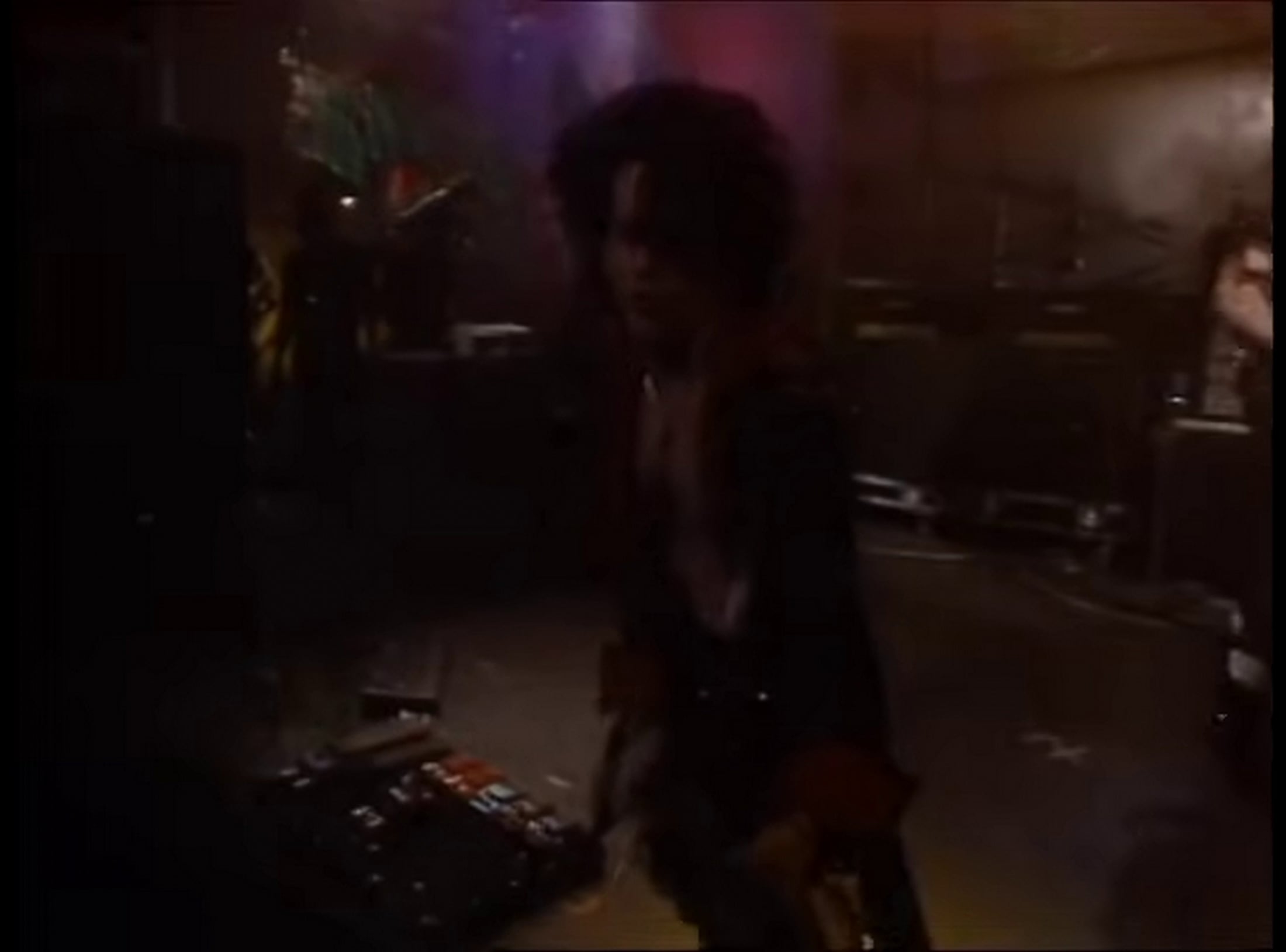
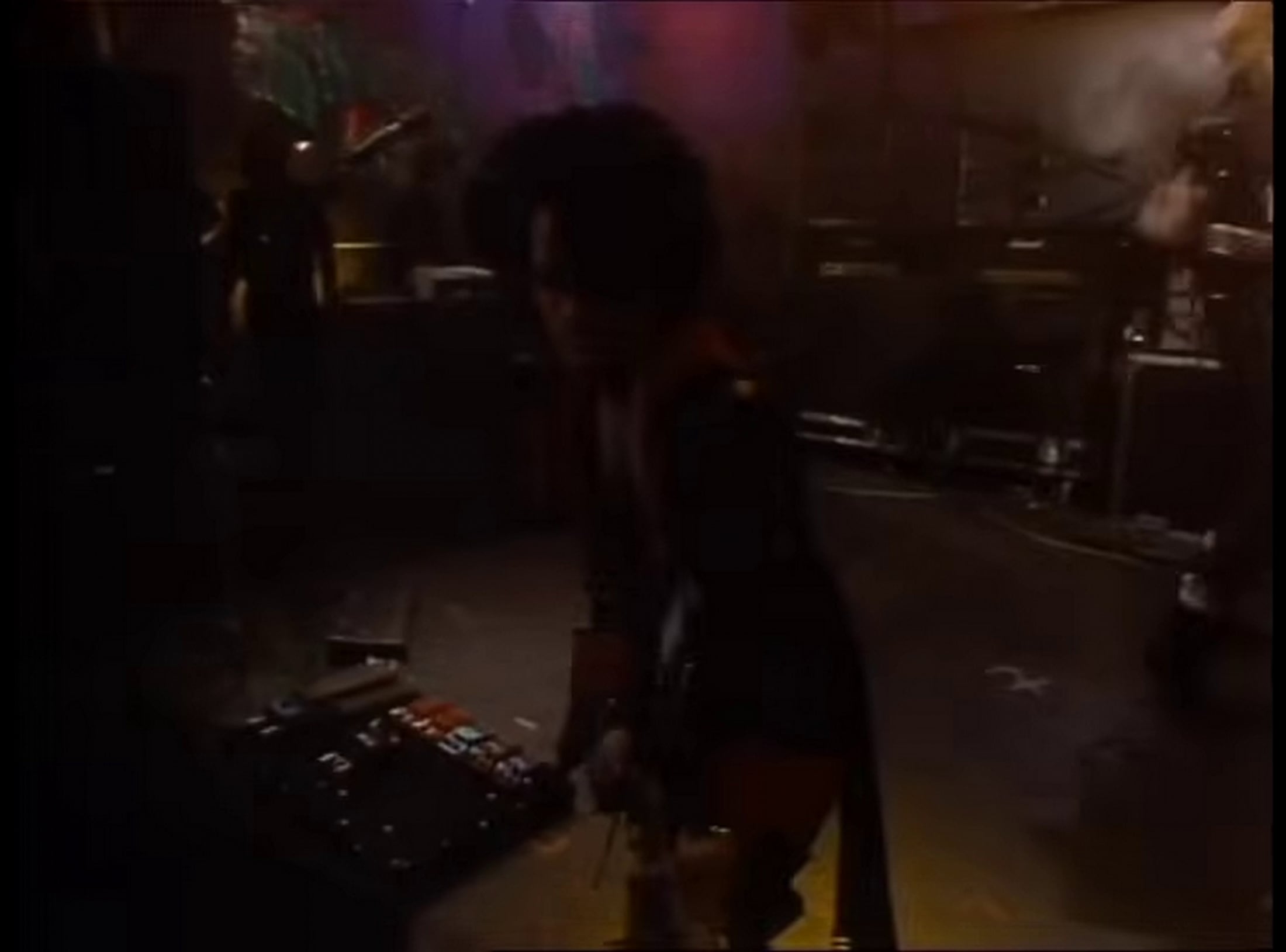
This pedalboard is screen-matched to Billy Idol’s MTV New Year’s Rock N’ Roll Ball performance of December 31, 1983 / January 1, 1984, where it is visible on stage throughout Stevens’ performance. Comparative screen captures are included in the photo documentation.
Specifications
· Custom Made pedalboard, personally built by Steve Stevens
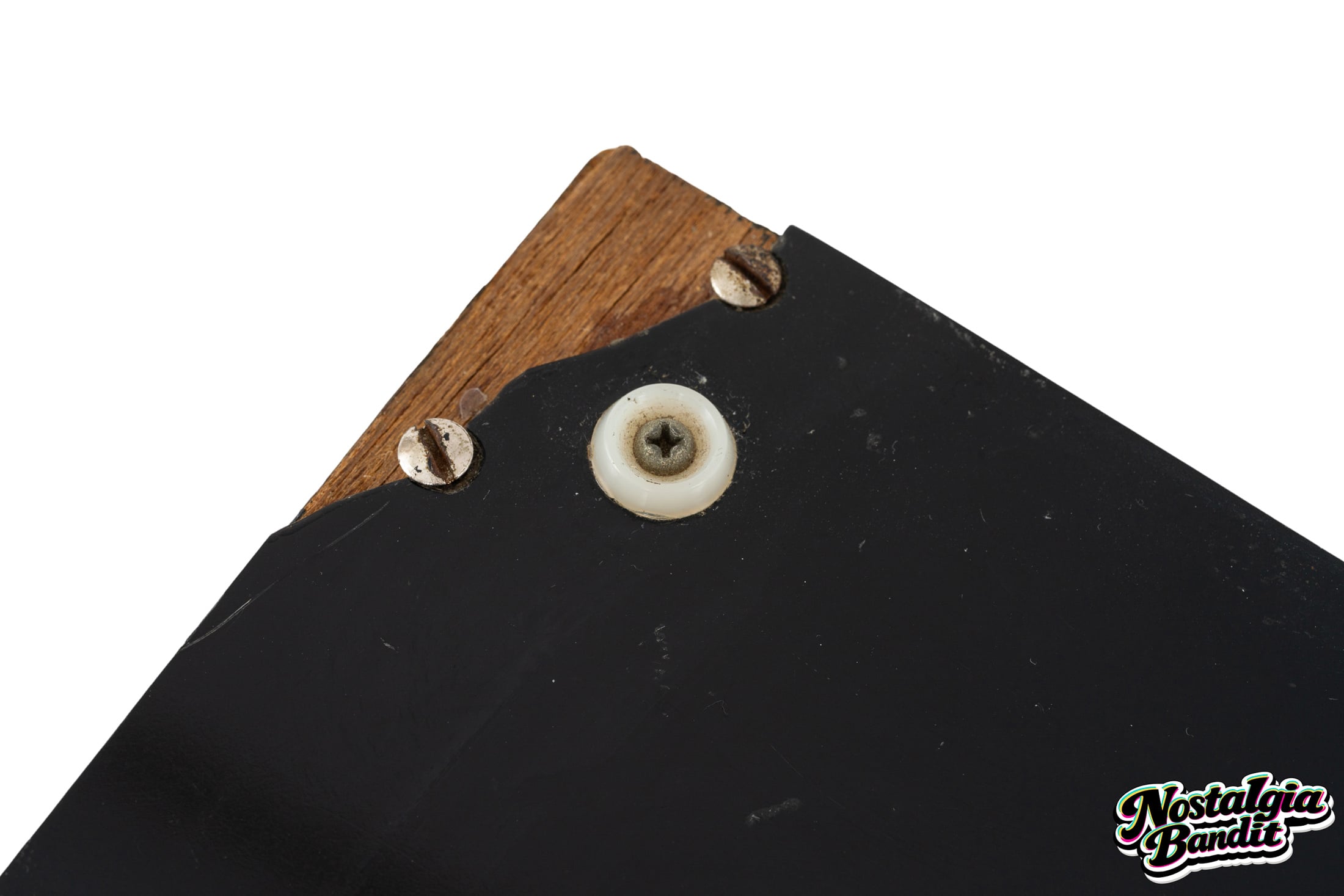
· Wood substrate with black painted metal surface
· Pedals mounted left to right:
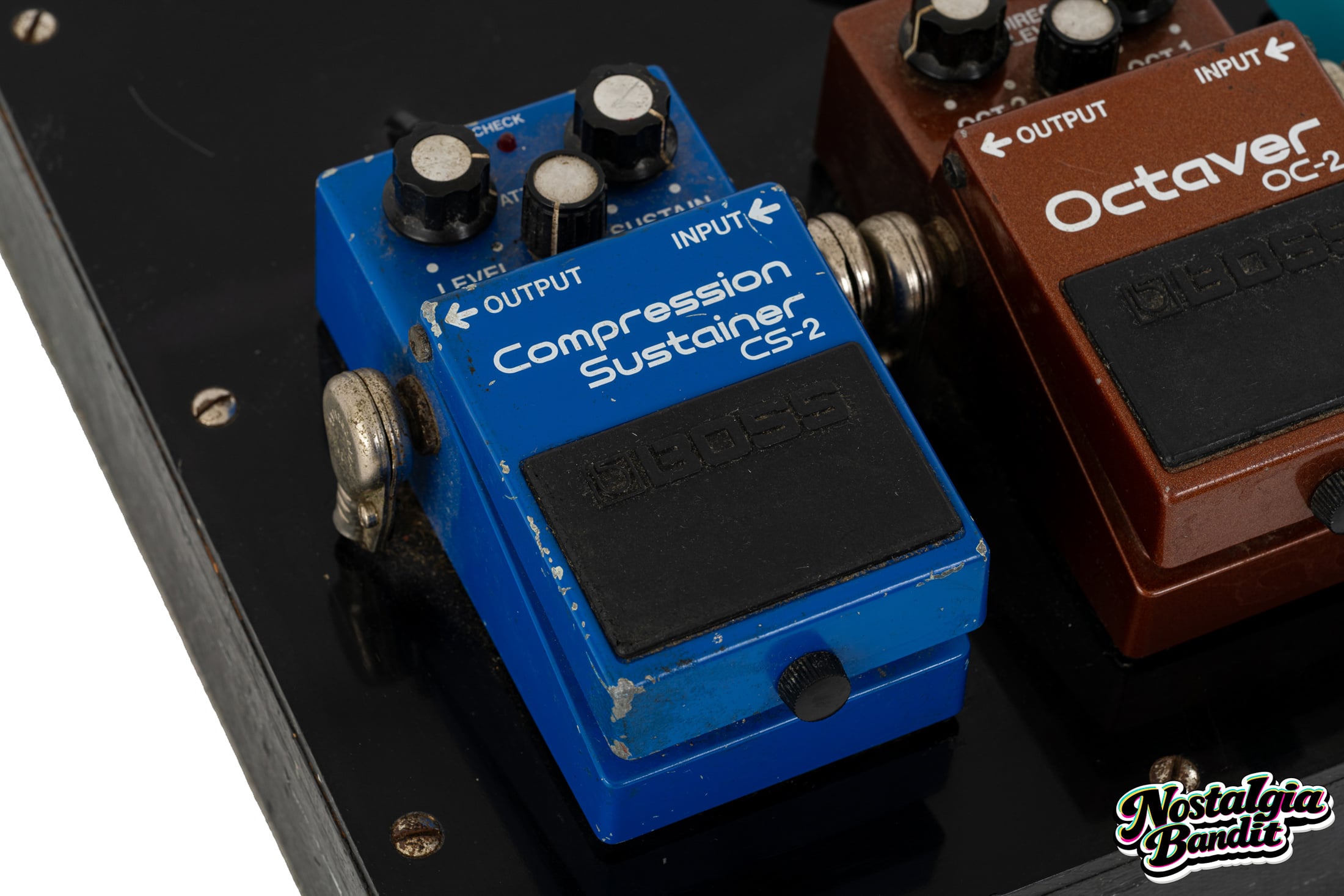
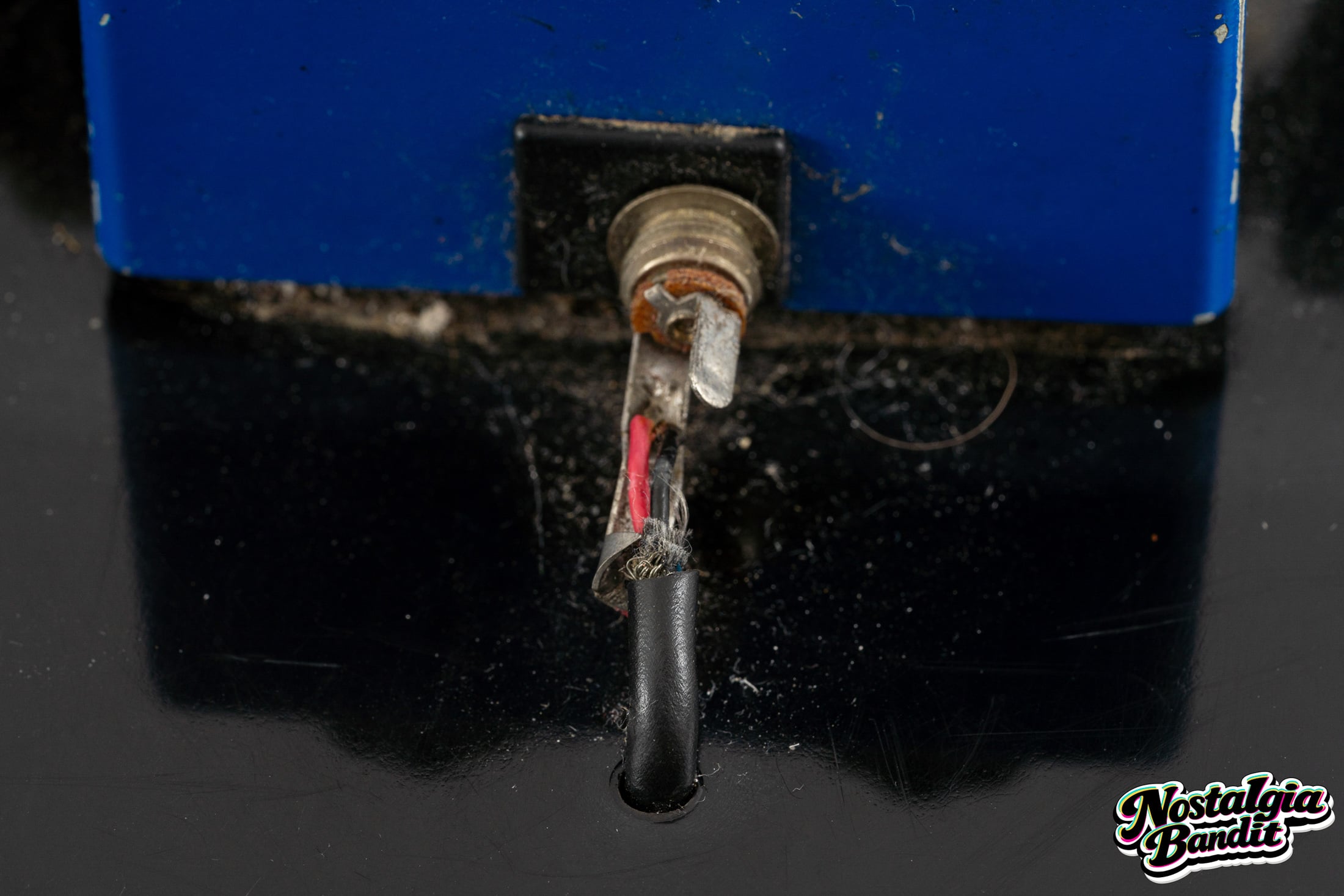
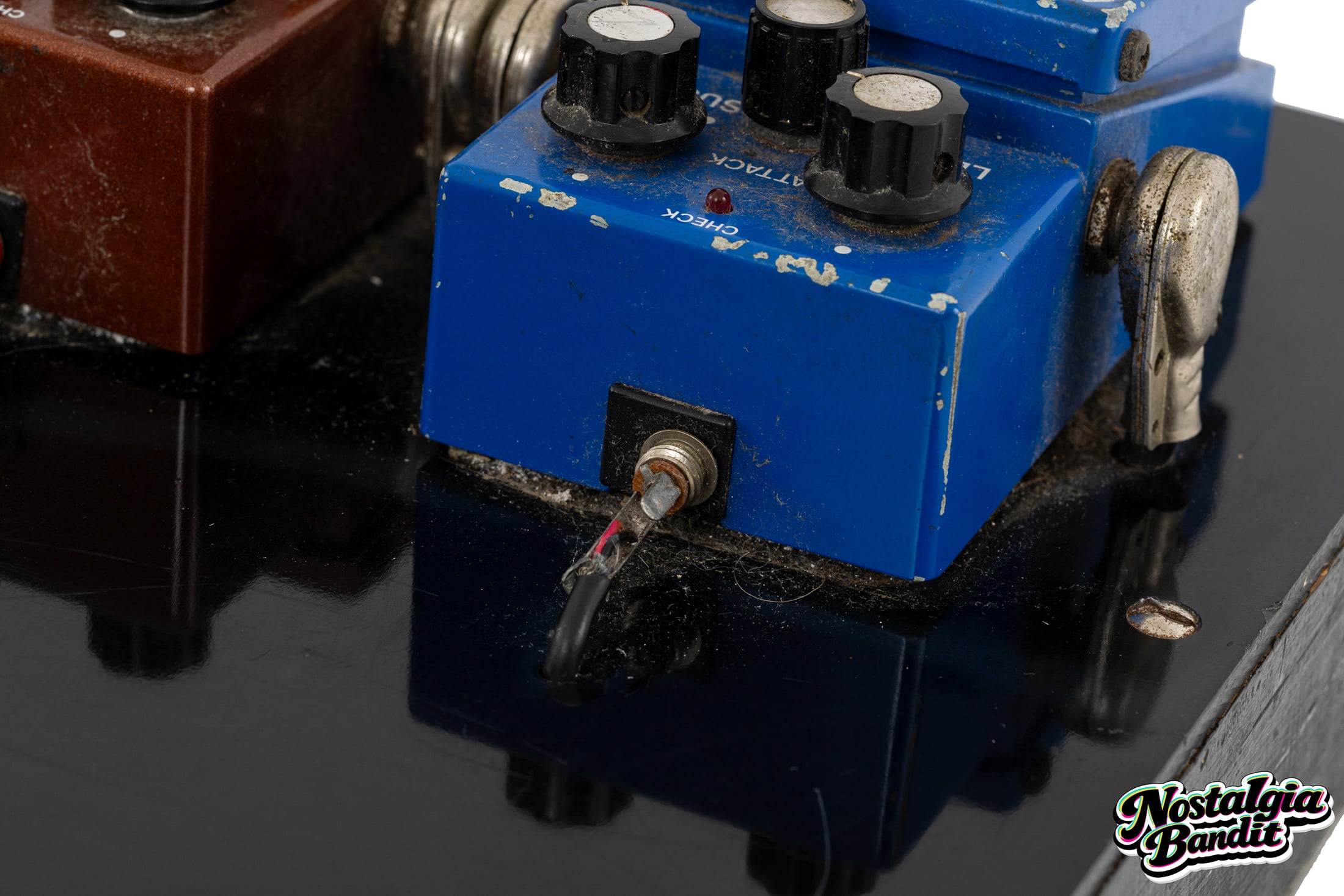
·· Boss CS-2 Compression Sustainer — DIY wiring repair visible on side (exposed red wire soldered in), consistent with Stevens personally maintaining and building the board
·· Boss OC-2 Octaver
·· Boss CE-2 Chorus
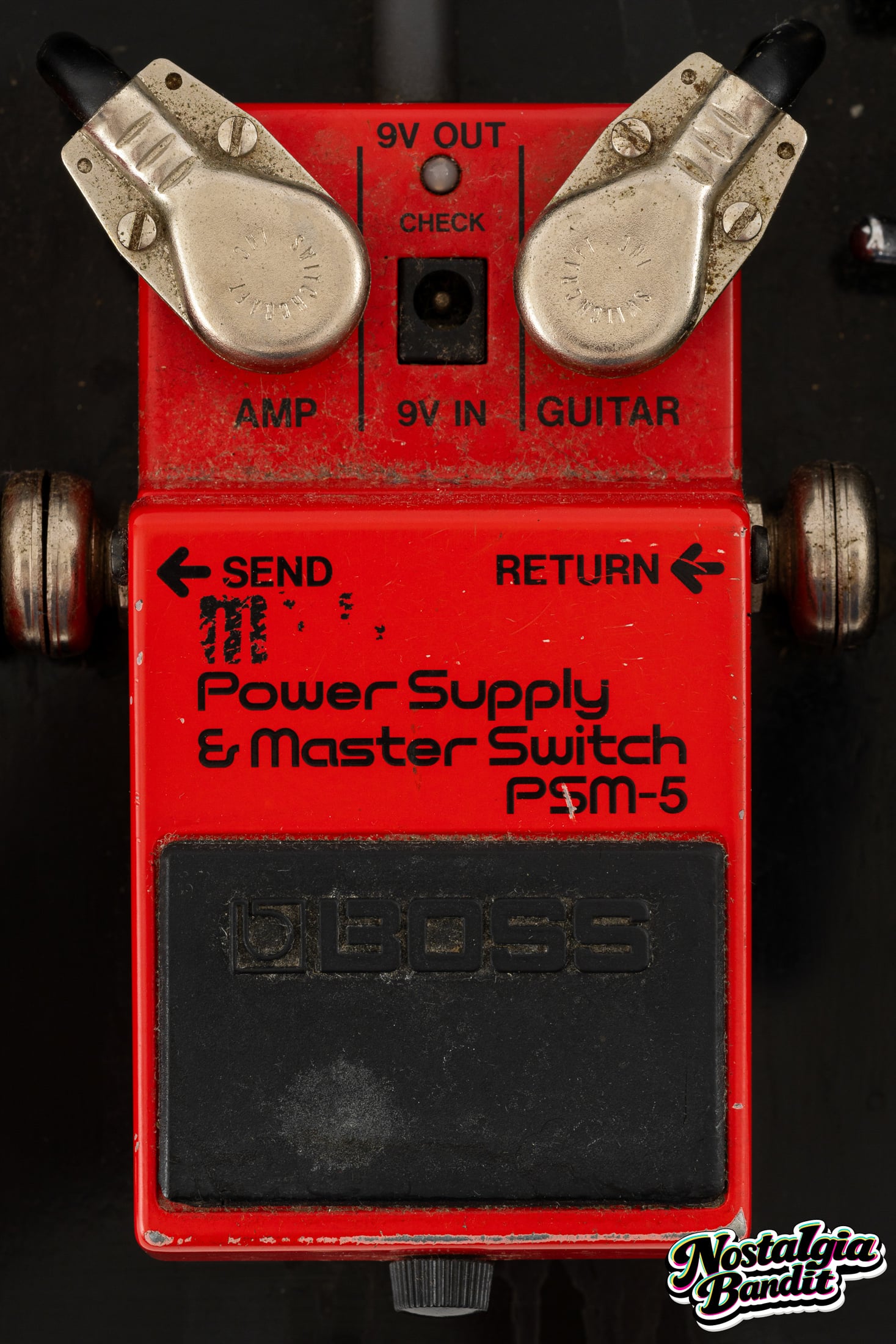
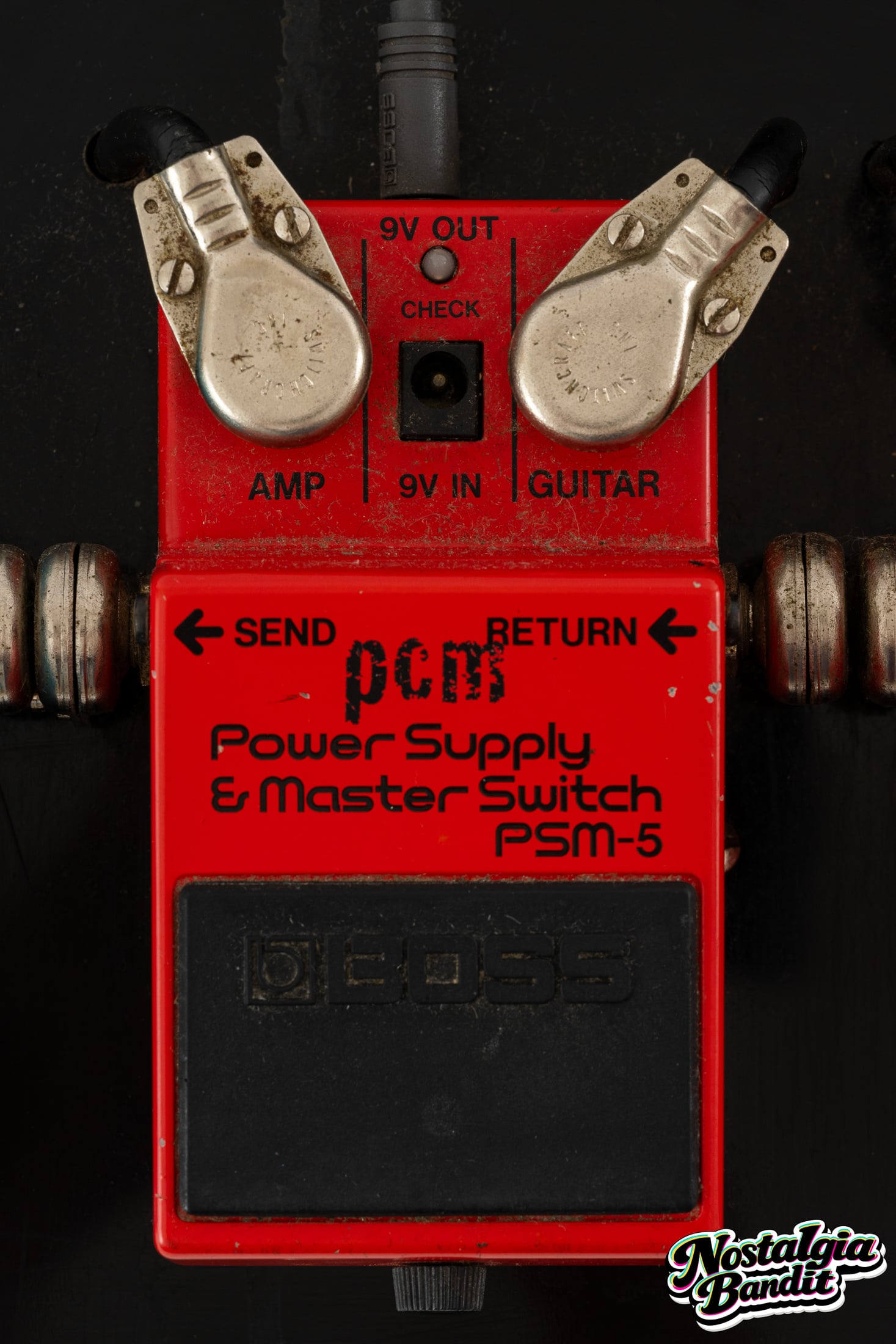
·· Boss PSM-5 Power Supply & Master Switch (×2)
·· Pro Co “The Rat” distortion unit (center, custom elevated mount)
·· Dunlop Cry Baby wah pedal, custom-rewired by Roger Mayer with overdrive modification (rocker switch added to side, activating overdrive when wah is engaged) — the July 1986 International Musician & Recording World feature documents Stevens’ use of “a Cry Baby rewired for him by Roger Mayer,” confirming both the instrument and the modification. Mayer is the British electronics engineer best known for building custom fuzz and wah units for Jimi Hendrix.
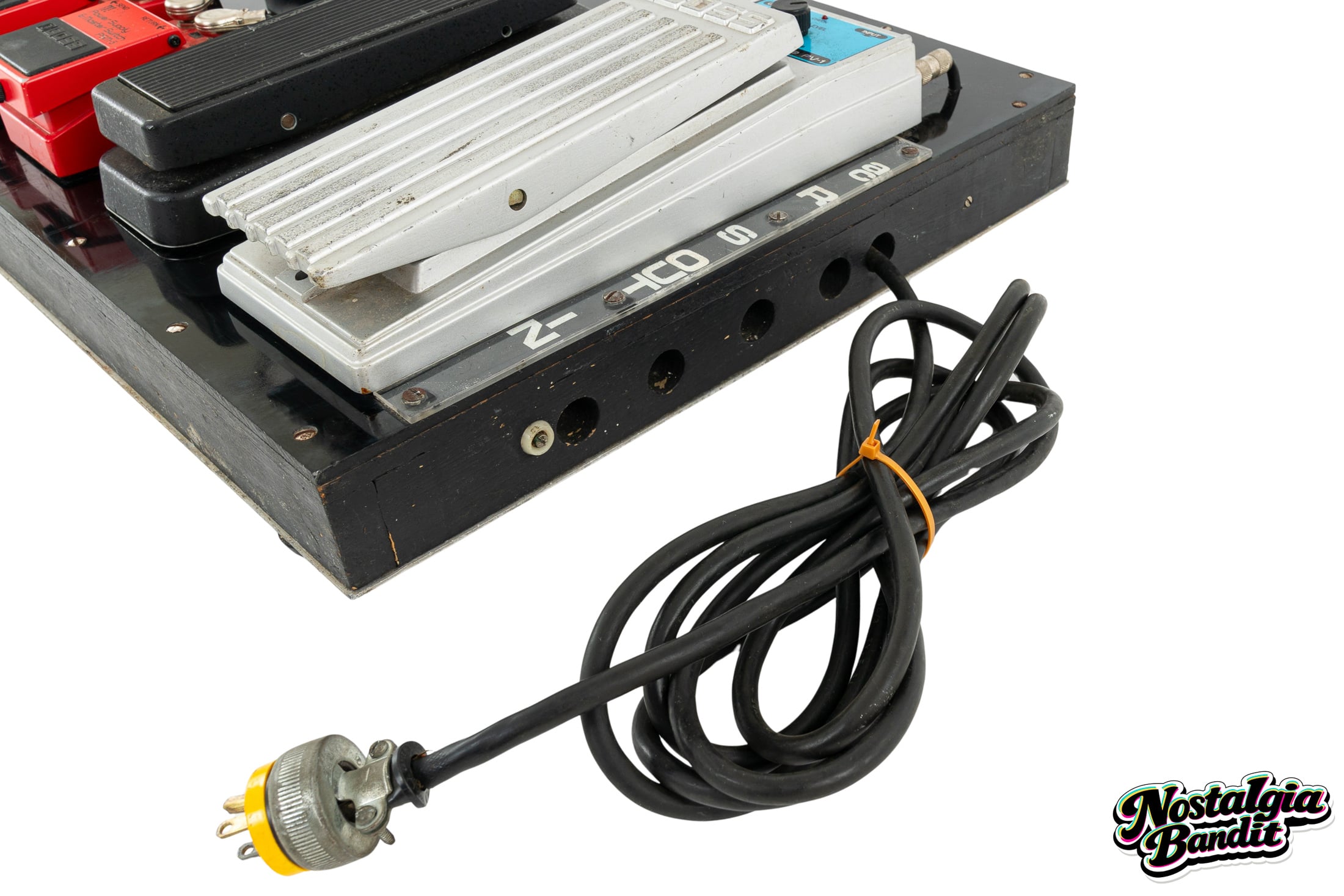
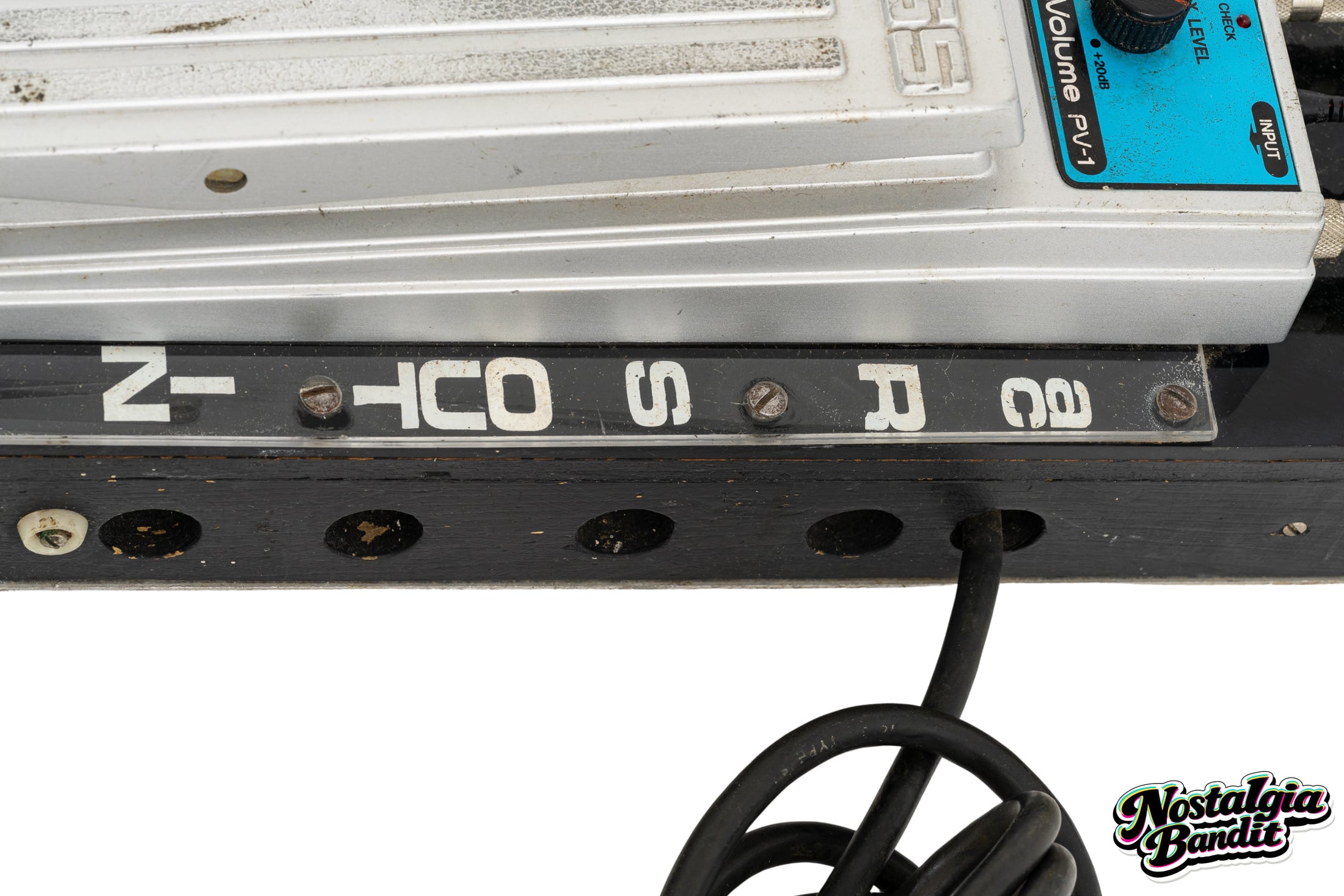
·· Boss PV-1 Rocker Volume
· Signal chain routing labels in white lettering along front edge panel
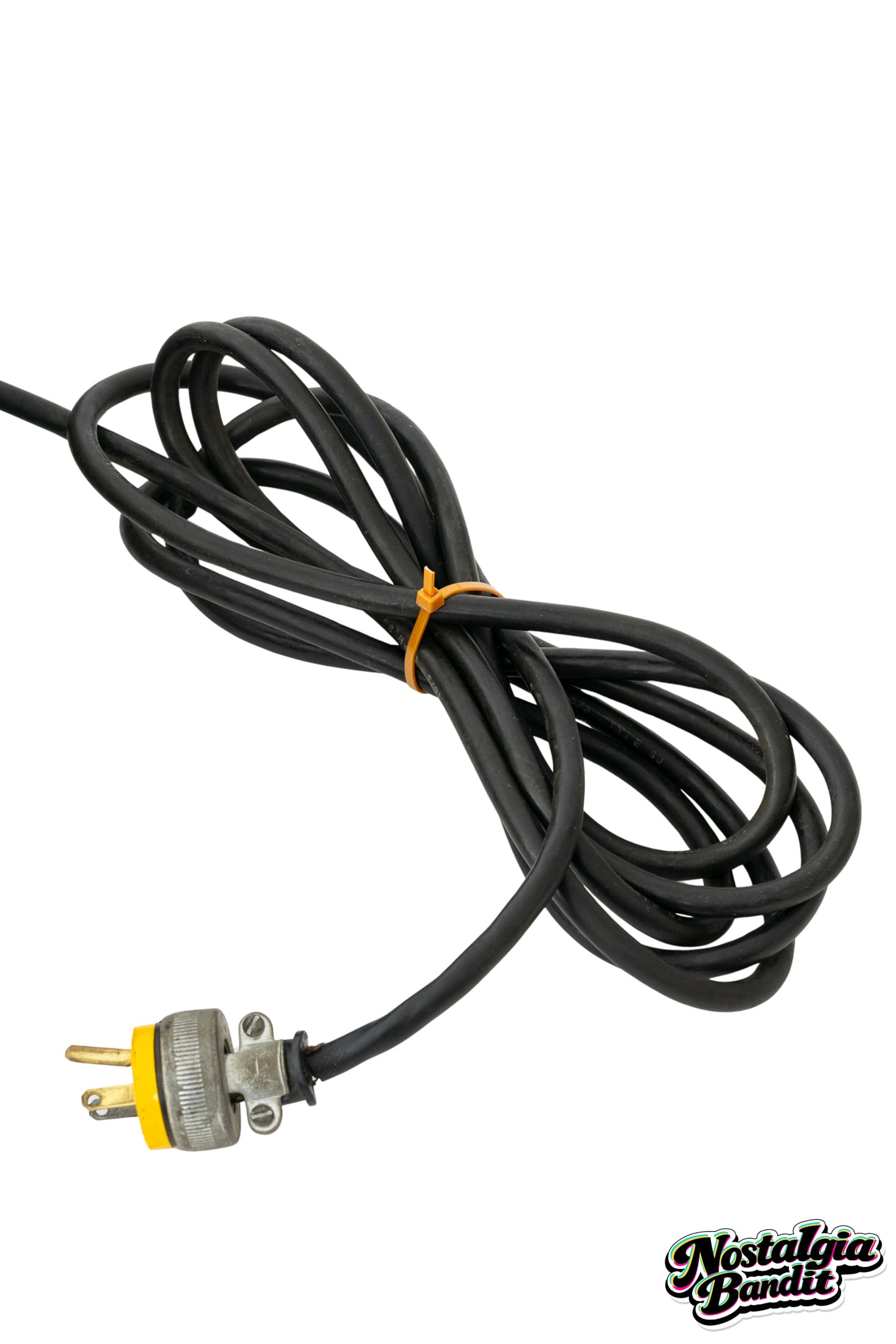
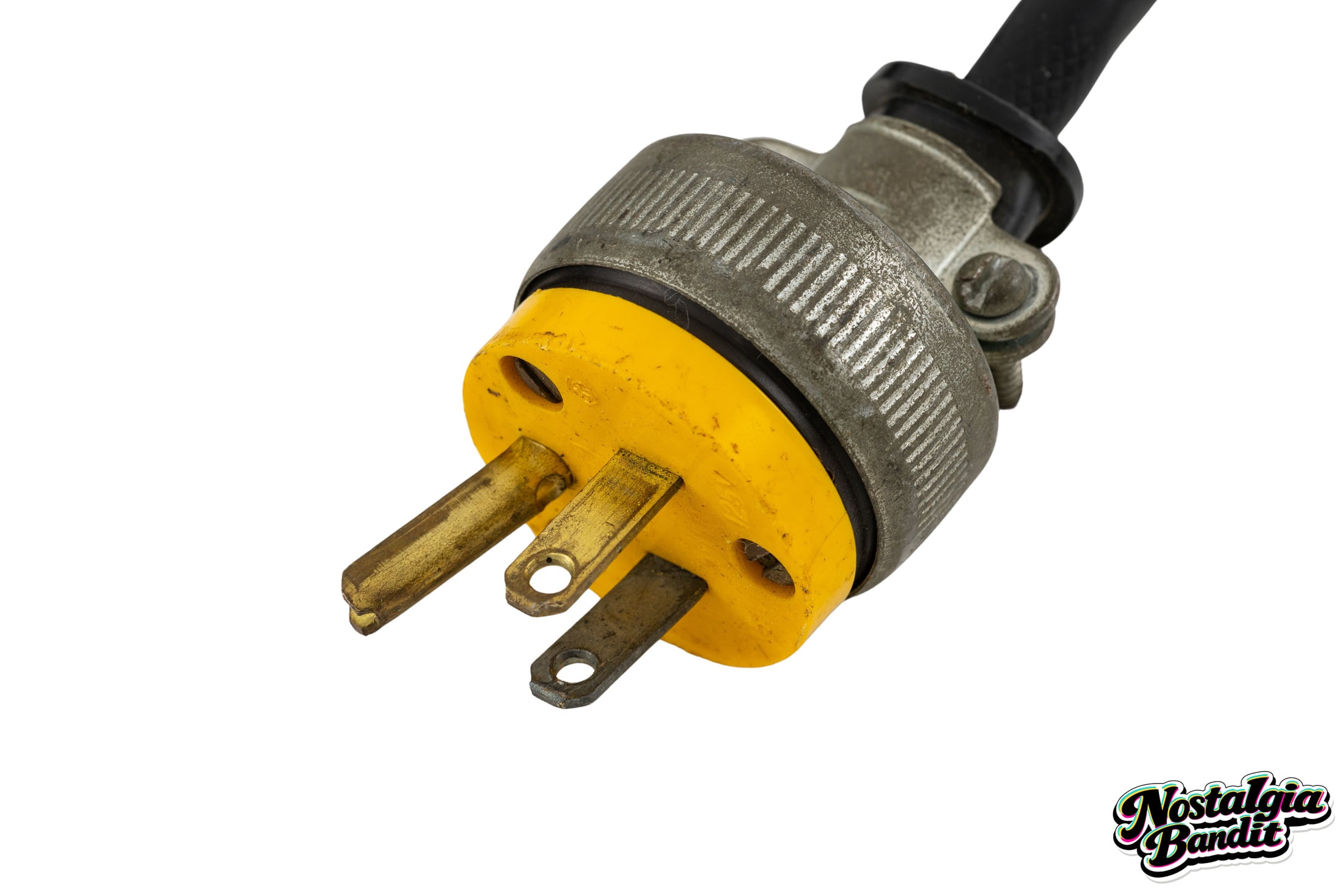
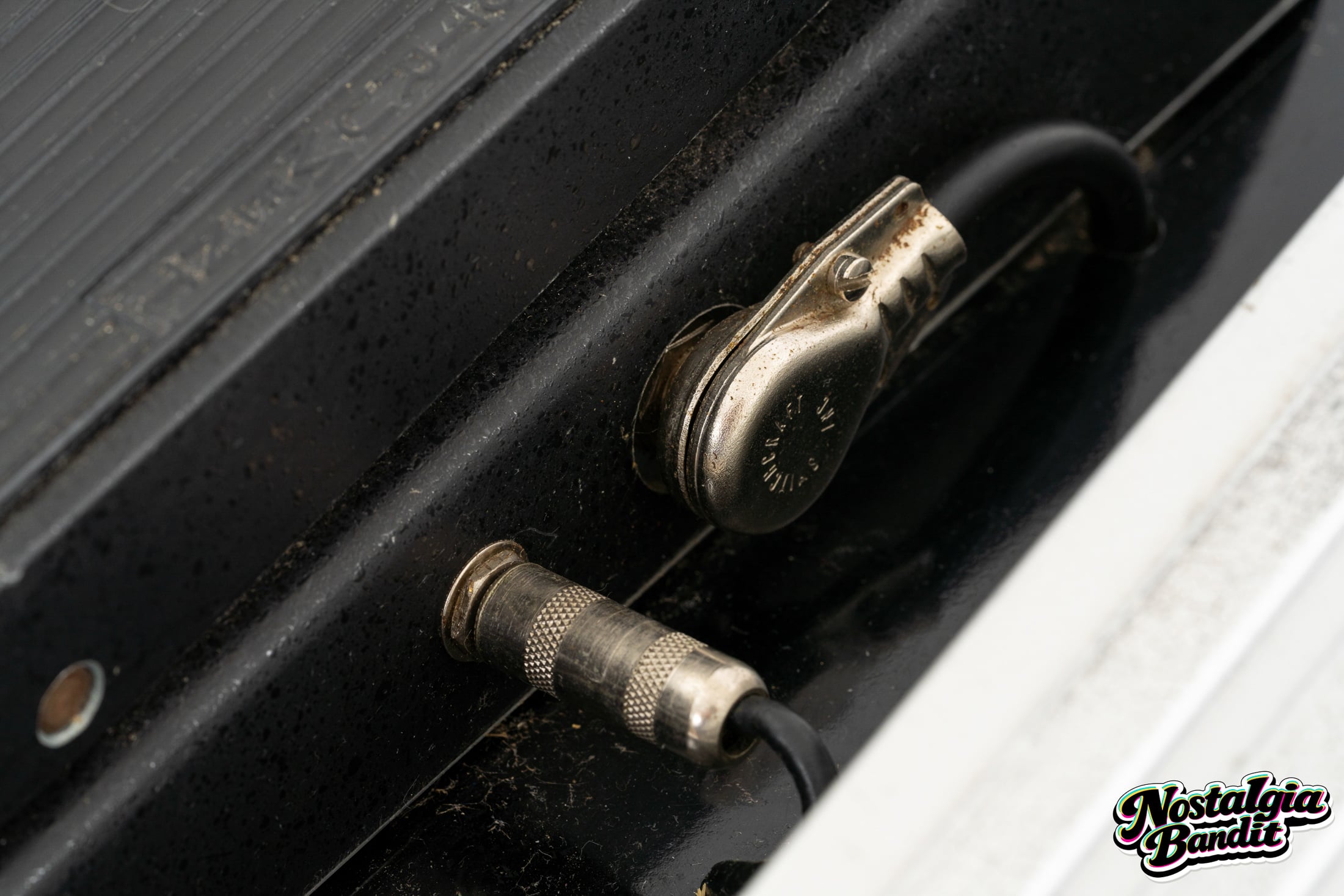
· Original power cable with yellow/grey locking connector
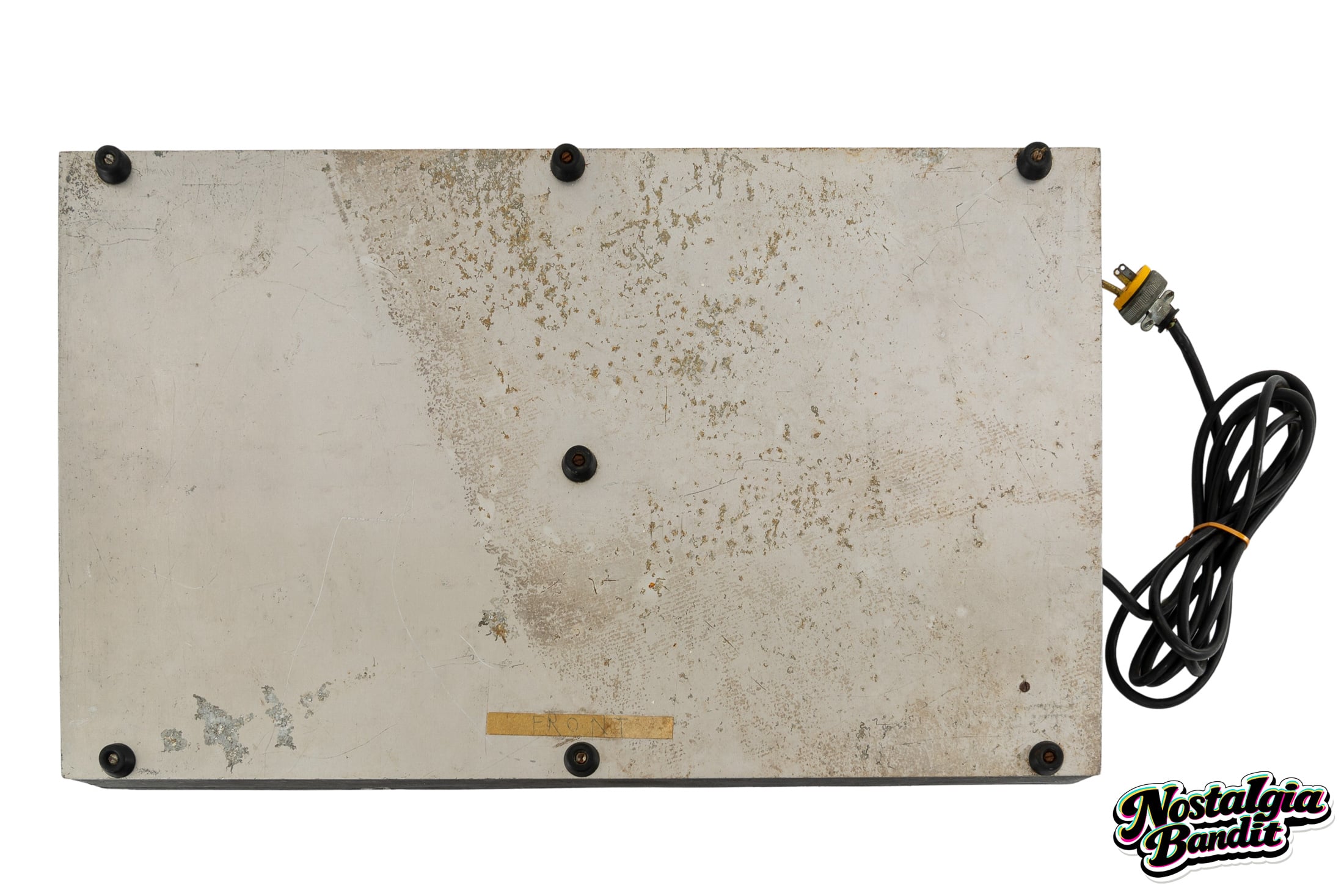
· “FRONT” tape label on underside
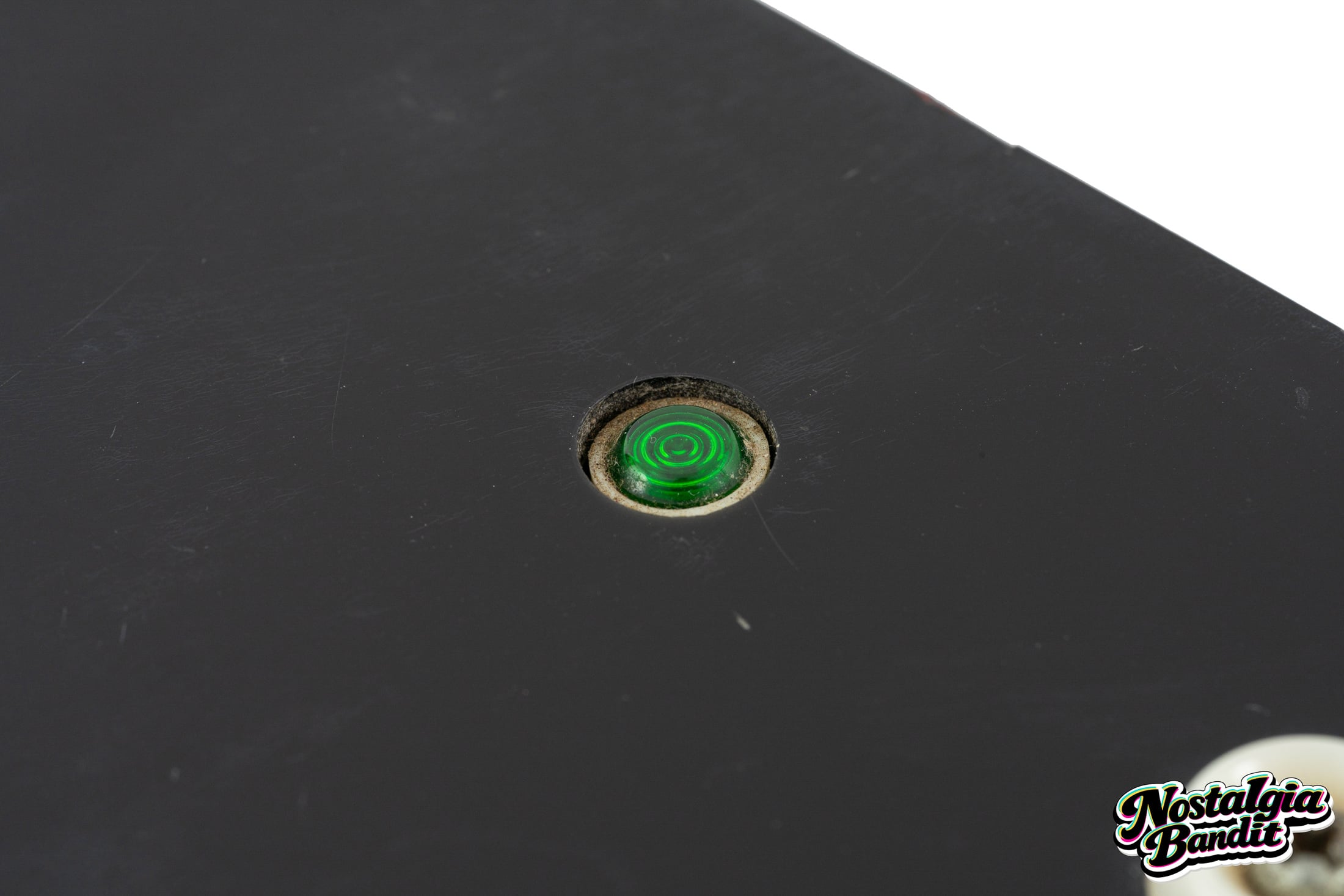
· Green power LED indicator on rear
· Rubber feet
Condition
The pedalboard exhibits heavy wear consistent with sustained studio and touring use from 1983 through 1987. The surface shows significant scuffing, paint loss, and patina throughout. All pedals are present in their original configuration as documented. The original power cable remains attached.
Included Items
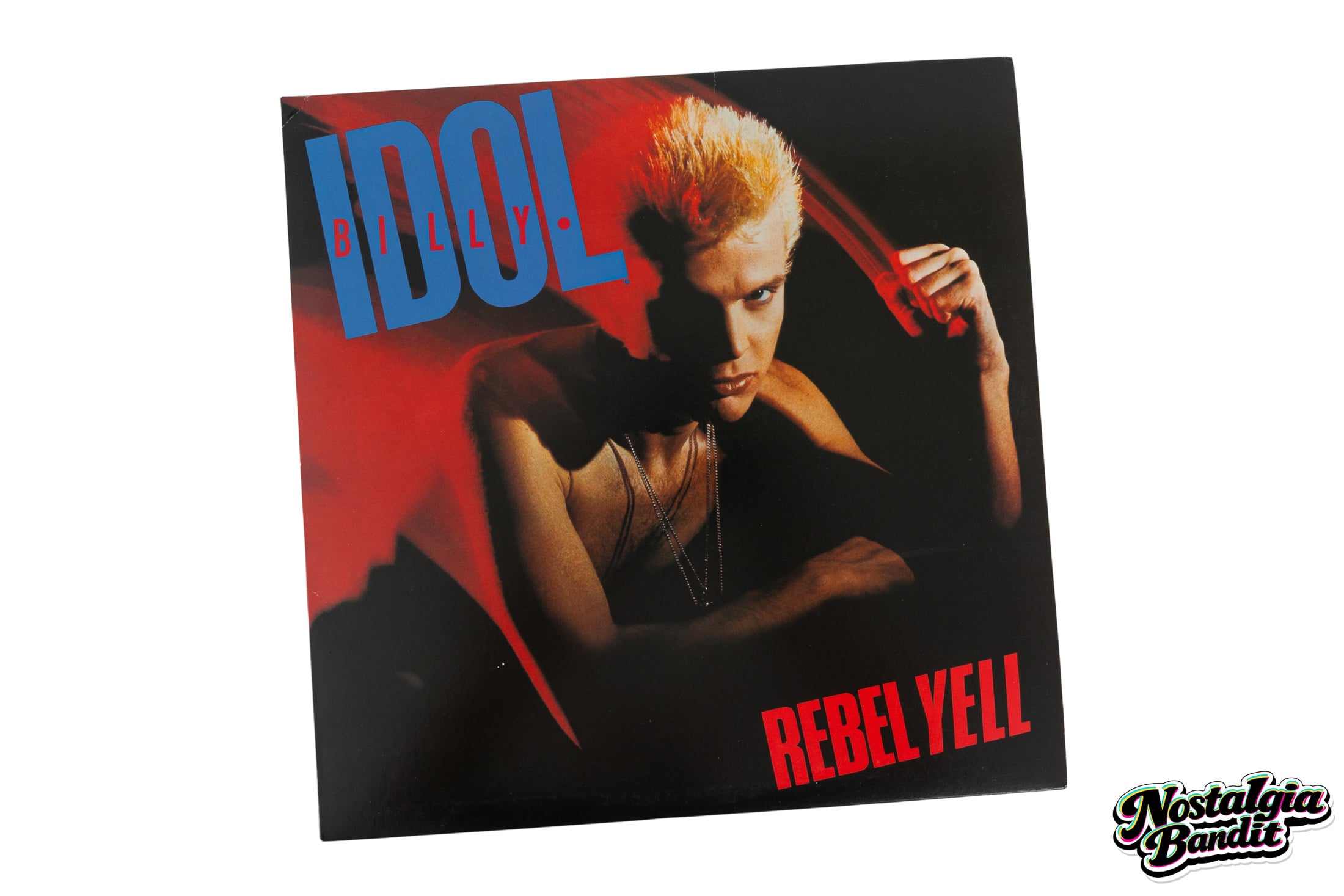
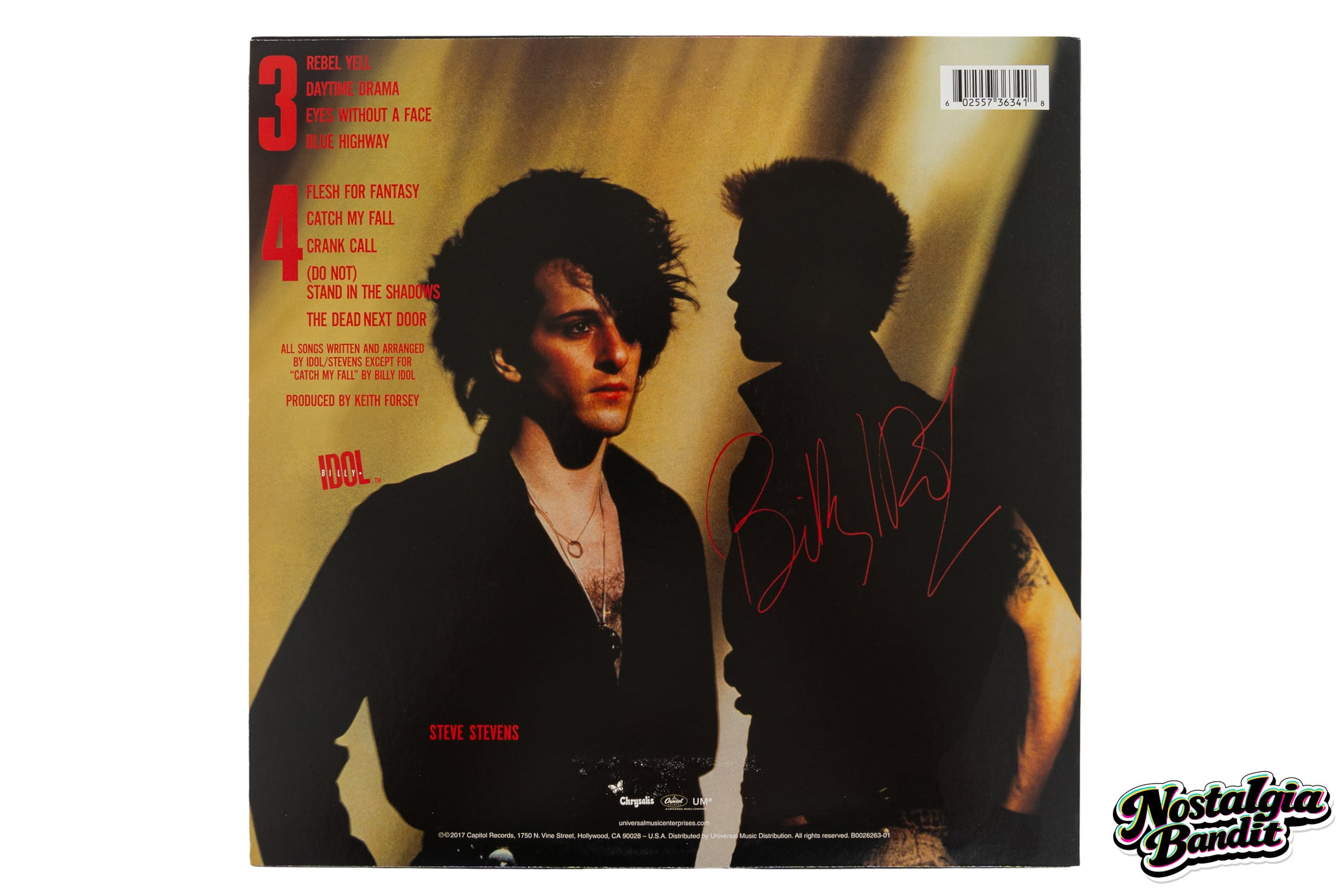
Original issue of Guitarist magazine (Vol. 3, No. 2, July 1986), featuring Stevens on the cover with full interview discussing his equipment approach and the Bradshaw system then under construction. Contemporary vinyl album sleeve (used) for Rebel Yell (Billy Idol, 1983). 1 photo.
Provenance
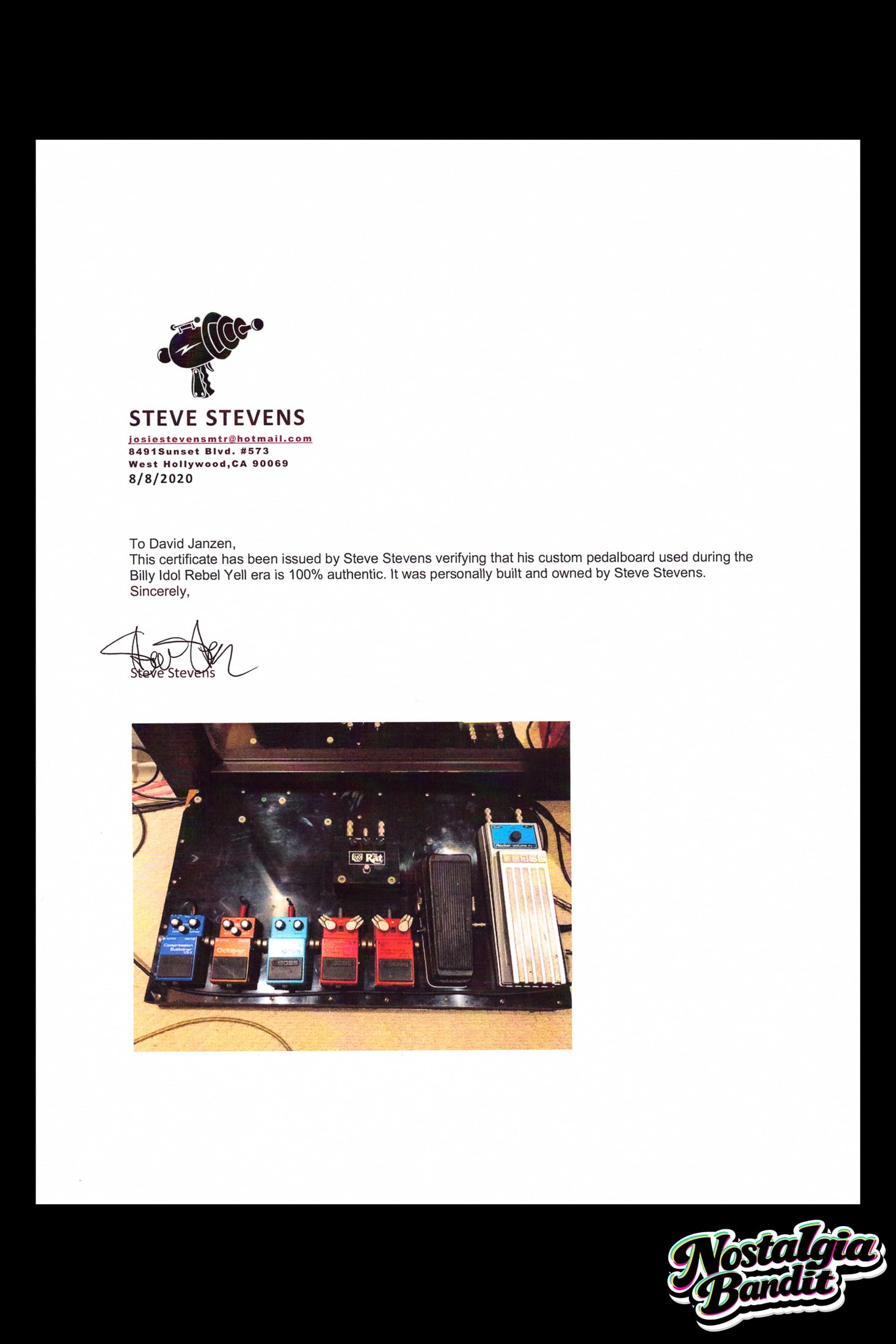
Accompanied by a Certificate of Authenticity signed by Steve Stevens (dated 8/8/2020), addressed to David Janzen, stating: “This certificate has been issued by Steve Stevens verifying that his custom pedalboard used during the Billy Idol Rebel Yell era is 100% authentic. It was personally built and owned by Steve Stevens.” Additionally documented in Stevens’ public Facebook post, in which he posted a photograph of this board with the caption confirming its use on the Rebel Yell recording and touring through 1987. Also included: original issue of Guitarist magazine (Vol. 3, No. 2, July 1986), featuring Stevens on the cover, with a full interview in which he discusses his equipment philosophy and the Bob Bradshaw-built rack system then under construction — period documentation from the exact years of the board’s active use.
Nostalgia Bandit Letter of Provenance
This lot will be accompanied by a Nostalgia Bandit Letter of Provenance — a document printed on official Nostalgia Bandit letterhead, signed by Nostalgia Bandit’s principal, and affixed with the official Nostalgia Bandit embossed seal. The Letter of Provenance reproduces the complete final auction description for this lot in full, memorializing all provenance documentation, attribution, supporting evidence, and condition details as presented herein. It is designed to travel with the lot through all future ownership transfers as a permanent, platform-independent physical record of the item’s documented history.
Shipping & Measurements
FIRST AND THIRD PARTY SHIPPING OPTIONS AVAILABLE. Contact Nostalgia Bandit for a shipping quote: shipping@nostalgiabandit.com
» Item: 30 x 18.25 x 6″ · 32.74 lbs.